Canada has turned the tables on Donald Trump’s steel tariffs, transforming a looming crisis into a strategic opportunity. In a recent exchange in the House of Commons, Foreign Affairs Minister Melanie Jolie laid bare the impact of Trump’s aggressive 50% tariffs on Canadian steel, which led to significant layoffs at Aloma Steel in Northern Ontario.
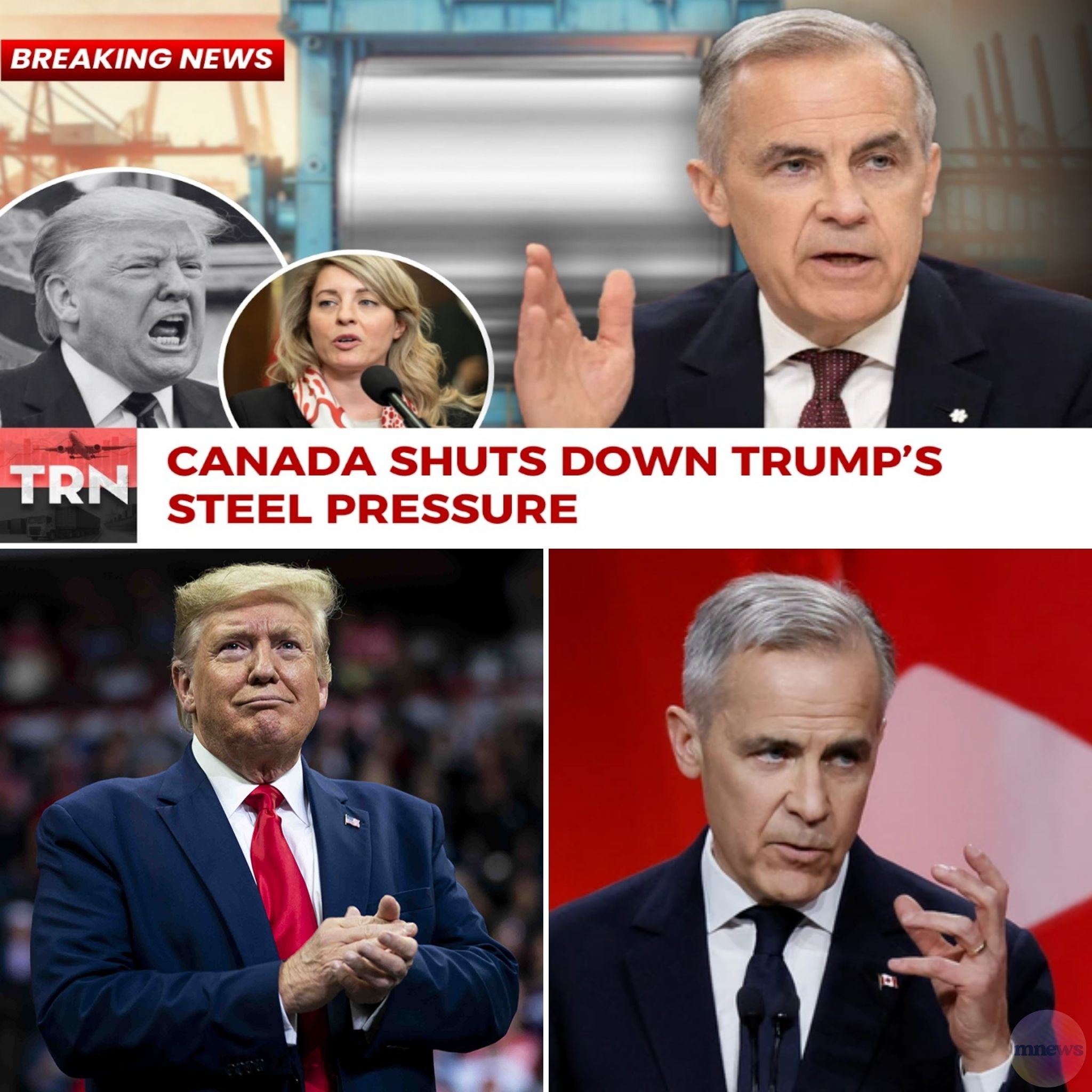
Instead of succumbing to the pressure, Canada has swiftly mobilized to support affected workers, emphasizing that the layoffs are a direct consequence of U.S. policy, not Canadian mismanagement. Jolie’s assertion reframed the narrative, shifting blame away from Ottawa and onto Washington.
This moment signifies a critical turning point in Canada-U.S. relations. Historically, Canada has been seen as a passive player in trade disputes, but the current administration has demonstrated a newfound assertiveness. Ottawa’s immediate response included establishing a crisis coordination team with Aloma’s leadership and exploring new markets in Europe and Asia, particularly for low-carbon steel.

The broader implications are significant. Trump’s tariffs, intended to disrupt Canadian industry and extract political concessions, have instead catalyzed a shift in Canada’s economic strategy. Canada is now diversifying its export markets and investing in clean energy technologies, positioning itself as a reliable partner in a global economy increasingly wary of U.S. unpredictability.
Remarkably, this shift has garnered bipartisan acknowledgment in Canada, with both Conservative and Liberal parties recognizing the tariffs as the root cause of the crisis. This unity signals a national consensus that Canada is no longer willing to allow U.S. economic turbulence to dictate its future.
The Aloma layoffs catalyze Canada to accelerate its industrial pivot. The government is not only strengthening domestic supply chains but also redirecting exports toward emerging markets, responding to the reality that reliance on the U.S. may no longer be sustainable.

As Canada opens a new consulate in Greenland, the geopolitical landscape is shifting. Greenland’s leaders have welcomed this move, seeing it as an opportunity to enhance trade ties with North America, particularly as they distance themselves from past U.S. ambitions.
In stark contrast, Trump’s tariffs have backfired domestically, with 60% of Americans now opposing his trade agenda. The political fallout is palpable, as rural communities suffer under the weight of these policies.
Canada’s proactive approach, characterized by a commitment to innovation and diversification, has positioned it to thrive amid uncertainty. What began as a crisis has become a transformative moment, allowing Canada to redefine its economic future and assert its independence on the global stage.
The Aloma situation is a clear indication that Canada is ready to face the challenges ahead, not merely as a neighbor to the U.S. but as a formidable player in its own right. The message is clear: Canada is not just surviving; it is adapting, evolving, and preparing for a future where it stands tall in the face of adversity.