A clandestine weapons factory, operating on an industrial scale and directly supplying Mexican cartels, has been discovered by federal agents on U.S. soil, signaling a dangerous new phase in transnational criminal operations. The sophisticated manufacturing hub was uncovered in a seemingly abandoned industrial building in Washington state, shattering long-held assumptions about how cartels arm themselves.

Homeland Security Investigations, leading a multi-agency task force under “Operation Takeback America,” breached the facility after months of surveillance. Inside, agents found not a simple stash house, but a fully operational production line. Rows of precision machinery, including drill presses and milling equipment, were used to manufacture firearms and conversion kits.
The factory contained specialized tools for converting semi-automatic weapons into fully automatic rifles. Workbenches were stacked with unfinished lower receivers, and blueprints were taped to the walls. Dozens of partially assembled firearms, along with pallets of sorted ammunition, indicated a logistics pipeline built for volume and efficiency.
“This was infrastructure,” a senior agent involved in the raid stated. “We are no longer just intercepting smuggled weapons. Cartels are building tools of war inside our country, exploiting legal loopholes and hiding in plain sight.” The discovery immediately triggered a nationwide alert for similar facilities. The investigation began when DEA analysts noted anomalies in fentanyl shipments within Washington’s Snohomish, King, and Lewis counties. The consistency and protection of these shipments suggested a highly organized operation beyond typical trafficking. Intelligence was cross-referenced with financial data, pointing to a cluster of suspicious properties. “Operation Takeback America” unified efforts across the DEA, ATF, CBP, IRS, and local law enforcement. The mandate was to identify and dismantle embedded cartel infrastructure within the United States. The Washington weapons factory represented their most alarming find, revealing a shift from smuggling to domestic manufacturing.

On October 28, 2025, simultaneous raids hit twelve locations across western Washington. The operations netted ten suspects and revealed a network deeply embedded in ordinary communities. At one residence, a loaded pistol was found beside children’s toys. Another suspect was caught fleeing with nearly two kilograms of fentanyl powder. The central site, linked to suspect Jose Isabel Sandival Zuniga, served as the network’s nerve center. Behind a false wall, agents discovered a logistical war room. It contained anodizing kits, gun-milling machines, and bins of components labeled for assembly. Modified Glock switches were stacked ready to convert pistols into automatic weapons.
Completed rifles, painted matte black and fitted with suppressors, showed factory-level precision. The same site held 25 kilograms of fentanyl powder and over 90,000 pills, illustrating a direct nexus between drug and weapons operations. This was a cartel factory on U.S. soil.
Concurrent investigations proved the problem was national. In May 2025, a separate pipeline funneling weapons from Georgia to New York was dismantled. David Morris, 31, was arrested after selling 17 guns to undercover officers. He bragged about access to machine gun conversion kits and a broader network. A raid on a Georgia storage unit linked to Morris uncovered an arsenal of over 200 high-powered firearms. The haul included a .50 caliber belt-fed machine gun, AR-15 variants, and Glock pistols pre-fitted with illegal switches. Nine of his associates were in the U.S. illegally, highlighting cartel use of embedded operatives.

The southern border delivered another shock at the Laredo, Texas crossing. A routine inspection of two tractor-trailers, driven by a father and son with clean records, revealed nearly 400 firearms hidden behind expertly engineered false walls. The weapons, including grenades and high-capacity drums, were destined for cartels in Mexico.
The precision of the hidden compartments indicated intimate knowledge of commercial trailer manufacturing. This seizure confirmed cartels are using U.S. citizens as trusted couriers within an industrialized supply chain, moving weapons south with military-level planning. In response to the escalating threat, the DEA launched one of the most aggressive nationwide crackdowns in its history in late September 2025. Synchronized raids across 23 field divisions targeted every layer of cartel operations within U.S. borders over a five-day blitz.
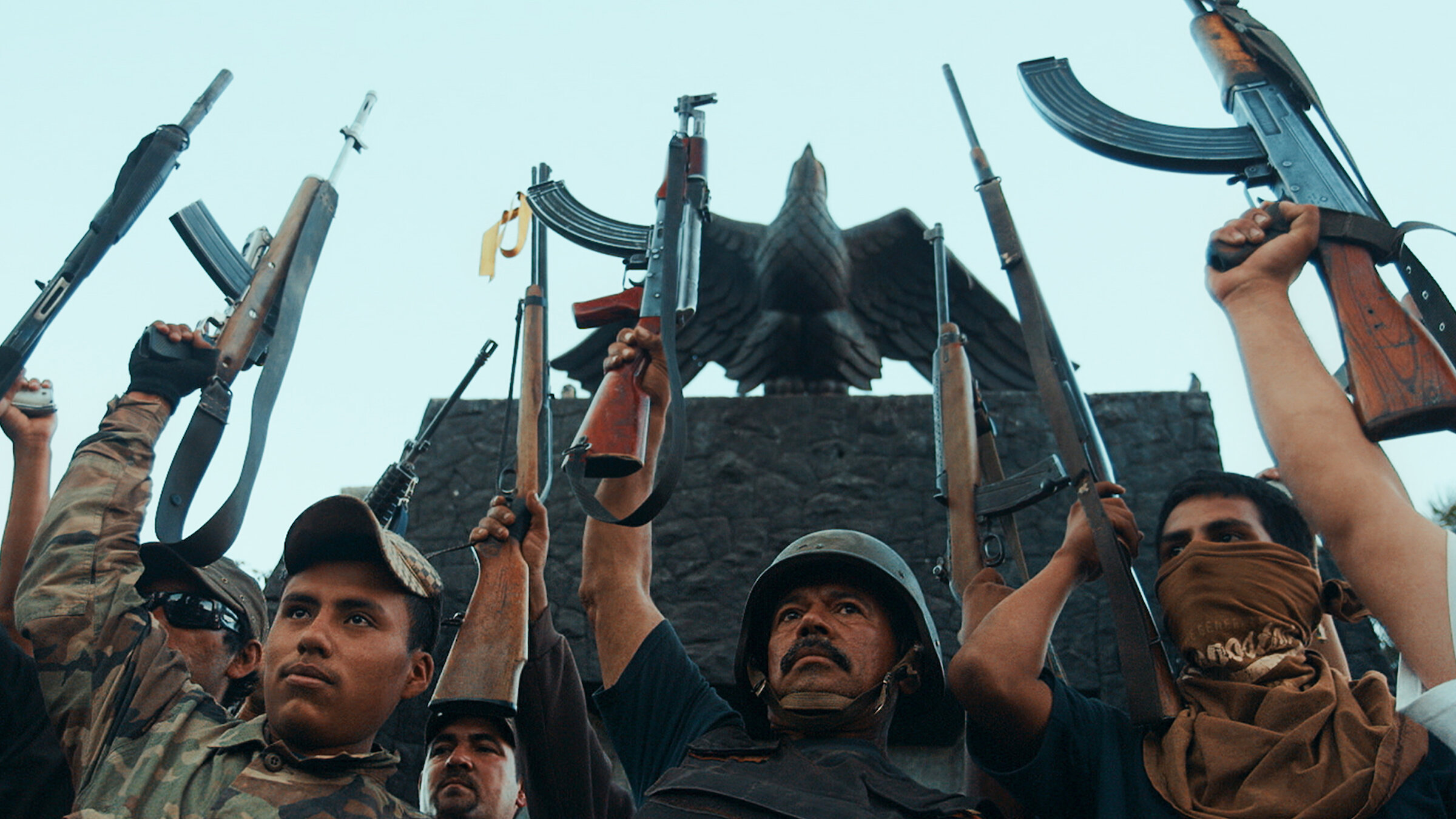
The seizures were staggering: 92 kg of fentanyl powder, 1.1 million counterfeit pills, over 6,000 kg of methamphetamine, and 23,000 kg of cocaine. Agents also recovered 244 firearms, many modified for automatic fire, and severed cartel finances by seizing over $18 million in cash and $30 million in assets.
Perhaps the most profound engineering feat was uncovered near Yum