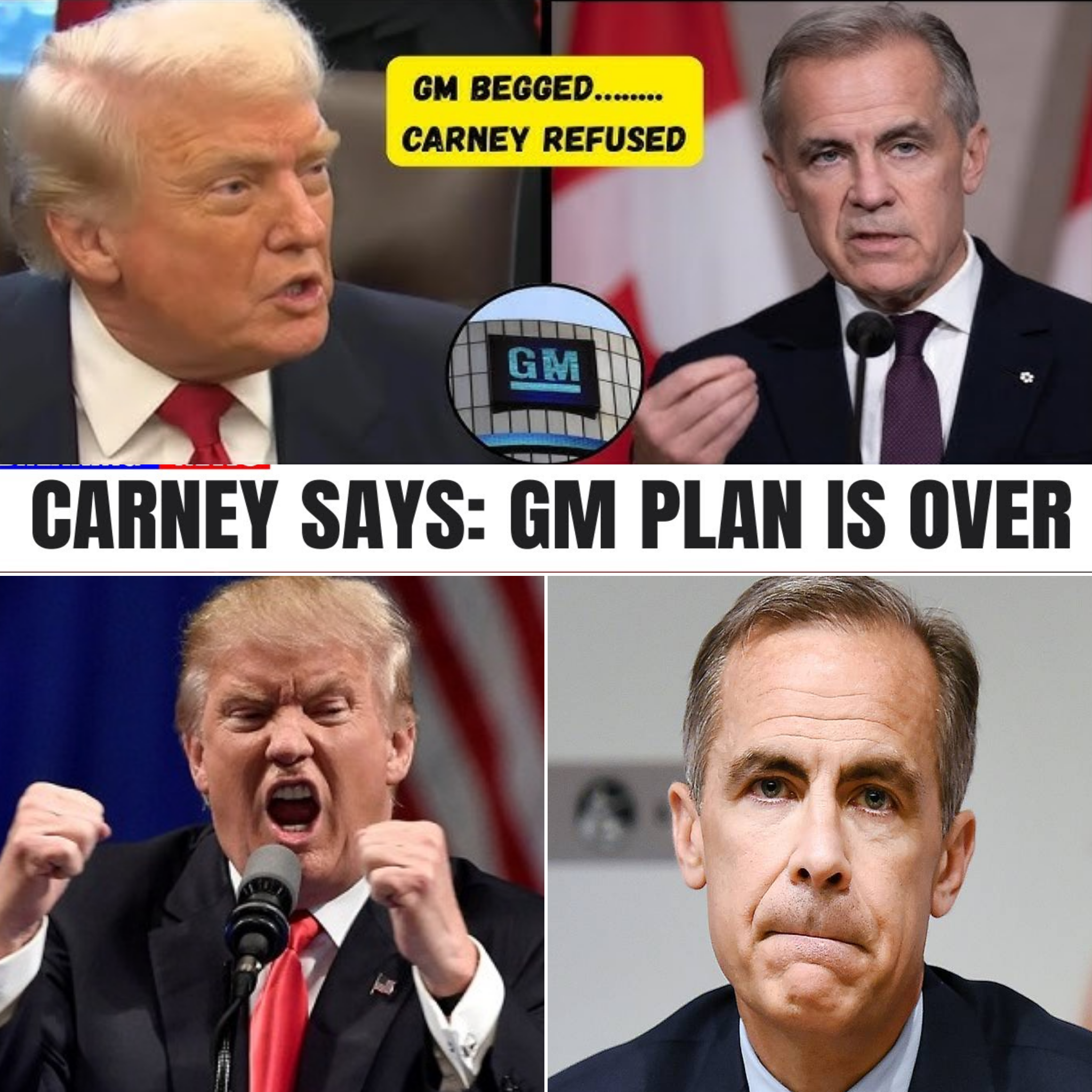
Canada is on the brink of a pivotal moment in its industrial history, sparked by General Motors’ abrupt closure of its BrightDrop electric delivery van facility in Ingersoll, Ontario. This decision, delivered without fanfare or warning, has reverberated through the nation, igniting a political firestorm and reshaping the landscape of corporate accountability.
 The closure has not only left over 1,200 workers in limbo but has also raised questions about the trust between corporations and the communities that support them. For decades, Canada has fought to maintain its industrial backbone, and GM’s decision feels like a betrayal of that struggle. Workers who believed in the promise of the electric vehicle revolution now face an uncertain future.
In a measured response, Canadian officials, including Industry Minister Melanie Jolie and Finance Minister François-Philippe Champagne, issued a statement highlighting GM’s failure to honor commitments made to both workers and the federal government. This was not merely a disappointment—it was a trigger for action. Canada has quietly developed a legal framework, the autoremission system, designed to hold corporations accountable for their promises.
This system is revolutionary. It allows Canada to impose significant penalties on companies that fail to deliver on their commitments, including a 25% tariff on GM vehicles imported from the U.S. This sudden shift in leverage has sent shockwaves through the automotive industry, forcing GM and other manufacturers to reconsider their strategies in Canada.

The stakes are high. GM’s abrupt closure comes at a time when the Canadian economy is already grappling with the fallout from trade tensions with the United States. The uncertainty of U.S. relations, exacerbated by the unpredictable nature of former President Donald Trump’s administration, has left Canada seeking alternatives. In this context, GM’s blunder has opened a door for Canada to explore new diplomatic avenues, including a potential thaw in relations with China.
Prime Minister Mark Carney’s recent meeting with Chinese President Xi Jinping signifies a strategic pivot. As Canada seeks stability amid U.S. volatility, the prospect of renewed cooperation with China could provide an unexpected lifeline. This shift in foreign relations is not a simple choice between allies; it’s a calculated move to ensure economic security.
Now, GM faces a critical deadline. The company has 15 days to present a comprehensive production plan for the Ingersoll facility, detailing concrete timelines and models integrated into its global EV strategy. Failure to comply will result in permanent tariffs, fundamentally altering GM’s pricing structure and market presence in Canada.

The implications of this standoff extend far beyond a single factory. If GM cannot meet Canada’s demands, the repercussions will ripple through the entire automotive supply chain, affecting dealerships, production schedules, and investor confidence. This moment marks a turning point where the balance of power has shifted—corporations can no longer dictate terms without consequences.
For Canadian workers, this is not just about economics; it is about dignity and respect. They are witnessing a rare moment where their government is prepared to stand up for them against corporate interests. As the clock ticks down, the automotive industry holds its breath, awaiting GM’s response. Will the company choose to collaborate and rebuild trust, or will it risk a rupture that could redefine the North American industrial landscape for years to come? The answer lies in the next 15 days, and the stakes have never been higher.