A major European battery materials firm has chosen Canada over the United States, committing billions in a strategic move that underscores a stark divergence in political stability and industrial policy across the North American border. Norway’s Vianode announced a $3.2 billion investment to build North America’s largest synthetic graphite plant in St. Thomas, Ontario, a direct challenge to China’s dominance and a vote of confidence in Canada’s predictable climate.

The decision delivers a cutting-edge facility to produce a critical mineral essential for lithium-ion batteries, the heaviest component by weight and a NATO-listed strategic material. Currently, 95% of the global supply is controlled by China, a dependency Western nations are urgently seeking to break. Vianode’s plant aims to produce 150,000 tons annually, enough for roughly two million electric vehicles.
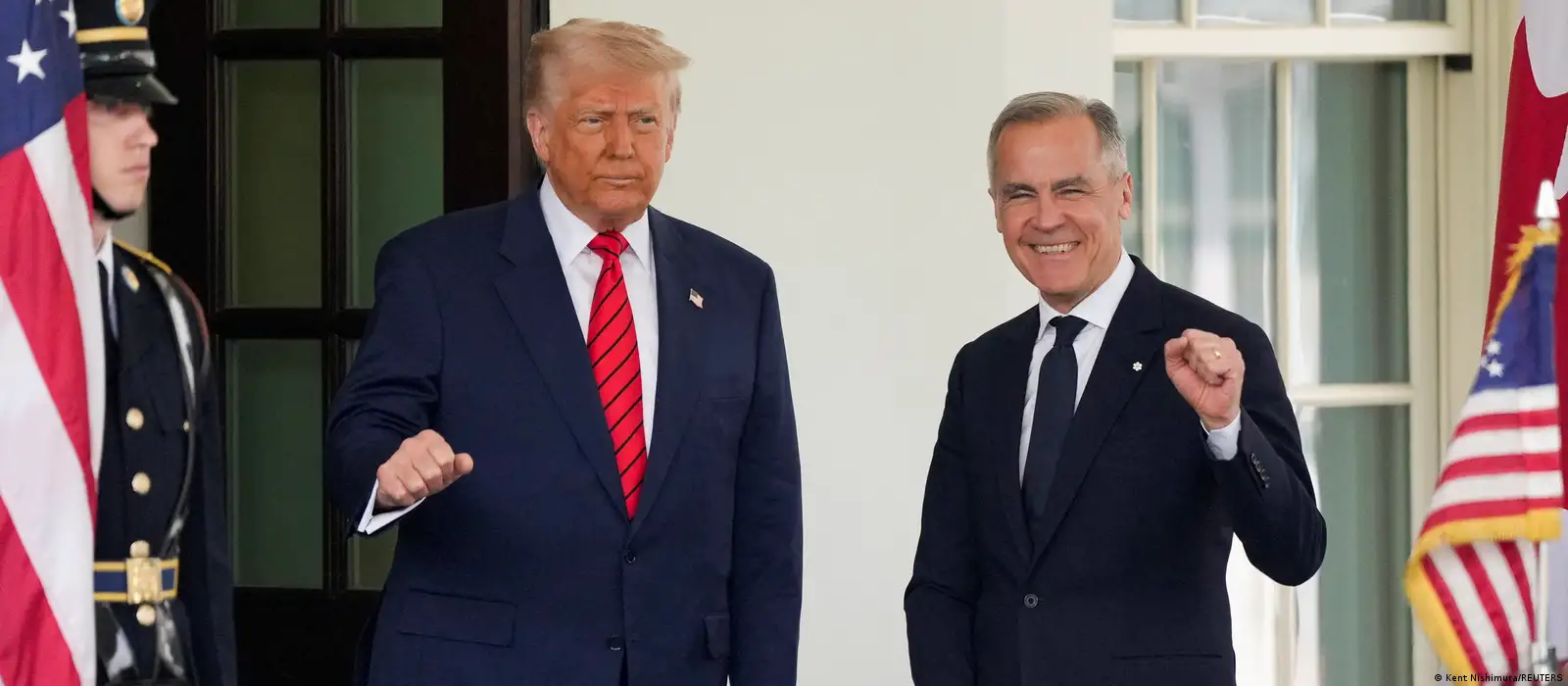
Vianode CEO Burkhard Straube framed the choice as one of fundamental certainty. He cited Canada’s stable and predictable political system as the decisive factor for a multi-billion-dollar investment. This statement stands in sharp contrast to the tariff battles and corporate litigation defining the current U.S. economic landscape under President Donald Trump. The investment will create 300 jobs in its initial phase, scaling to approximately 1,000 at full capacity. It represents a monumental win for Ontario’s burgeoning battery ecosystem, arriving shortly after Volkswagen’s $7 billion PowerCo gigafactory began construction in the province. Federal and provincial governments are backing the project with over a billion dollars in combined financial support.

This investment cuts to the heart of the global clean tech supply chain race. Synthetic graphite is not merely a factory input but the backbone of the EV battery. By establishing this production on Canadian soil, Vianode helps create a secure, non-Chinese supply line for automakers and battery manufacturers across the G7.
The announcement’s timing is profoundly symbolic. It arrives as the United States grapples with a new wave of protectionist policies, including sweeping tariffs on autos and metals and threats to impose 100% duties on Chinese goods. This has created deep uncertainty for industries reliant on integrated cross-border supply chains.

Even the future of the continental trade pact, the USMCA, is clouded as President Trump has threatened to let it expire in 2026. This climate of unpredictability is causing automakers to delay U.S. battery projects and rewrite supply chain plans to avoid tariff exposure.
Canada, meanwhile, is projecting deliberate stability and long-term vision. Prime Minister Mark Carney’s government is actively expanding trade and defense partnerships in Asia and Europe, positioning the country as a reliable hub for clean-tech manufacturing and critical minerals processing.
A key advantage driving this investment is Canada’s electrical grid. Producing synthetic graphite is intensely energy-intensive. Canada’s grid, powered overwhelmingly by hydroelectricity and nuclear generation, offers the clean, affordable, and steady power at scale that few other advanced economies can match.

Vianode states its technology will cut emissions by over 90% compared to traditional Chinese production methods, but this green achievement is fundamentally enabled by Canadian electricity. This clean power advantage is a magnet for heavy industry seeking to decarbonize without crippling cost increases.
The move signals a profound shift in North American industrial geography. For decades, foreign direct investment flowed almost automatically to the United States. Vianode’s choice indicates that assumption is eroding, as global investors begin to perceive higher risk and unpredictability south of the 49th parallel.
This decision grants Canada significant strategic leverage. It moves the nation beyond exporting raw minerals into advanced processing, ascending the value chain. It positions Canada as an essential partner for allies seeking secure, democratic, and environmentally compliant supply lines.
The backdrop in Ontario adds further weight to Vianode’s commitment. The province has recently lost thousands of auto jobs as Stellantis shifted Jeep production to Illinois and GM idled EV van output in Ingersoll. Vianode is moving in the opposite direction, toward Canada.
The message to Washington is unambiguous. In the global contest for the industries of the future, real confidence is demonstrated not by tariffs but by long-term capital commitments. Vianode’s $3.2 billion verdict declares Canada the stable anchor in an increasingly unstable region.

This development is part of a broader pattern of economic realignment triggered by U.S. trade policy. In a separate but telling move, the American manufacturer of the iconic Canadian party drink Sour Puss has relocated production from Minnesota to Montreal, a direct result of provincial purchasing shifts following U.S. tariffs.
Phillips Distilling Company CEO Andy England stated that with 98% of the brand’s global sales in Canada, the choice was clear when Canadian liquor boards favored domestic products. This small but symbolically potent shift demonstrates how Canadian market gravity is reshaping corporate behavior. The trend extends beyond commerce into defense and geopolitics. Prime Minister Carney’s recent visit to South Korea’s Hanwha Ocean shipyard, a finalist to build Canada’s next submarine fleet, underscored a strategic pivot toward Asian technology partnerships less fraught with political tension. While President Trump promotes an “America First” agenda of walls and tariffs, Canada is actively building bridges and diversifying its trade portfolio. This submarine procurement, potentially worth up to $24 billion, represents a declaration of industrial independence from Washington’s orbit.

The cumulative effect is a dramatic reshaping of Canada’s economic posture. The tariffs intended to pressure Ottawa have instead accelerated its pursuit of self-reliance and new global alliances. The country is leveraging its clean energy, critical minerals, and political stability to attract cornerstone investments. As the world transitions to a clean-tech economy, Canada is no longer just participating; it is positioning itself to set the pace. The nation is building a future-proof industrial base grounded in the resources and trust that global capital now desperately seeks.
Investors and governments worldwide are watching this North American divergence unfold. Vianode’s landmark investment poses a critical question to the international community: if a leading European materials company chooses Canada for its strategic security, who will be next? The flow of capital suggests the answer may redefine the continent’s economic hierarchy for decades to come.