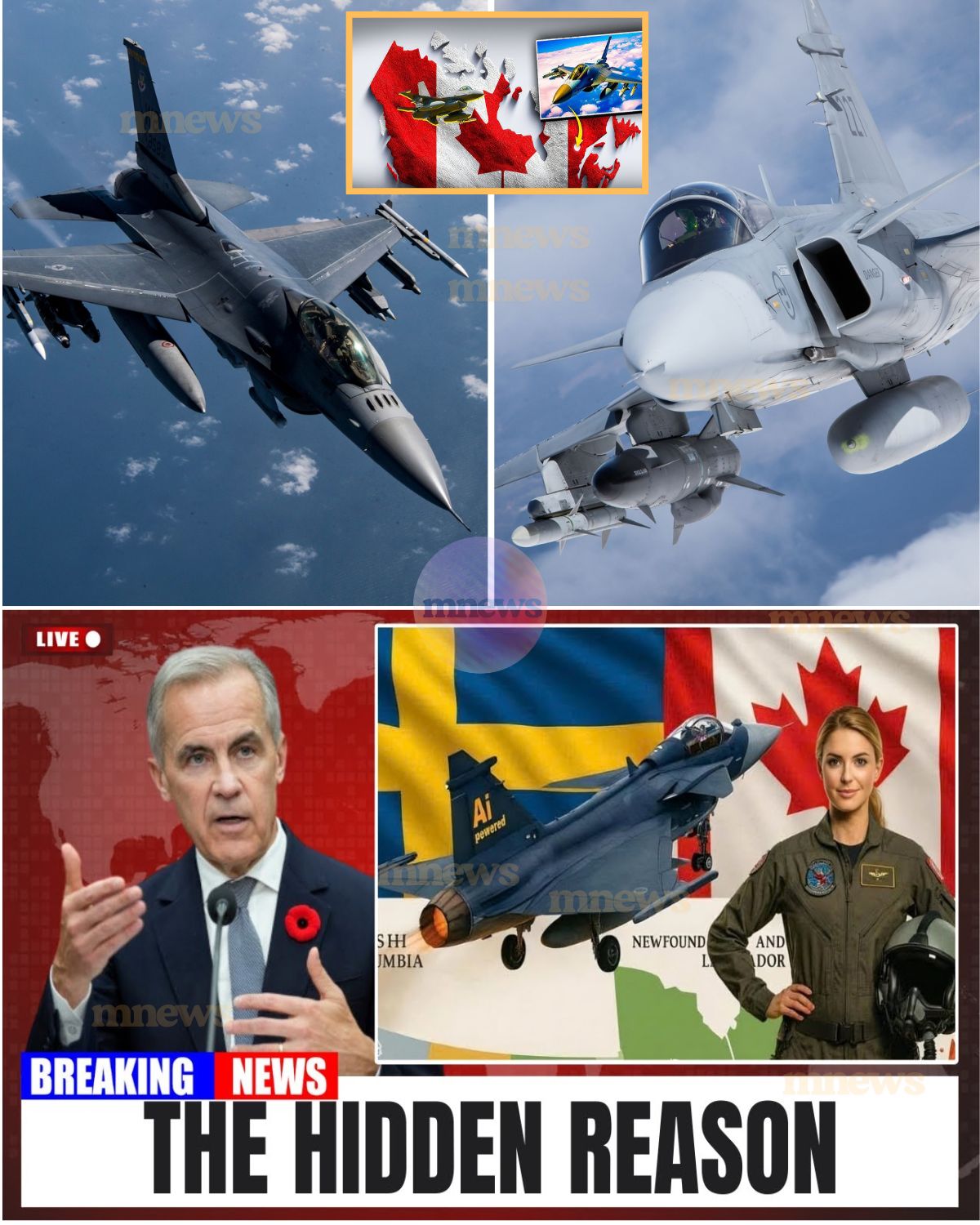
A seismic shift in global defense strategy has been quietly proposed across the Arctic ice, with Sweden’s offer of 88 Gripen E fighter jets to Canada representing far more than a simple arms sale. This unprecedented deal, emerging as Ottawa grapples with its troubled F-35 procurement, is a calculated strategic move that experts believe could redraw the lines of Arctic sovereignty and technological independence for decades to come. The number of aircraft is not arbitrary; it is the precise quantity required for Canada to assert continuous, autonomous control over its vast northern territories.
 The proposal arrives at a moment of acute vulnerability for Canadian defense. The Royal Canadian Air Force’s CF-18 fleet is aged beyond its operational prime, with some airframes exceeding four decades of service. Concurrently, the Arctic environment itself is transforming from a frozen frontier into a contested geopolitical arena. Rapid ice melt is unlocking new shipping lanes and vast resource reserves, while Russia accelerates a military buildup unseen since the Cold War, constructing new bases and deploying strategic assets with increasing frequency.
Sweden’s Gripen E, engineered by Saab for Scandinavia’s harsh climate, presents a stark contrast to the complex, infrastructure-heavy F-35. It is a platform born of Arctic necessity, capable of operating from short, icy runways, starting in minus-40-degree temperatures, and achieving a combat turnaround in mere minutes without costly heated hangars. This inherent cold-weather resilience addresses a critical operational gap for Canada, where vast distances and extreme conditions define the northern mission.

Yet the true revolution lies not in the airframe’s specifications, but in the sweeping terms of the offer. Stockholm is proposing a complete technology transfer, allowing Canada to locally assemble the jets and establish domestic manufacturing for engines, electronics, and critical parts. This would grant Ottawa full control over the fleet’s software, maintenance, and upgrades—a level of sovereignty unattainable under the F-35’s restrictive, U.S.-controlled logistics and software architecture. For a nation balancing its NORAD commitments with a desire for strategic autonomy, this is a pivotal opportunity.
The figure of 88 aircraft is a direct import of Swedish operational doctrine. Military analysts confirm it is the minimum needed to maintain 24/7/365 Arctic air surveillance and patrols. This force structure, proven over decades defending Baltic airspace, would allow Canada to permanently station combat-ready jets in the north, ensuring immediate response capability without reliance on southern basing or external approval. It is a blueprint for genuine air sovereignty.

International observers note Sweden’s deeper strategic calculus: a strong, independently capable Canada is a more reliable partner for Northern European security. A Canada dependent on another nation for every component and software patch is a weaker link in the collective defense of the Arctic flank. The offer reportedly includes co-developing a “Gripen North” variant, making Canada a design partner in creating next-generation Arctic-specific sensors and systems.
The proposal has undoubtedly triggered high-stakes diplomatic maneuvering. Washington has intensified lobbying efforts in Ottawa, emphasizing the sanctity of NORAD interoperability and the deep integration of U.S. and Canadian defense systems. The implicit pressure underscores the high stakes; this deal challenges the traditional North American defense industrial paradigm.

Financial and operational data further fuels the debate. The Gripen E’s estimated operating cost of approximately $8,000 per flight hour starkly undercuts the F-35’s reported $35,000-$47,000, promising savings of billions over a fleet’s lifespan. More critically, the Gripen’s demonstrated readiness rates of 80-90% could provide Canada with more available aircraft at any given time than the F-35’s historically lower availability in early deployment phases.
Ultimately, this is a decision about future-facing sovereignty. As trillions of dollars in shipping and resources become accessible in the thawing north, the ability to independently monitor and defend its territory is existential for Canada. Sweden’s offer of 88 Gripens is not merely a sale of equipment; it is an offer of partnership, industrial capability, and unencumbered control. The coming decision in Ottawa will signal whether Canada chooses a path of managed dependency or invests in becoming a truly autonomous Arctic power. The world, and particularly the capitals watching the top of the globe, is waiting to see.