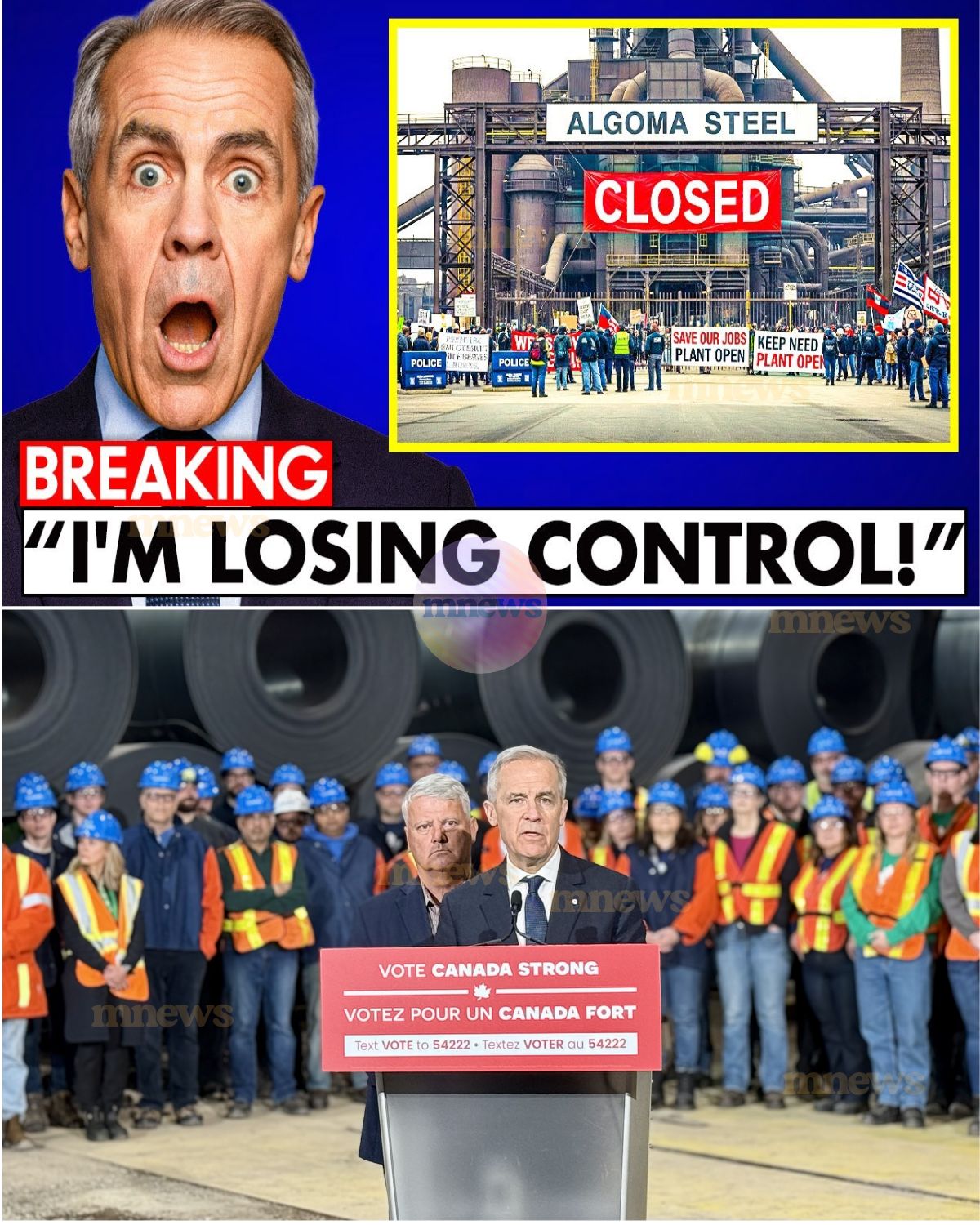
A devastating economic shockwave has hit Sault Ste. Marie, Ontario, as Algoma Steel, the city’s cornerstone employer, has terminated 1,000 workers—nearly one-third of its workforce. The massive layoffs, announced Monday, have ignited a political firestorm in Ottawa, with Conservative Leader Pierre Poilievre accusing the Liberal government of a catastrophic “bait and switch” on the workers it vowed to protect.
 The cuts come just months after the federal and Ontario governments provided Algoma with a combined $500 million in loans, publicly framed as a measure to safeguard jobs against punishing U.S. steel tariffs. Prime Minister Justin Trudeau had personally promised workers a negotiated solution by July 21st, a pledge that now rings hollow for those receiving pink slips. Company executives stated the “extraordinary” market conditions and tariffs necessitated an accelerated transition to newer electric arc furnace technology, shuttering traditional blast furnace operations earlier than planned.
In a heated Question Period, Poilievre excoriated the government, declaring the Prime Minister had looked workers in the eye and guaranteed their futures only to leave them with “empty promises.” He further lambasted the Liberal plan to proceed with an increased industrial carbon tax on the struggling mill, arguing it would make operations more expensive amidst a crisis. “A thousand people just lost their jobs and the government’s response is to make it even more expensive for the company to operate,” Poilievre stated.
 The government’s response, delivered by Environment Minister Steven Guilbeault and House Leader Steven MacKinnon, focused on expressing confidence in the company’s pivot and offering support for developing new products and markets. This was met with scorn from the Opposition, who labeled it “pathetic” and “insulting” to workers who are already unemployed. Industry Minister François-Philippe Champagne defended the loans, asserting they were critical to the company’s survival and that without them, job losses could have been even more severe.
The human impact is profound and immediate across Sault Ste. Marie, where Algoma Steel is the number one employer. Community leaders warn the layoffs will impact every aspect of the city, from local businesses to pension plans. Workers expressed shock and anxiety, with some nearing retirement now facing reduced pensions and others just starting their careers left with few local alternatives.

The Algoma crisis has rapidly expanded into a broader debate on Liberal economic and climate policies. Poilievre linked the layoffs to the government’s carbon pricing, citing a recent parliamentary committee exchange where a farmer directly challenged Minister Guilbeault on the tax’s impact on food production costs. The Conservative leader argued the “Liberal food cost crisis” is being exacerbated by taxes on farm equipment, fertilizer, and processing.

Further connecting the issues, Poilievre highlighted a new report showing a 34% drop in housing starts across Ontario municipalities, blaming the industrial carbon tax on construction materials like steel and aluminum. He contrasted this with reports of lavish spending by the Housing Minister’s department, accusing the government of hypocrisy on affordability.
The debate then turned to immigration, with Poilievre citing statistics showing over 3 million entries through temporary and study programs, arguing this influx massively outpaces housing construction and overwhelms healthcare systems. He pointed to data showing tens of thousands of Canadians dying on healthcare waitlists as evidence of a system in collapse.
As Sault Ste. Marie grapples with the immediate devastation, the political fallout in Ottawa shows no signs of abating. The Algoma layoffs have become a potent symbol for the Opposition of broader government failure, intertwining issues of industrial policy, carbon pricing, affordability, and immigration into a single, explosive narrative. The government maintains its financial support was necessary, but for a thousand newly unemployed workers, the promise of future viability offers little comfort today.