For decades, an invisible war has been unfolding beneath the U.S.–Mexico border — a silent, subterranean conflict where drug cartels dug deeper, smarter, and more dangerously than anyone imagined. Now, for the first time, authorities say the ground itself is starting to give up their secrets.

What was once an untouchable advantage for cartels — vast underground tunnel networks — is finally being exposed by a new generation of technology that can see, hear, and analyze what happens beneath the earth.
And the discoveries are more disturbing than anyone expected.
A Tunnel That Changed Everything

In early 2020, U.S. agents uncovered a tunnel stretching more than 4,300 feet from Tijuana into San Diego. This was no crude hole in the ground.
It was an underground highway.
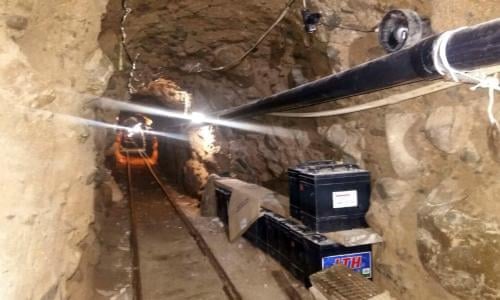
The tunnel featured rail tracks, electrical lighting, reinforced walls, and a sophisticated ventilation system designed for long-term use. It ran directly beneath one of the most heavily monitored borders on Earth — unnoticed for months, possibly years.
That discovery confirmed a terrifying reality:
The border above ground was no longer the real border.
From Crude Holes to Underground Engineering
In the 1990s, early smuggling tunnels were primitive — short, unstable, and mostly used to move small quantities of marijuana. But as border enforcement intensified, cartels responded with innovation.
By the 2000s and 2010s, tunnels evolved into complex engineering projects:
-
reinforced concrete walls
-
precise depth calculations to avoid detection
-
rail carts capable of hauling tons of narcotics
-
hidden entrances inside homes, warehouses, and factories
By the mid-2010s, more than 230 tunnels had been discovered — many linked to powerful organizations such as the Sinaloa cartel.
Each tunnel represented millions of dollars in potential profit — and a massive security failure.
Why the Tunnels Worked So Well
The underground routes offered cartels something invaluable: invisibility.
No checkpoints.
No cameras.
No patrols.
Drugs could move freely beneath cities while life above continued unaware. In some cases, tunnels ended just a few feet from distribution hubs on the U.S. side, allowing smugglers to vanish into normal neighborhoods within minutes.
For years, authorities relied on luck, tips, or accidental discoveries to find them.
That era is now ending.
The Technology That Changed the Game
A new wave of detection technology has begun turning the ground into a surveillance zone.
Authorities are now deploying:
-
ground-penetrating radar capable of mapping voids underground
-
advanced acoustic sensors that detect drilling and movement
-
distributed acoustic sensing using fiber-optic cables that “listen” to vibrations across miles
Artificial intelligence systems analyze this data in real time, learning the difference between natural ground noise and human activity.
Instead of reacting after a tunnel is complete, agents can now intercept construction in progress.
For the first time, cartels are losing their greatest advantage: secrecy.

Proof the System Works
In 2025, U.S. agents intercepted a nearly finished tunnel in Otai Mesa — before it was ever used. Investigators say the discovery was made possible entirely by the new sensor network.
The U.S. government has invested roughly $100 million into expanding these systems, signaling that tunnel warfare has become a top national security priority.
Officials describe it as “shifting the battlefield underground — and finally seeing it clearly.”
Cartels Are Adapting Again
But the war is far from over.
Cartels are already changing tactics:
-
shorter, rapidly built “pop-up” tunnels
-
connections to storm drains and sewage systems
-
increased reliance on legal ports of entry
-
expanded use of maritime and coastal routes
The smuggling network is fragmenting, diversifying, and evolving — just as it always has.
An Underground War With No End in Sight
The discovery of these tunnels is more than a law enforcement success story. It exposes the scale, sophistication, and persistence of global drug trafficking organizations — and how far they are willing to go to stay ahead.
What was once a hidden world beneath the border is now being dragged into the light, meter by meter.
But as long as demand exists, and profit remains astronomical, the underground war will continue — not just below the border, but across technology, intelligence, and human ingenuity itself.
The question is no longer whether the tunnels exist.
It’s how many are still waiting to be found — and how deep the next ones will go.