A new investigation reveals that some of the world’s most prestigious museums are not just repositories of history, but also vaults for artifacts deemed too perilous for public view. These are not merely fragile relics; they are objects tied to death, disaster, and dark legend, kept under lock and key to protect the public from their alleged curses and very real physical dangers.

The terror of the 2001 anthrax attacks is crystallized in a handful of simple envelopes. Following a decontamination process, the FBI permitted the Smithsonian’s National Postal Museum to take possession of several of the lethal letters. For years, they were considered too hazardous for any display, locked away to ensure no one came into contact with the remnants of the weaponized spores that killed five people.
From the sands of ancient Egypt come instruments of ominous prophecy. Two trumpets from King Tutankhamun’s tomb, one bronze and one silver, are shrouded in a legend that playing them heralds war. Historical coincidences are chilling: a BBC broadcast of the silver trumpet in 1939 preceded World War II, and subsequent playings in 1967 and 1990 coincided with the Six-Day War and the Gulf War. They now reside, unplayed, in the Egyptian Museum in Cairo.
In a Sydney university, a unique collection serves as a stark medical warning. The Museum of Human Disease displays preserved human organs from individuals who succumbed to various illnesses. This confronting exhibit shows the visceral reality of diseases like cancer and emphysema, offering an unflinching educational tool that is decidedly not for the faint of heart.
The artistic and scientific marvels of Florence’s La Specola museum face a dual threat. Its exquisite 18th-century anatomical wax models, crafted from fragile beeswax mixed with potentially toxic substances like mercury, require meticulously controlled environments. A simple power outage in summer could melt these irreplaceable works, while their very materials pose a latent chemical hazard to conservators.
While the Hope Diamond’s infamous curse is well-known, its current home at the Smithsonian reports a reversal of fortune. Since jeweler Harry Winston mailed the gem to the institution in 1958—a mailing followed by tragedy for the deliveryman—the museum claims the diamond has brought nothing but “good luck,” helping to build its world-class gem collection without further incident.
A seemingly innocuous wooden chair in England’s Thurk Museum is mounted high on a wall, deliberately out of reach. This is the Bisby Stoop Chair, tied to a 1702 murder and a death curse allegedly uttered by the condemned man, Thomas Bisby. Stories persist that those who later sat in it met untimely ends, leading the museum to ensure no one can ever sit in it again.
One of the most literally poisonous books in existence resides at Michigan State University. “Shadows from the Walls of Death,” published in 1874, is a book of wallpaper samples saturated with arsenic-based pigments like Paris Green. Of an estimated 100 copies, only five survive, handled exclusively by trained staff in protective gear due to the persistent lethal risk of the flaking, toxic pages.
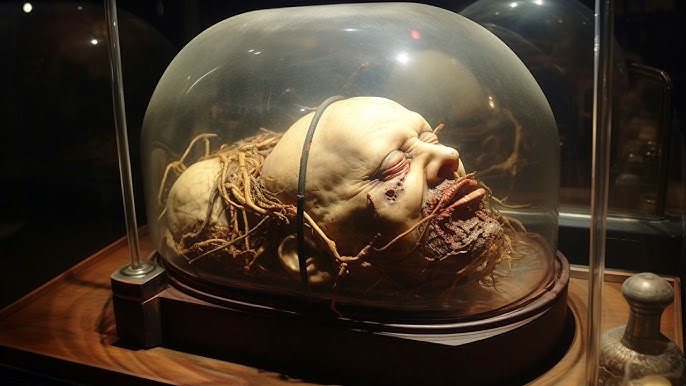
The “Woman from Lem” statue is an archaeological anomaly surrounded by macabre lore. This Cypriot limestone figurine, dating to around 3500 BCE, is allegedly linked to the deaths of multiple families of its owners. While historical records of these owners are absent, the statue is rumored to be held by the Royal Scottish Museum, kept from public display due to its sinister reputation.
London’s Natural History Museum holds the Delhi Purple Sapphire, a stone its last private owner desperately tried to destroy. Edward Heron-Allen, plagued by the misfortune of all who possessed it, finally sealed the gem in a bank vault with a written plea to “throw it into the sea.” The museum now stores the sapphire, along with its dire warning.
Similarly, the Black Orlov diamond, said to be cursed after being stolen from a Hindu statue, has left a trail of tragedy. Its history includes owners who died by suicide, including a New York diamond dealer and two Russian princesses. Despite its alleged curse, it has been displayed in major museums before being sold to a private owner in 2004.
These collections reveal a hidden dimension of museum stewardship: the ethical and practical management of objects that carry not just historical weight, but tangible peril. Their stories blur the line between superstition and documented hazard, compelling institutions to act as guardians protecting the present from the dangerous legacies of the past.