Beneath the quiet hills of Pennsylvania, archaeologists have uncovered evidence of a forgotten human civilization so ancient that it threatens to upend the entire story of North America’s origins. Buried deep below layers of soil and time, this discovery suggests humans were living on the continent thousands of years earlier than history ever allowed.

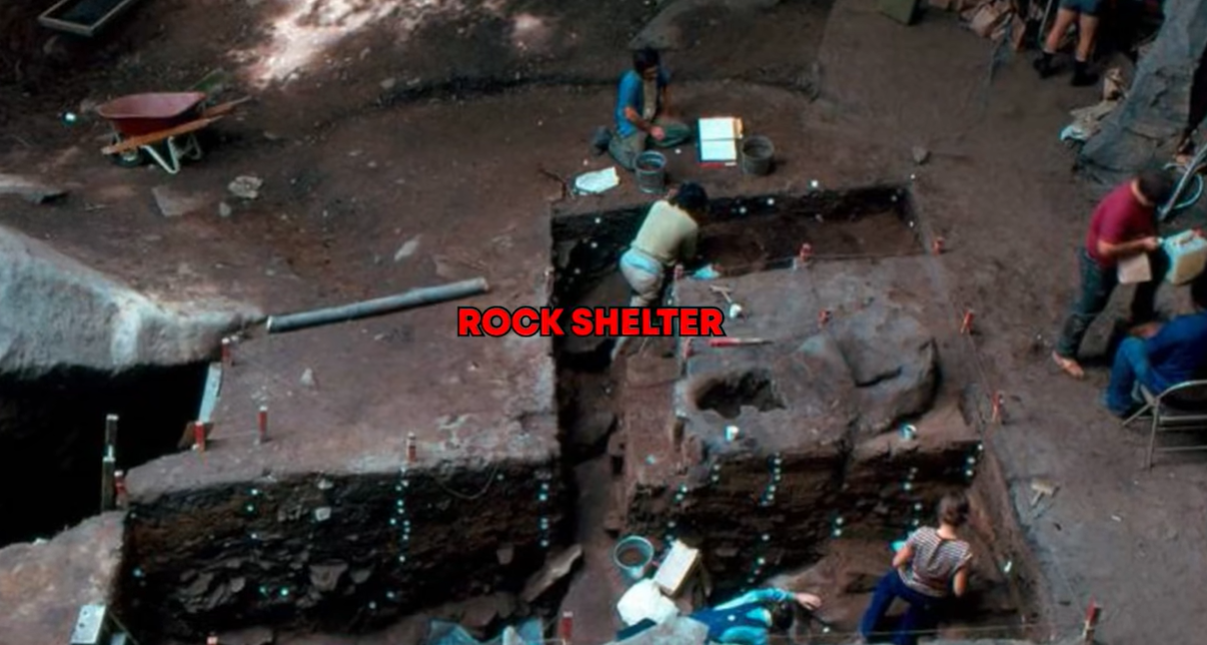
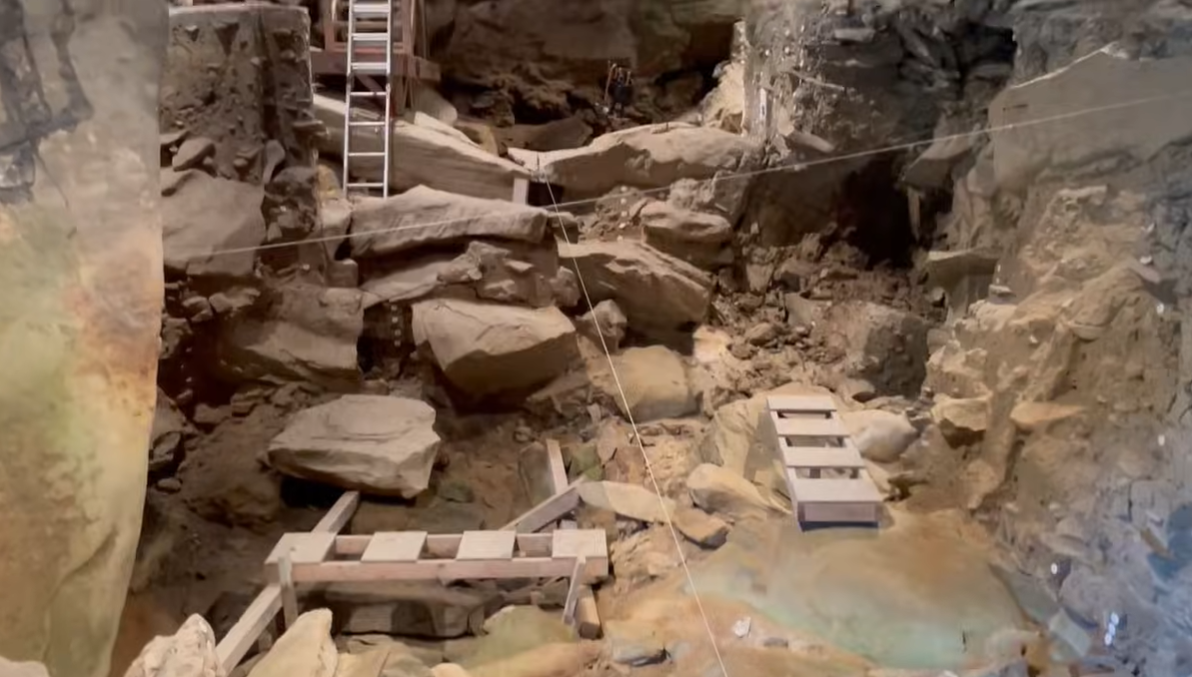
The site at the center of this revelation is the Meadowcroft Rock Shelter, a place long known to researchers—but never fully understood. What lay hidden beneath it has now forced scientists to confront a startling possibility: North America’s human story began far earlier than we were taught.
A Shelter That Shouldn’t Exist—At Least Not That Early
Meadowcroft Rock Shelter sits unassumingly in western Pennsylvania, yet the evidence recovered from its deepest layers paints a radically different picture of the past. Excavations reveal unmistakable signs of human occupation dating back 16,000 to 19,000 years ago, a time when massive ice sheets still dominated much of the continent.
This alone was enough to send shockwaves through archaeology.
According to long-standing models, humans were not supposed to be here yet.
Tools That Rewrite the Timeline
The excavation, led by archaeologist James Adavasio, uncovered a sophisticated collection of stone tools now known as the Miller Complex. These artifacts were not crude or experimental. They showed planning, precision, and technological intent—finely shaped spear points, prismatic blades, and tools designed for repeated use.
These were not the tools of desperate survivors.
They were the tools of a culture that knew what it was doing.
The End of “Clovis First”?
For decades, the dominant theory—known as Clovis First—claimed that the earliest humans arrived in North America around 13,000 years ago, spreading rapidly across the continent.
Meadowcroft destroys that timeline.
Radiocarbon dating from the deepest layers returned dates thousands of years older than Clovis. If correct, it means another population lived here first—one we barely understand and never accounted for.
A civilization before the civilization.
Doubts, Controversy, and a Reluctant Acceptance
At first, critics dismissed the findings. Some argued that ancient coal seams beneath the site could have contaminated samples, making them appear older than they were. Others claimed groundwater interference skewed the data.
But Adavasio anticipated these objections.
The excavation followed exceptionally strict protocols, and multiple dating methods were applied. Over time, as similar pre-Clovis sites began appearing across the Americas, skepticism softened.
Meadowcroft was no longer an anomaly.
It was a warning.
A Lost People With No Name
Who were these people?
That question remains unanswered.
They were not Clovis. They arrived earlier. They brought different tools. And at some point, they vanished—or were absorbed into later populations.
No written record remains. No clear descendants can be traced.
They lived.
They adapted.
And then they disappeared into history.
History Is Being Forced to Catch Up
The implications of Meadowcroft extend far beyond Pennsylvania. If humans were here this early, then migration routes, survival strategies, and cultural development must all be reconsidered.
How did they arrive?
What technology did they possess?
Why did their culture fade while others endured?
Each answer threatens to dismantle what we thought we knew.
A Civilization Beneath Our Feet
The Meadowcroft Rock Shelter stands as a reminder that entire chapters of human history can lie hidden beneath familiar ground, waiting centuries to be uncovered.
What was once considered impossible is now undeniable:
North America’s past is deeper, older, and more complex than the textbooks ever admitted.
And if one lost civilization was found beneath Pennsylvania…
how many more are still buried, unseen, beneath our feet?
History is not finished revealing itself.