A new federal indictment has cast a stark, legal spotlight on the long-running and deadly feud between Chicago’s OBlock and factions along 63rd Street, revealing how the violence that claimed the life of rapper FBG Duck continues to reverberate through the city’s South Side. The indictment, unsealed in a Northern District of Illinois court, directly ties recent acts of violence to the historic conflict, underscoring a cycle of retaliation that has persisted for over a decade and now ensnares a new generation.
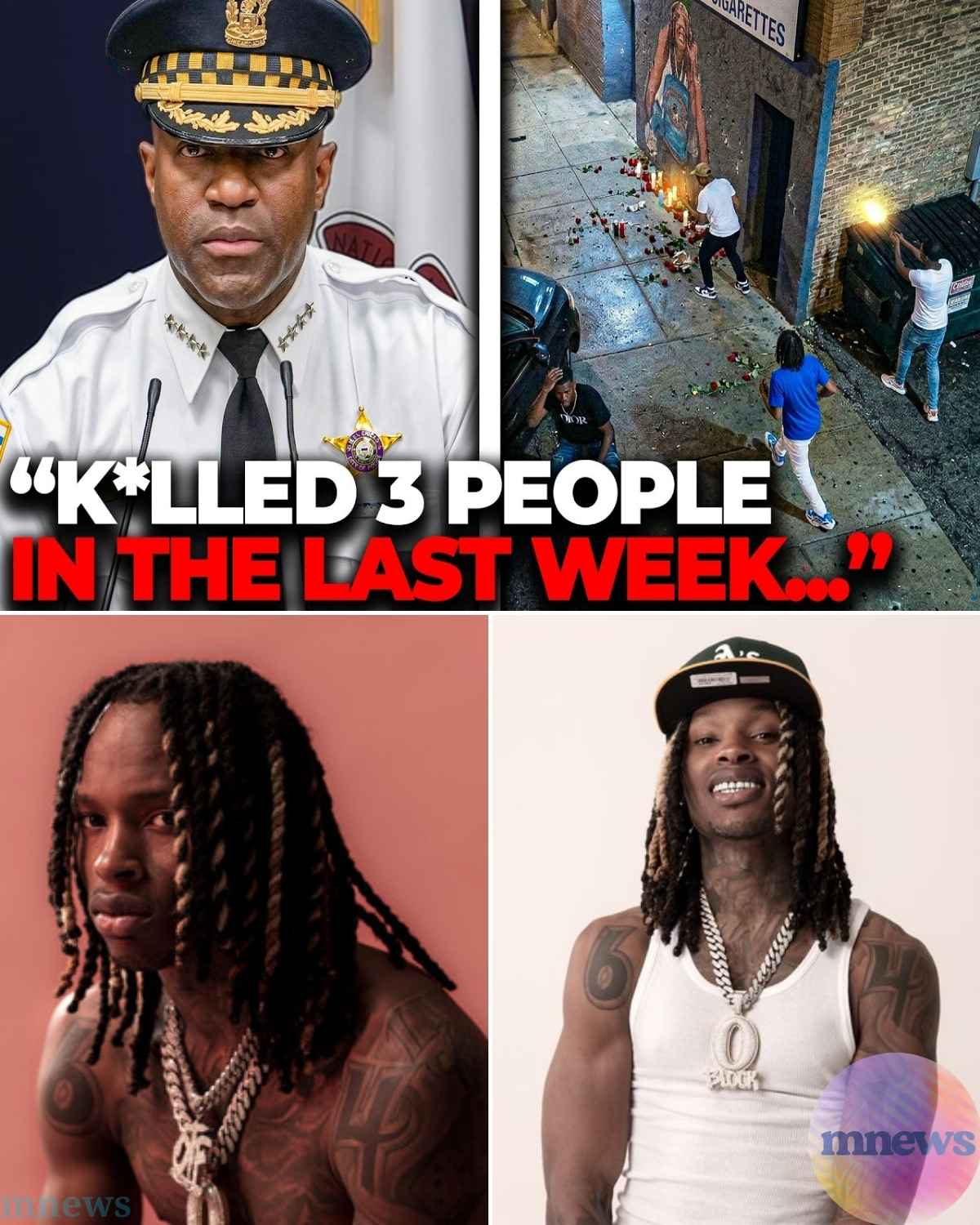
The court documents detail a series of alleged actions by affiliates of the OBlock faction, formally tied to the Black Disciples street gang, targeting rivals from the 63rd Street area, affiliated with the Gangster Disciples. Prosecutors allege these actions were conducted in furtherance of an ongoing criminal enterprise, invoking federal racketeering statutes. This legal strategy mirrors the approach used to secure convictions in the 2020 murder of rapper FBG Duck, born Carlton Weekly.
Central to the new filing is the alleged retaliation for the killing of OBlock’s iconic figure, rapper King Von, in November 2020. While Von’s death occurred in Atlanta under unrelated circumstances, the indictment alleges that OBlock members vowed retribution against their historic 63rd Street rivals, whom they blamed for perpetuating the feud that defined Von’s life and music. This set the stage for continued violence.
The indictment meticulously chronicles the feud’s origins, tracing open hostilities back to the 2011 murder of 15-year-old Shondale “Tooka” Gregory, a loss that profoundly impacted the 63rd Street community. This event, following the earlier killing of OBlock’s namesake, Odee Perry, cemented a cycle of vengeance. The conflict uniquely played out in real-time through the rise of drill music, with artists from both sides, including Chief Keef, King Von, and FBG Duck, using their platforms to amplify the hostility.

A key incident outlined involves the March 2026 killing of a 29-year-old man known as “Lil Mikey,” a documented figure from the Gervo City faction on 63rd Street. He was shot while sitting in a vehicle at a gas station near 63rd and Drexel. While no one has been publicly charged in his murder, the indictment cites social media activity following his death, alleging that OBlock affiliates posted cryptic messages interpreted on the streets as claims of responsibility, a pattern familiar to investigators.
Federal prosecutors assert this act was part of a continuum, alleging that OBlock members have been “still sliding on 63rd for King Von,” a reference to the practice of driving into rival territory to seek retaliation. The language draws directly from the lexicon of the drill music scene, where such phrases are common. The indictment positions these acts not as isolated crimes but as interconnected operations of a sustained criminal enterprise.
The document further highlights the role of social media as both a catalyst and a record. It notes how taunts, diss tracks, and symbolic posts have served to escalate tensions and publicly claim victories, creating a digital footprint that federal investigators now use to establish motive and intent. This modern dimension has transformed a local turf war into a nationally documented narrative.
With this indictment, federal authorities are applying intense pressure on the networks perpetuating this specific feud. The use of RICO charges allows prosecutors to connect individuals to the broader enterprise, potentially holding them accountable for actions they ordered or supported, even if they did not personally pull a trigger. This approach aims to dismantle the organizational structure fueling the violence.
Community advocates point to the indictment as a grim testament to a failure of intervention. They note that while federal prosecutions may incarcerate individuals, they do not address the root causes of the conflict—generational trauma, lack of resources, and the glorification of street warfare through music and social media. The cycle, they argue, continues to recruit new participants.
The families of victims, from Tooka and Odee Perry to FBG Duck, King Von, and now Lil Mikey, represent the human cost of a 15-year war. Each loss renews the vow for retaliation, a fact the indictment lays bare. The legal system now seeks to interrupt this equation with the severe penalties of federal racketeering law.
As the case moves forward, it promises to re-examine the complex intersection of street conflict, hip-hop culture, and justice. The indictment serves as a official, chilling record of a feud that has shaped a genre, ended promising lives, and defied all efforts to stop it. The question looming over the proceedings is whether federal prison sentences can finally do what time, tragedy, and even music have not: bring a definitive end to the violence between OBlock and 63rd.