A Manchester Museum artifact has begun a silent, solitary revolution, turning 180 degrees inside its sealed case with no human intervention, reigniting debates on ancient energies and modern science. This eerie movement, captured on time-lapse footage in 2013, is just one of several recent discoveries from Egyptian tombs that have fundamentally challenged expert understanding of pharaonic burial practices and technology. The statue, a 1,800 B.C.E. shabti meant to serve the deceased in the afterlife, defied logic by rotating on its uneven base, a phenomenon physicists attribute to subtle vibrations from foot traffic, yet the single, permanent shift remains partially unexplained.
Far older and more celestial is the blade buried with the boy king Tutankhamun. Scientific analysis published in 2016 revealed the dagger’s composition—10% nickel and cobalt—matches that of iron meteorites, not terrestrial ore. Crafted around 1300 B.C.E., centuries before iron smelting emerged in Egypt, the weapon confirms ancient texts describing iron as “metal from the sky.” Its flawless polish and intricate gold handle signify it was a treasure of otherworldly origin, a royal weapon forged from the heart of a fallen star.
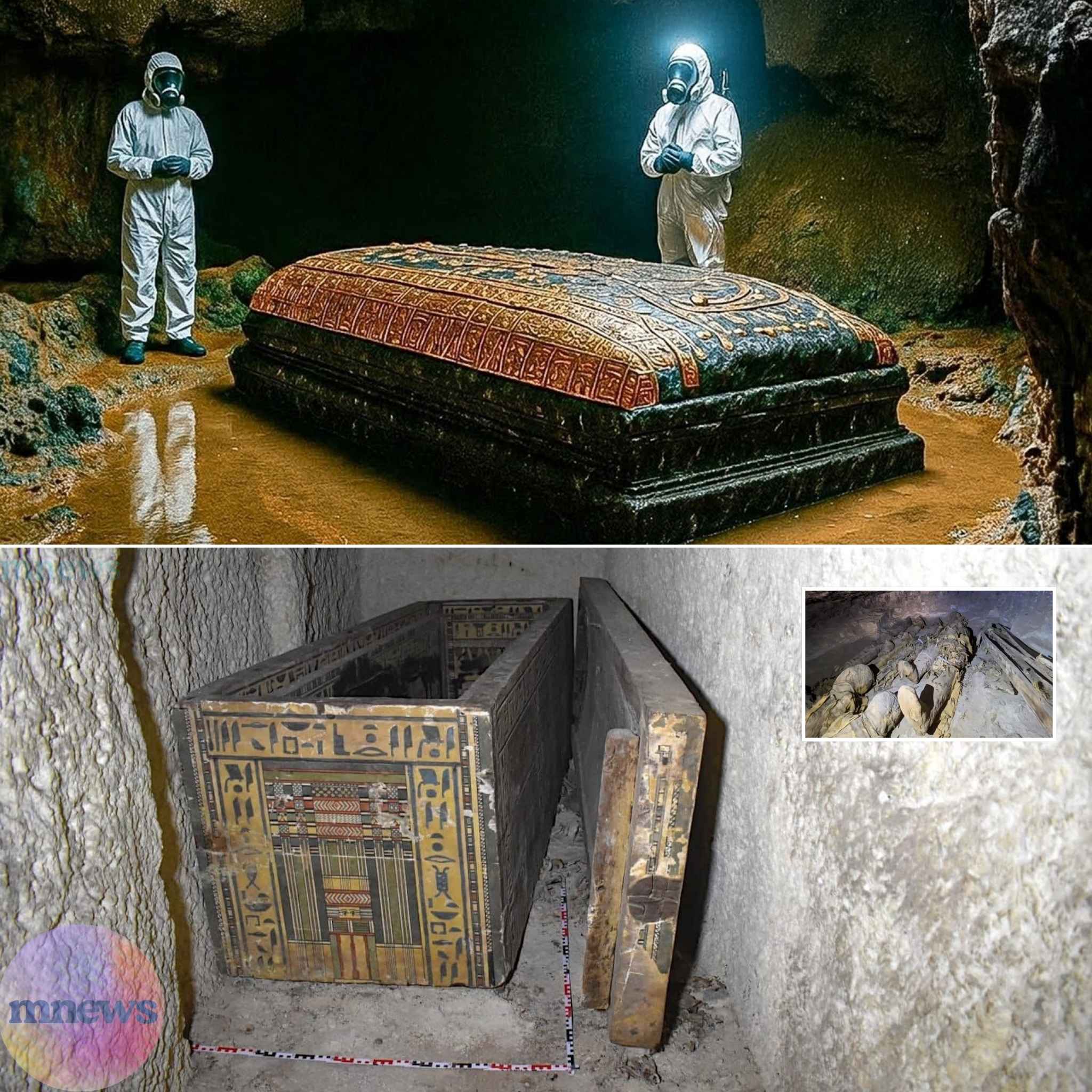
The Valley of the Kings yielded another profound mystery in 2005: a fully sealed, untouched tomb adjacent to major royal burials. Inside, archaeologists discovered seven empty wooden coffins and over twenty large jars, all containing mummification materials like linen, used bandages, and embalming waste. This was not a burial chamber but a storage room for the sacred process of preservation. The presence of complete, sealed coffins suggests they were either built as spares or repurposed and abandoned, offering a rare glimpse into the practical logistics of death rituals.
A sense of dread accompanied the 2018 unsealing of a massive, unmarked black granite sarcophagus in Alexandria. Weighing 30 tons and buried five meters deep, the Ptolemaic-era coffin held three skeletons submerged in a fetid, reddish-brown liquid of decomposed organics and seeped groundwater. One skull bore a hole likely from an arrow, indicating a violent death. With no inscriptions or grave goods, the identities of these individuals and the reason for their shared, anonymous interment in such a monumental vessel remain a chilling enigma.
Perhaps the most viscerally disturbing find is the “Screaming Mummy,” also known as Unknown Man E. His contorted face, frozen in a silent scream, and his burial wrapped in ritually impure sheepskin, starkly contrasted with the serene dignity of other royals. Modern CT scans and DNA testing identified him as Pentawere, a son of Pharaoh Ramesses III, implicated in a plot to assassinate his father. His horrific mummification appears to be a deliberate, punitive act, denying him peace in the afterlife as part of his sentence for treason.
In stark contrast, the tomb of Seti I, discovered in 1817, represents the apex of Egyptian funerary art. Its walls are a comprehensive library of sacred texts like the Book of the Dead and the Book of Gates, serving as a detailed roadmap for the pharaoh’s journey through the underworld. The ceiling is a mapped night sky, and the depth and preservation of the carvings are unparalleled, making it one of the most significant archaeological sites open to the public today.
Historical context for tomb violations comes not from artifacts but from administrative papyri. The Abbott Papyrus, circa 1100 B.C.E., is an official report on tomb robberies, while the Leopold II Papyrus contains shocking confessions. One thief describes breaking into a royal burial chamber, stripping gold from the coffin and the mummy itself, and tearing apart the sacred wrappings before dividing the loot. These documents provide a gritty, bureaucratic record of ancient crime and punishment.
A tender narrative of brotherly love was rewritten by science in 2018. Two coffins from around 1,800 B.C.E., long believed to hold the brothers Khnum-Nakht and Nakht-Ankh, were subjected to DNA analysis. The results revealed they were, in fact, half-brothers, sharing a mother but having different fathers. This discovery adds complex familial dimensions to their shared burial, which still displayed equal care and preparation for both men.
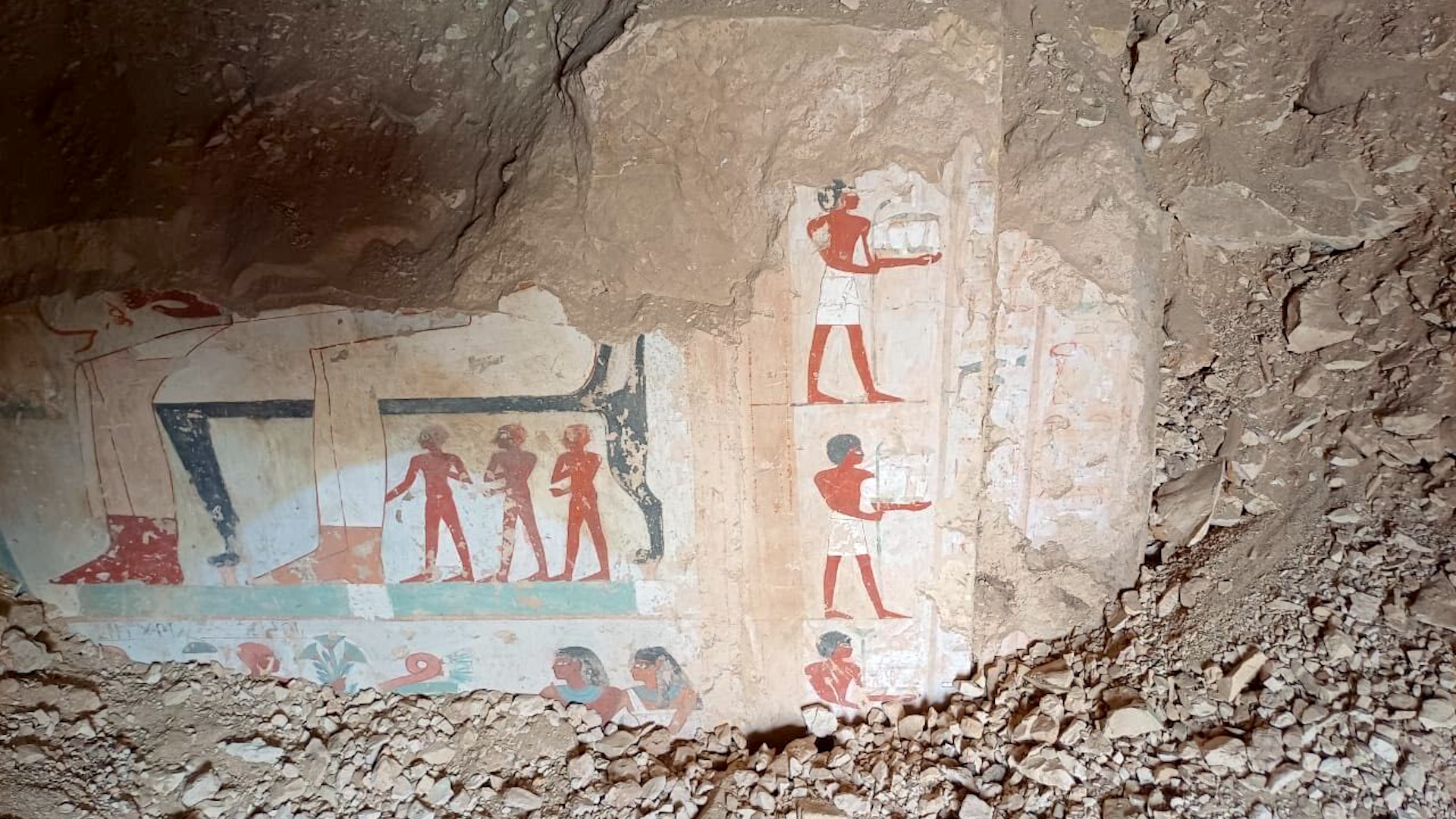
The lost tomb of Thutmose II, a pharaoh of the early 18th Dynasty, has been tentatively identified in the Valley of the Kings. Researchers pieced together fragments of stone bearing his name and remnants of burial equipment from a flood-damaged tomb. While the chamber was largely empty due to ancient looting and water damage, its layout and the scattered evidence finally provided an answer to a long-standing royal mystery.
Finally, the sacred industry of animal mummification has been exposed as not always what it seemed. CT scans on millions of votive mummies—of cats, birds, and crocodiles—revealed a startling truth. Many bundles contain only partial skeletons, random animal parts, or no animal remains at all, just linen shaped like a creature. A 2015 study concluded these were often mass-produced, highlighting a commercial aspect to this deeply religious practice where demand sometimes outstripped meticulous supply.
Together, these discoveries paint a picture of ancient Egypt that is far more dynamic, complex, and mysterious than previously imagined. From celestial weapons and cursed princes to bureaucratic theft reports and ritual mass production, each finding peels back a layer, revealing a civilization continually surprising us from beyond the veil of time. The sands of Egypt continue to shift, promising that the next revelation may be just one excavation away.