A state-sanctioned firing squad has ended the life of one of South Carolina’s most notorious serial killers. Stephen Corey Bryant, 44, was executed at the Broad River Correctional Institution on Friday evening, November 14, 2025, concluding a legal saga that stretched over two decades following a brutal eight-day rampage that terrorized Sumter County.
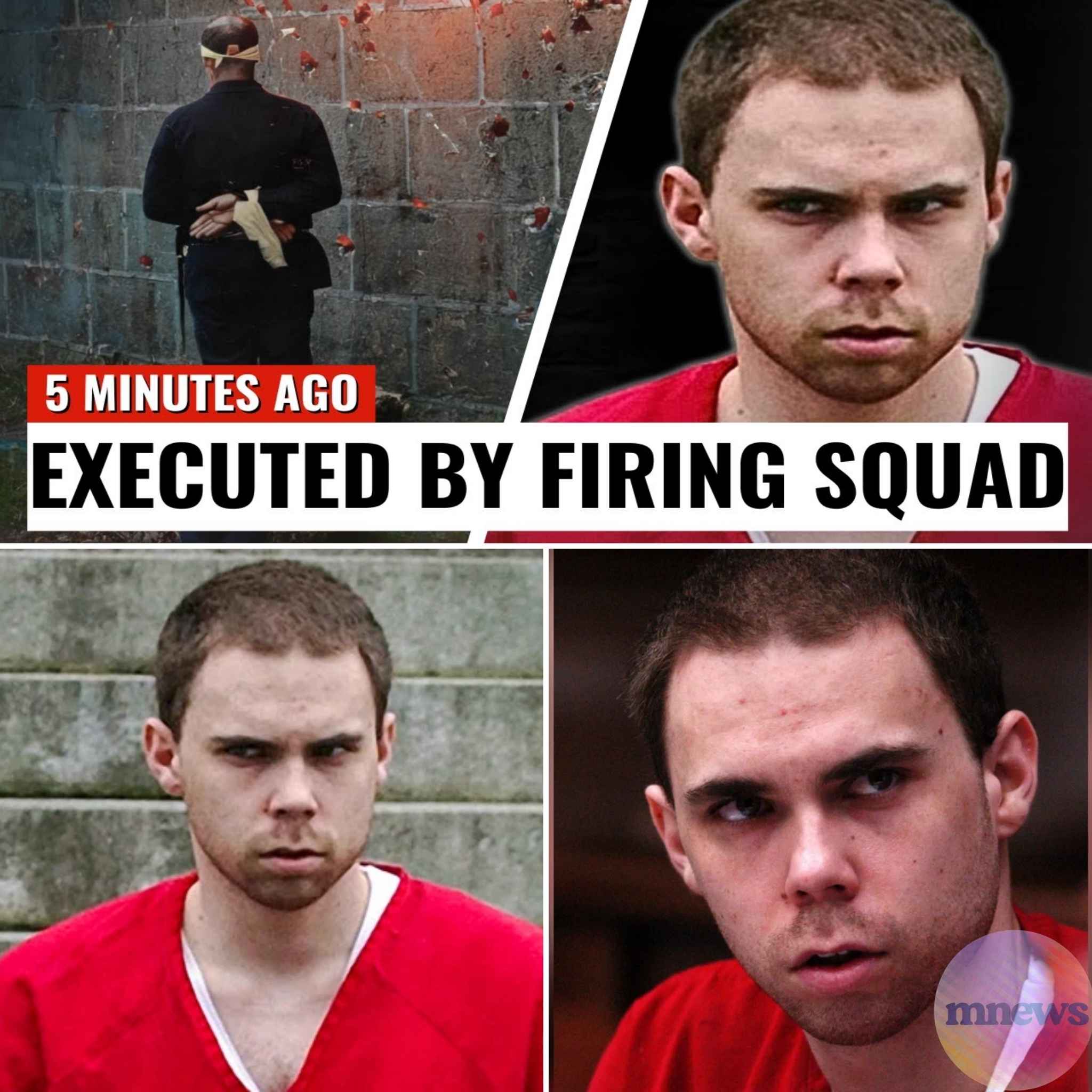
The execution proceeded shortly after 6 p.m., following the U.S. Supreme Court’s rejection of his final appeal last month. Bryant, who had spent more than 17 years on death row, chose the firing squad method over lethal injection, becoming only the third inmate in the state to do so since executions resumed in 2024.
Authorities confirmed Bryant showed no visible emotion as he was secured to the execution chair. A hood was placed over his head and a target positioned over his heart. Three shooters, volunteers from the Department of Corrections, fired simultaneously at 6:10 p.m.
The coroner pronounced Bryant dead at 6:20 p.m. Officials stated he did not offer any final words. His last meal, requested and served earlier in the day, consisted of a double cheeseburger, French fries, a chocolate milkshake, and a slice of pecan pie.
Bryant’s path to the execution chamber began in October 2004 when, at age 23, he embarked on a spree of violence that left three men dead and a fourth severely wounded. His crimes were marked by a chilling callousness that stunned even veteran investigators.
His first known attack was on Clinton Brown, 56, who was shot in the back while fishing on October 8, 2004. Brown survived his injuries and drove himself to a hospital. The following day, Bryant murdered his friend and co-worker, 36-year-old Clifton Gay, shooting him in the head on a rural road.
The brutality escalated on October 11, 2004, when Bryant killed 62-year-old Willard Teachin. After gaining entry to Teachin’s remote home by feigning car trouble, Bryant shot the man nine times. He then desecrated the body with lit cigarettes.
While ransacking the home, Bryant answered a call from Teachin’s daughter, Kimberly. He identified himself as “the prowler,” confessed to the murder, and ended the call with a mocking laugh. He used Teachin’s blood to write taunting messages on the walls.
The messages, which included “Victim four in two weeks” and repeated scrawls of “catch me if you can,” were discovered by police. Bryant left the scene after arranging candles around Teachin’s body in a macabre display.

His final murder occurred on October 13, 2004. Bryant shot 35-year-old Christopher Earl Burgess twice after offering him a ride from a convenience store. Burgess’s body was found in a ditch less than two hours later, leading to Bryant’s arrest that same day.
Evidence gathered from his girlfriend’s home included stolen firearms and property taken from the victims. Bryant was formally charged with three counts of murder, armed robbery, arson, and multiple burglary and weapons offenses.
His violent behavior continued behind bars. In 2005, while awaiting trial, he brutally assaulted a correctional officer, punching the man repeatedly after he was already subdued and on the ground.
After a lengthy legal process, a jury found Bryant guilty of capital murder on September 11, 2008. He received the death penalty specifically for the murder of Willard Teachin during a burglary, a capital offense under state law.
For the murders of Clifton Gay and Christopher Burgess, he received consecutive life sentences. Nearly 100 additional years were tacked on for his other convictions, ensuring he would never leave prison alive.
Over the next 16 years, Bryant’s legal team, largely comprised of court-appointed attorneys and death penalty opponents, filed numerous appeals. Each challenge was ultimately rejected by state and federal courts.
The final barrier fell on October 14, 2025, when the Supreme Court declined to hear his case. South Carolina Attorney General Kristen Clark swiftly moved to set an execution date, which was formally issued to Bryant on October 17.
State law mandated the execution be scheduled for the fourth Friday after the order was received, setting the date for November 14. On October 31, Bryant was notified of his right to choose his method of execution and selected the firing squad.

In his final days, Bryant received no visits from family. He was attended only by prison staff and a spiritual advisor. On the morning of his execution, he awoke at 4 a.m., showered, and met with his counselor.
He was administered sedatives before the procedure, a standard protocol for firing squad executions aimed at reducing anxiety. At 5:45 p.m., he was escorted to the execution chamber and secured to the chair.
Witnesses, including media representatives and law enforcement officials, observed from behind bulletproof glass as the warden read the death warrant. The three .308 caliber rounds fired by the squad struck Bryant’s torso in rapid succession.
Neurological death was determined to have occurred within seconds, though reflexive bodily movements were observed. The execution marks a grim closure for the victims’ families, who have waited over 21 years for finality.
“Today, justice was finally served for my father,” said Kimberly Teachin in a statement released through the state attorney general’s office. “While it does not bring him back, it ensures this monster can never harm another family.”
The execution is the fourth carried out in South Carolina since the state revised its execution protocol in 2023, citing an inability to procure lethal injection drugs. The firing squad method, last used in the state in 2024, remains a rare but legal option.
Debate over the method and the death penalty itself continues among state legislators and advocacy groups. Opponents argue it is a barbaric relic, while proponents maintain it is a just sentence for the most heinous crimes.
With Bryant’s death, South Carolina’s death row population now stands at 32 inmates. The state has two more executions scheduled for the first quarter of 2026, though legal appeals could delay those proceedings.
For the communities of rural Sumter County, the execution draws a final line under a chapter of profound fear. The random, sadistic nature of Bryant’s crimes left deep scars that many say will never fully heal.
“We lived in lockdown for those eight days,” recalled former Sumter County Sheriff’s Captain Roy Gibson, who worked the case. “He wasn’t just a killer; he was a terrorist in our own backyard. Tonight, that chapter is closed.”