TOKYO – In a historic strategic pivot, Japan has formally returned to the realm of aircraft carrier operations, deploying billion-dollar warships equipped with advanced stealth fighters into the contested waters of the Indo-Pacific, fundamentally altering the regional military balance.
For generations, the nation’s post-war pacifist constitution, specifically Article 9, has renounced war and the maintenance of offensive military forces. This principle shaped the Japan Maritime Self-Defense Force into a primarily defensive and humanitarian armada. That era has decisively ended.
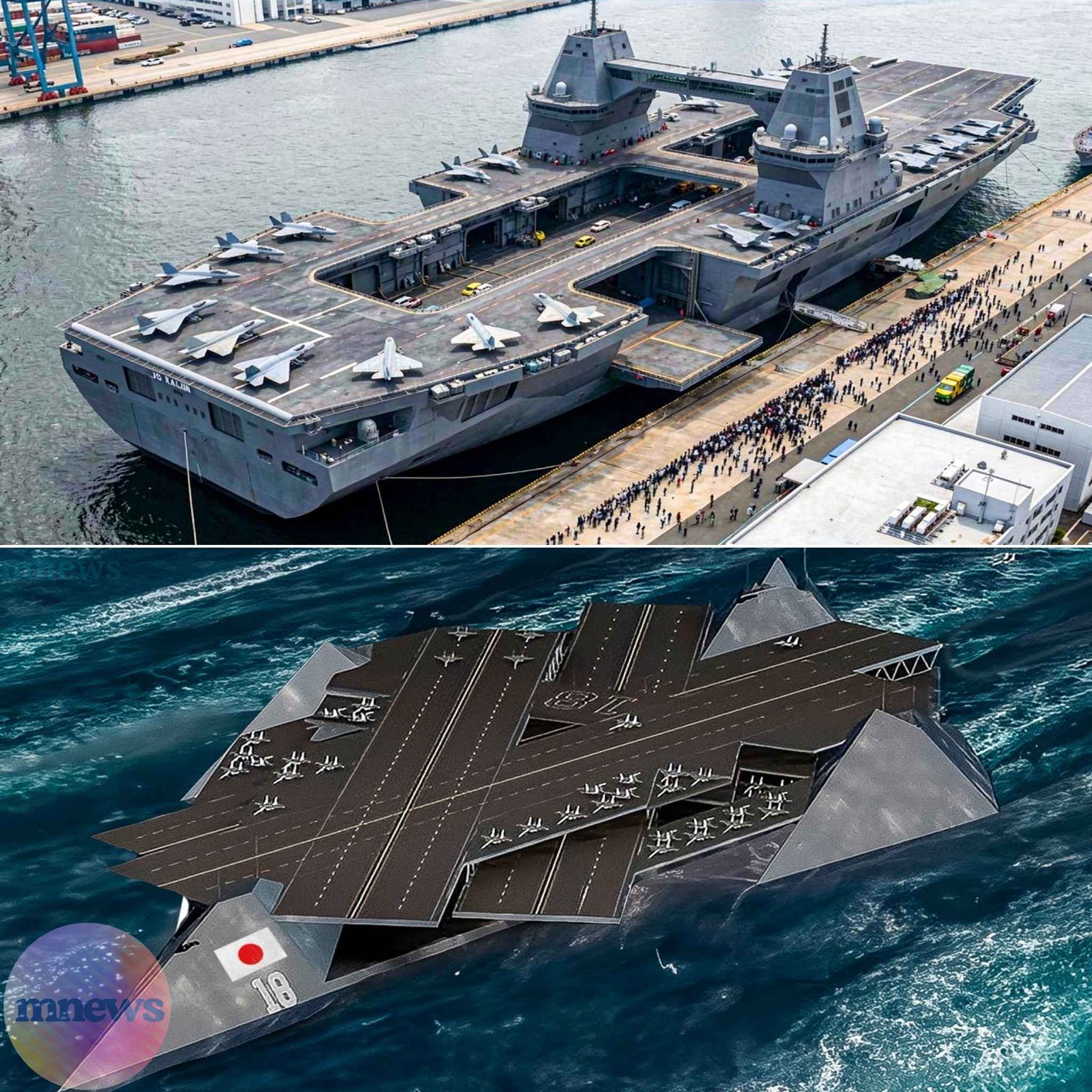
The transformation centers on the JS Izumo and JS Kaga, two 800-foot vessels initially classified as “helicopter destroyers.” After years of meticulous modification, these ships now operate as fully capable light aircraft carriers, designed to launch and recover the F-35B Lightning II stealth fighter.
This evolution is a direct response to a rapidly deteriorating security environment. With North Korea’s missile tests, China’s massive naval expansion, and frequent incursions near disputed territories like the Senkaku Islands, Japan’s static land bases are considered vulnerable. The carriers provide a mobile, survivable airfield.
“The shift was slow and careful, but the intent is now unmistakable,” says a senior defense analyst in Tokyo. “These are no longer auxiliary ships. They are the centerpiece of a new Japanese power projection capability, wrapped in legal terminology but clear in its operational purpose.”
The strategic calculus is stark. Japan’s economy is utterly dependent on maritime trade routes through the South China Sea and near Taiwan. Securing these sea lanes from potential disruption has become a national security imperative beyond pure territorial defense.
The key enabling technology is the F-35B. Its short takeoff and vertical landing capability allows it to operate from the Izumo-class decks without requiring catapults or arresting wires. Japan has ordered 42 of these fifth-generation jets, making it the largest F-35 operator outside the United States.

Deployments have already begun. The first F-35Bs arrived at Nyutabaru Air Base in southern Japan in 2025, positioned for rapid deployment to the carriers. Intensive training, including with U.S. Marine Corps and British Royal Navy F-35Bs, has integrated the ships into allied carrier strike group operations.
At sea, the carriers never sail alone. They form the core of a potent carrier strike group, escorted by Aegis-equipped destroyers for air defense, attack submarines, and supply vessels. This creates a mobile, networked bastion of air, surface, and undersea power.
The command centers aboard Izumo and Kaga fuse data from the F-35s’ advanced sensors, ship-based radars, and sonar arrays into a single, comprehensive battlefield picture. This information dominance allows the group to monitor vast ocean areas and respond to threats with unprecedented speed.
Despite their combat focus, the ships retain a vital humanitarian role. Their large decks and capacious hangars make them ideal platforms for disaster relief, capable of transporting hundreds of personnel, vehicles, and helicopters to crisis zones, as demonstrated after the 2016 Kumamoto earthquakes.

Japan’s move is part of a wider carrier arms race in Asia. China now operates three carriers, including the advanced Fujian with electromagnetic catapults. India has commissioned its first domestically built carrier. Japan’s vessels, while smaller, are distinguished by their stealth air wings and deep integration with U.S. and allied forces.
This military expansion is backed by a record defense budget, now approaching 2% of GDP. The spending funds not only the carriers and jets but also long-range strike capabilities, including upgraded domestic missiles and hundreds of U.S.-made Tomahawk cruise missiles.
The political and constitutional implications within Japan remain profound. Successive governments have stretched the interpretation of Article 9 to allow for “collective self-defense” and now, offensive carrier operations. Public opinion, increasingly wary of regional threats, has largely supported the buildup.
Looking ahead, Japan is investing in the next generation of air power. Its participation with the United Kingdom and Italy in the Global Combat Air Programme aims to develop a sixth-generation stealth fighter by the mid-2030s, ensuring its carrier aviation remains cutting-edge.
The arrival of Japan’s carrier strike groups marks the final departure from its post-war defensive posture. In the tense chessboard of the Pacific, where every move is watched, Japan has placed a powerful and unambiguous new piece on the board.