In a stunning development that has sent shockwaves through the scientific and tech communities, a functional quantum computing device has been successfully constructed not in a billion-dollar laboratory, but in a residential basement. This unprecedented achievement challenges the very notion of who can pioneer the next frontier of computational technology.
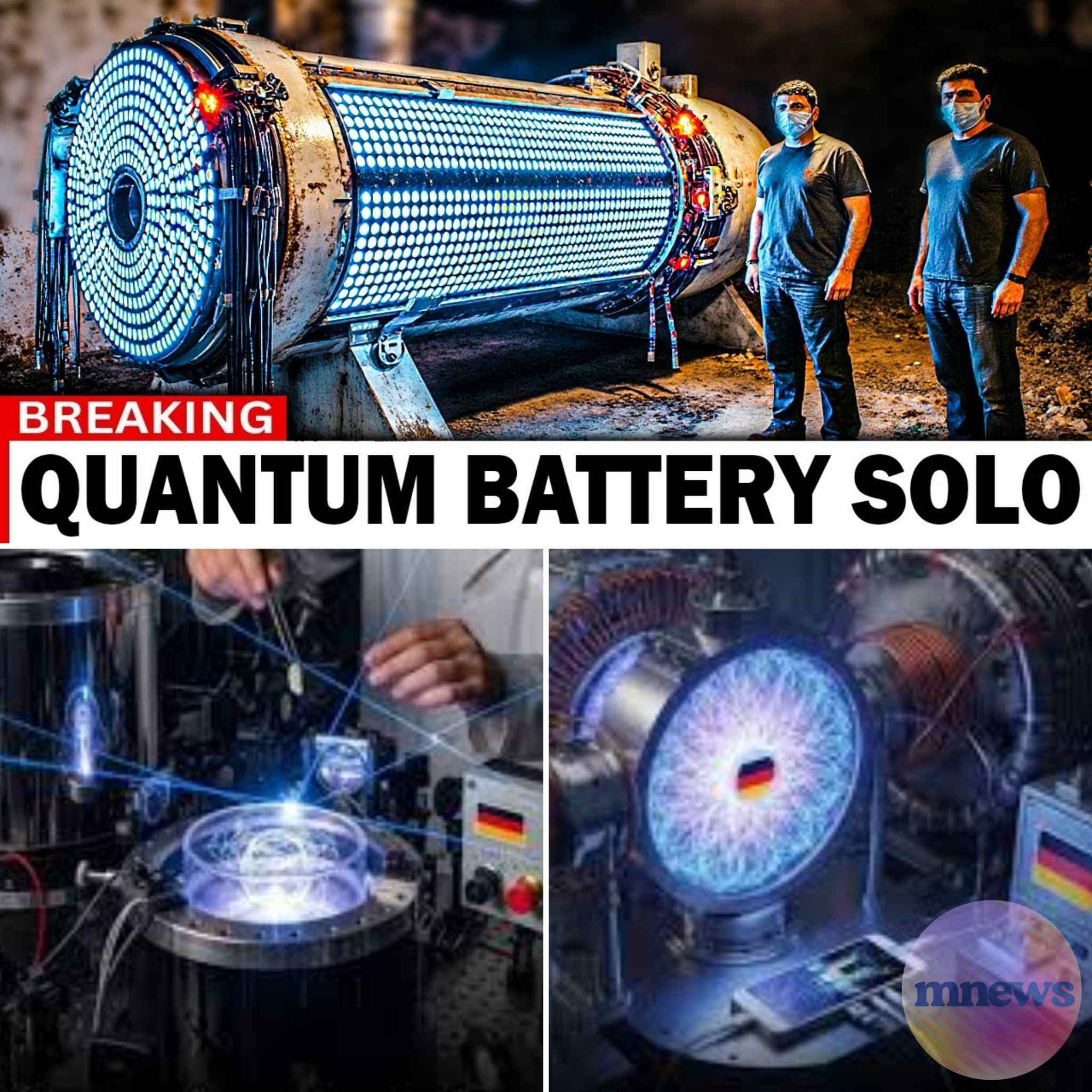
The individual behind this feat, inventor James Tag, reportedly assembled the apparatus using commercially available components and repurposed electronics, operating in a space adjacent to household appliances. This stands in stark contrast to the approach of industry giants like Google and IBM, which rely on vast, ultra-secure facilities cooled to temperatures colder than outer space to maintain the fragile quantum states necessary for operation.
Early reports and analysis of the setup describe a system involving a laser generating superposed electrical signals, which are then directed between mirrors to create a measurable quantum interference pattern. While full technical specifications and independent verification are pending, the initial functionality of the device has ignited a firestorm of discussion across online tech forums and academic circles.
Quantum computing operates on principles fundamentally different from classical computing. Instead of standard bits that are either 0 or 1, quantum computers use qubits, which can exist in a state of superposition—being both 0 and 1 simultaneously—and can be entangled with each other across distances. This allows them to process information in ways that could, in theory, solve certain complex problems intractable for even the most powerful supercomputers today.
The potential applications are profound, ranging from breaking current encryption standards and revolutionizing drug discovery by simulating molecular interactions to optimizing global logistics and supercharging artificial intelligence. This is precisely why major corporations and governments have invested billions in the technology, treating it as a high-stakes race for strategic advantage.
The core challenge has always been the extreme environmental sensitivity of qubits. They are notoriously susceptible to decoherence, where heat, electromagnetic noise, or even minor vibrations cause them to lose their quantum properties. This necessitates the complex, cryogenic infrastructure employed by corporate and research labs, making a home-built version seem implausible.
That a solitary inventor appears to have overcome these barriers in a non-laboratory setting is what makes this story so extraordinary. Experts are scrambling to understand the methodology, with many expressing a mixture of skepticism and awe. The achievement suggests a possible simplification or novel approach to maintaining quantum coherence, a breakthrough that could dramatically lower the barrier to entry for quantum experimentation.
James Tag’s broader ambition, as indicated in related discussions, is reportedly to explore the creation of digital beings inspired by the human brain, using quantum computing as a pathway. This adds a layer of profound philosophical and technical ambition to the practical engineering accomplishment already demonstrated.
The immediate implications are multifaceted. For the field of cryptography, it underscores the urgent need for quantum-resistant encryption algorithms. For the tech industry, it poses a disruptive question about the centralized, capital-intensive model of quantum development. For aspiring scientists and engineers, it serves as a powerful inspiration, demonstrating that groundbreaking innovation can originate outside traditional institutional walls.
This event occurs within the context of the Noisy Intermediate-Scale Quantum (NISQ) era, where current devices are prone to errors and not yet universally superior to classical computers for practical tasks. Whether Tag’s device represents a step beyond current NISQ capabilities or a clever demonstration of quantum principles at a small scale is a key subject of intense scrutiny.
Regardless of the final analysis, the mere possibility of a basement-built quantum processor has already altered the conversation. It democratizes the aura surrounding one of the most exclusive technological pursuits of our time. Platforms like IBM Quantum already allow public access to cloud-based quantum computers for experimentation, but this represents a tangible leap toward personal, physical ownership of the technology.
The road from a functional prototype to a stable, error-corrected quantum computer capable of solving real-world problems remains long. Thousands of physical qubits may be needed to create a single, reliable logical qubit, a hurdle known as quantum error correction. Yet, this achievement proves that the foundational steps on that road may not require unimaginable resources.
As the world grapples with challenges from climate modeling to personalized medicine, the promise of quantum computing to provide solutions grows ever more relevant. This basement breakthrough, verified or not, signals a potential shift in how that future is built. It suggests that the next great leap may come not only from corporate campuses but from the determined curiosity of individuals working in unlikely places.
The scientific community now faces the critical task of peer review and replication. If validated, James Tag’s work will be remembered as a pivotal moment that expanded the horizon of what is considered possible in quantum engineering. It is a testament to human ingenuity and a reminder that the tools to reshape the future can sometimes be found closer to home than anyone dared to imagine.