The legendary actor Robert Duvall, whose quiet intensity defined generations of cinema, has died at 95, leaving behind a monumental artistic legacy and a personal fortune that underscores a lifetime of disciplined craft over celebrity.

His passing at his Virginia home marks the end of an era for an actor considered among the finest of his generation, a master of the supporting role who could command the screen with mere presence. The news has prompted a global revisiting of iconic performances, from The Godfather to Apocalypse Now.
Behind those unforgettable characters lies a story of remarkable financial acumen. Industry estimates place Duvall’s net worth between $50 and $70 million, a fortune built not on blockbuster franchises alone but through decades of steady, respected work and shrewd ownership.
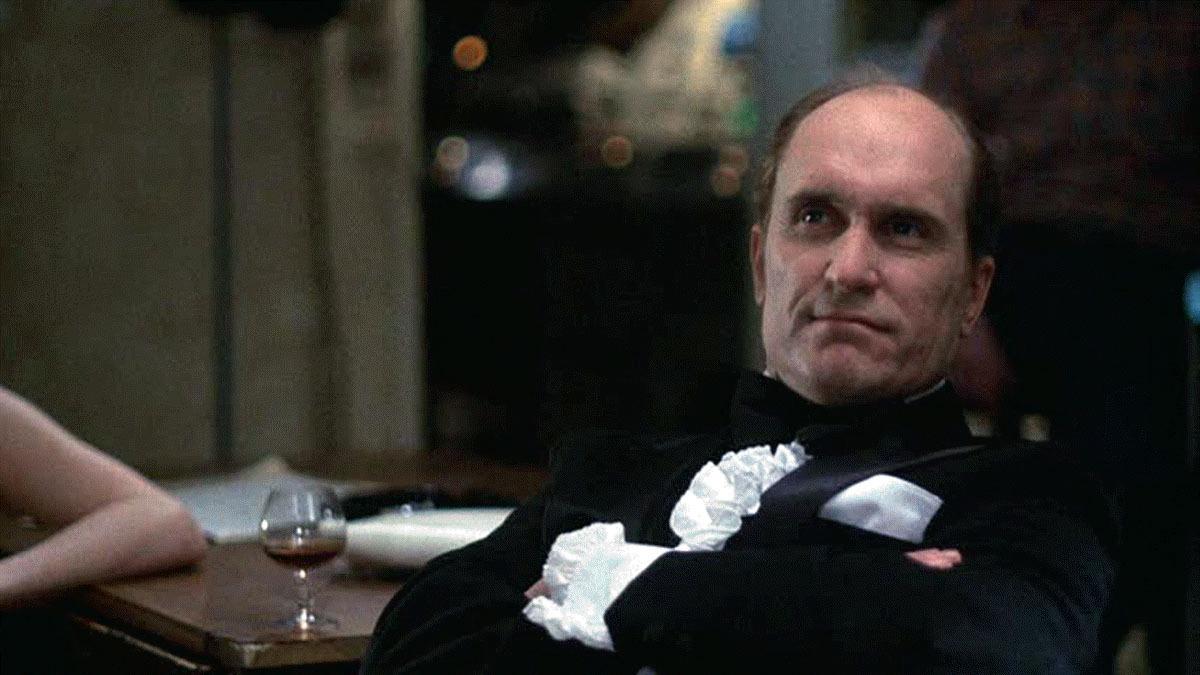
His journey was one of patience. Born into a military family, Duvall served in the Army before struggling in New York, taking jobs as a mail clerk and truck driver while studying acting. He lived with fellow unknowns Gene Hackman and Dustin Hoffman, all awaiting their break.
That breakthrough came subtly with Boo Radley in To Kill a Mockingbird. His powerful, nearly silent performance opened Hollywood’s doors, leading to his career-defining role as consigliere Tom Hagen in Francis Ford Coppola’s The Godfather, for which he earned a modest $36,000.
The nomination and critical acclaim that followed transformed his standing. By the sequel, his salary soared to $500,000, reflecting his essential contribution to the saga. He became Hollywood’s most reliable character actor, dubbed “the number one number two” for his scene-anchoring power.
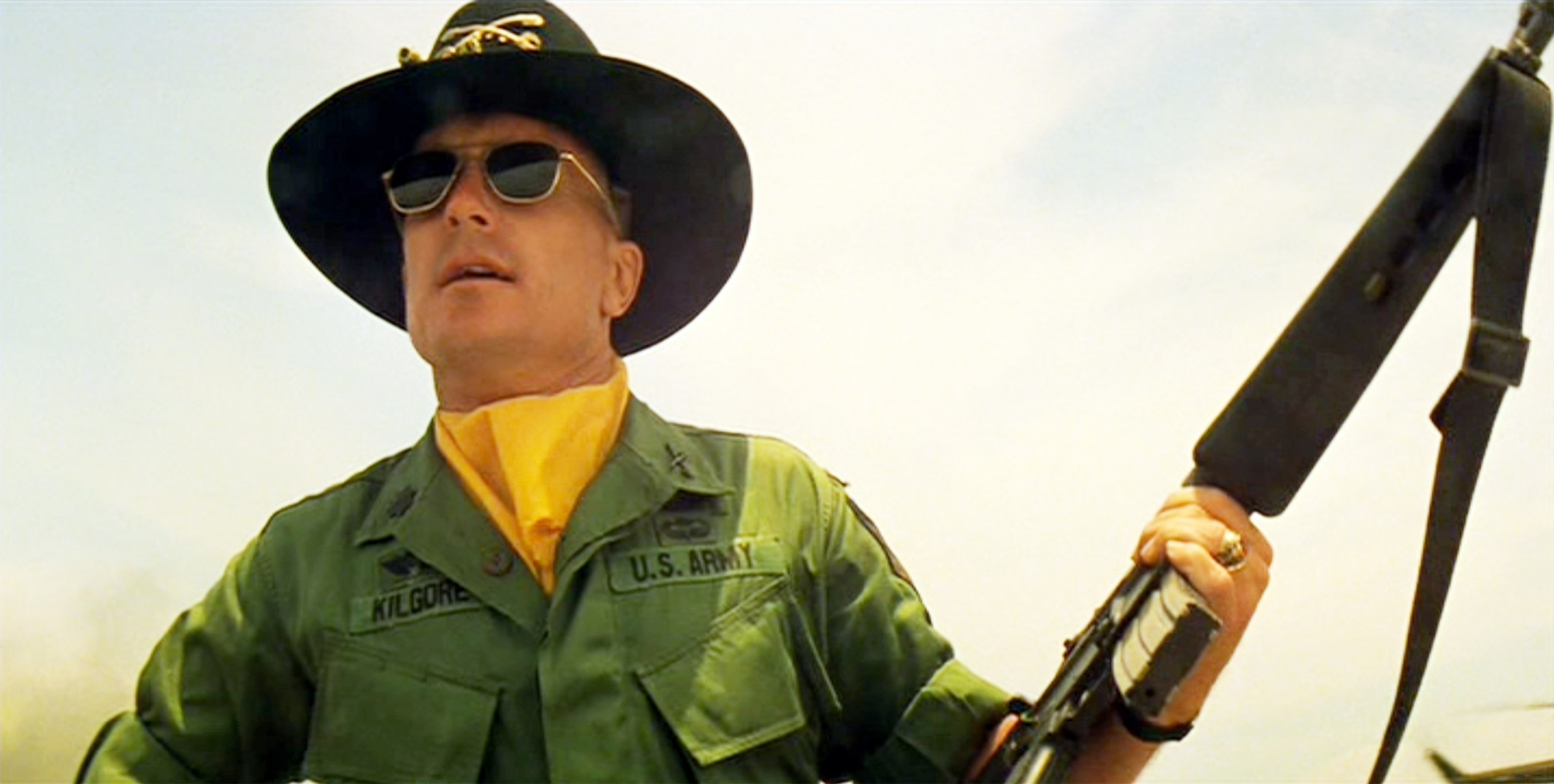
His legendary 11-minute turn as Colonel Kilgore in Apocalypse Now, featuring the immortal “napalm in the morning” line, earned another Oscar nomination. It proved his ability to leave a permanent imprint with minimal screen time, further elevating his market value and respect.
The ultimate validation came with 1983’s Tender Mercies. His restrained portrayal of a broken-down country singer won him the Academy Award for Best Actor, confirming he could carry a film and command leading-man salaries while maintaining his artistic integrity.

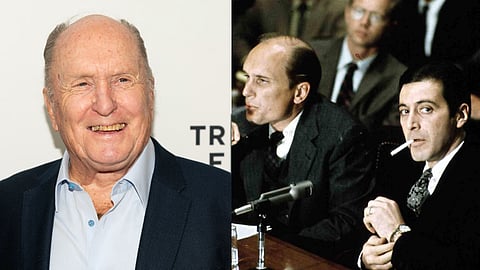
A pivotal moment revealing his value occurred during The Godfather Part III. Duvall walked away from a $1 million offer, refusing a pay disparity he felt was disrespectful compared to co-star Al Pacino. His absence forced major script rewrites and showed a principled stance on worth.
Financially, Duvall built his wealth through consistency. His filmography spans over 90 projects, collectively grossing more than $3 billion globally. He benefited from long-term royalties, residuals, and savvy back-end profit participation deals on countless classics.
He also moved behind the camera, founding Butcher’s Run Films. This production company gave him creative control and ownership stakes, generating revenue beyond acting fees and allowing him to develop personal projects like The Apostle, which he wrote and directed.
Away from Hollywood, he invested in tranquility. His primary residence was Burnley Farm, a historic hundreds-of-acre estate in Virginia’s horse country. Friends described it as his sanctuary, reflecting a man who valued privacy and the rhythms of rural life over glamour.
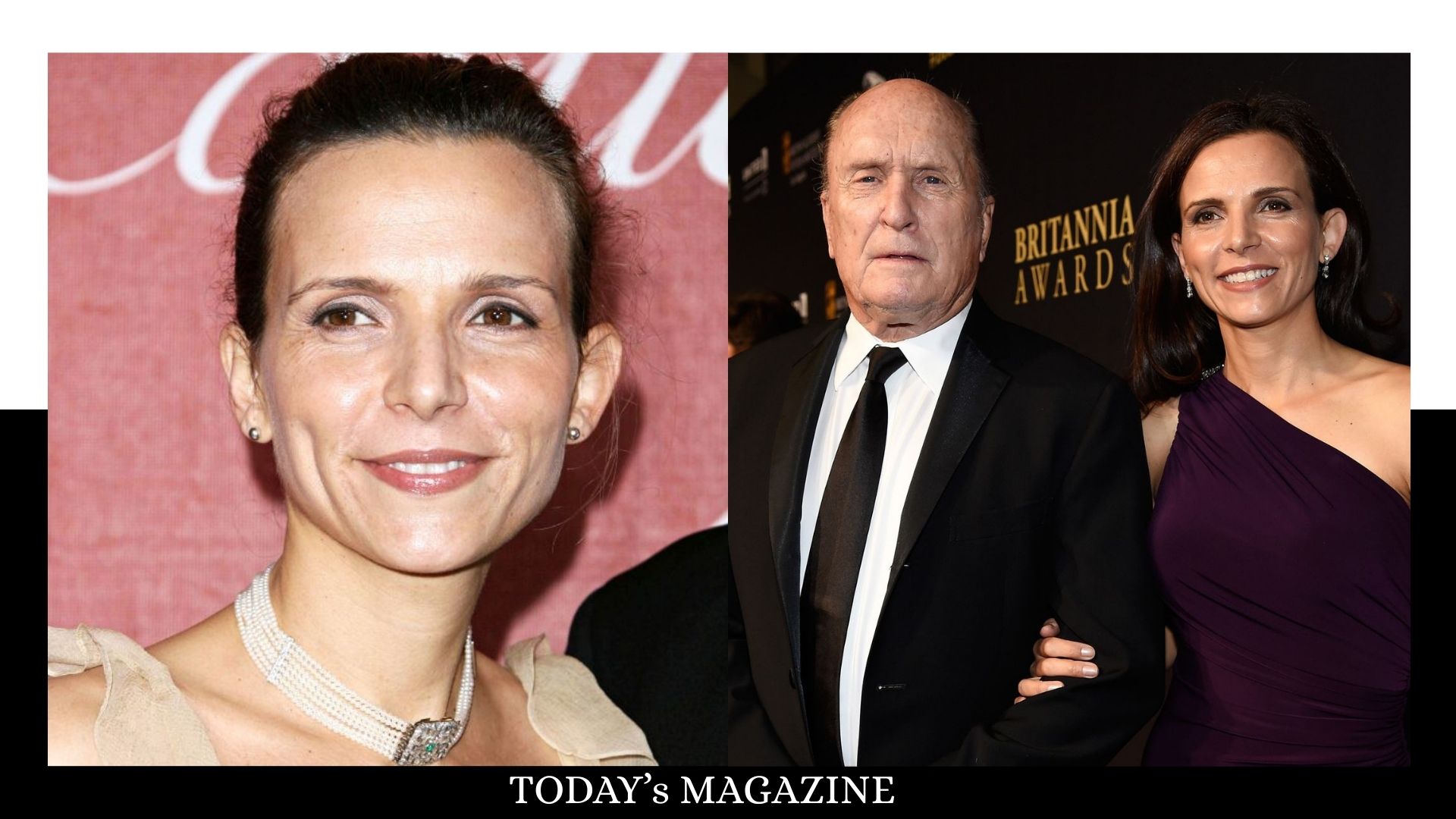
Duvall was married four times, most recently to Argentine actress Luciana Pedraza in 2005. The couple shared nearly two decades together, with Pedraza often by his side at events and on his properties. They had no children together.
Estate planners anticipate the bulk of his considerable estate will pass to Pedraza. In her statement confirming his death, she remembered him as both a giant of acting and the cherished center of her personal world, a man of profound depth beyond his public persona.
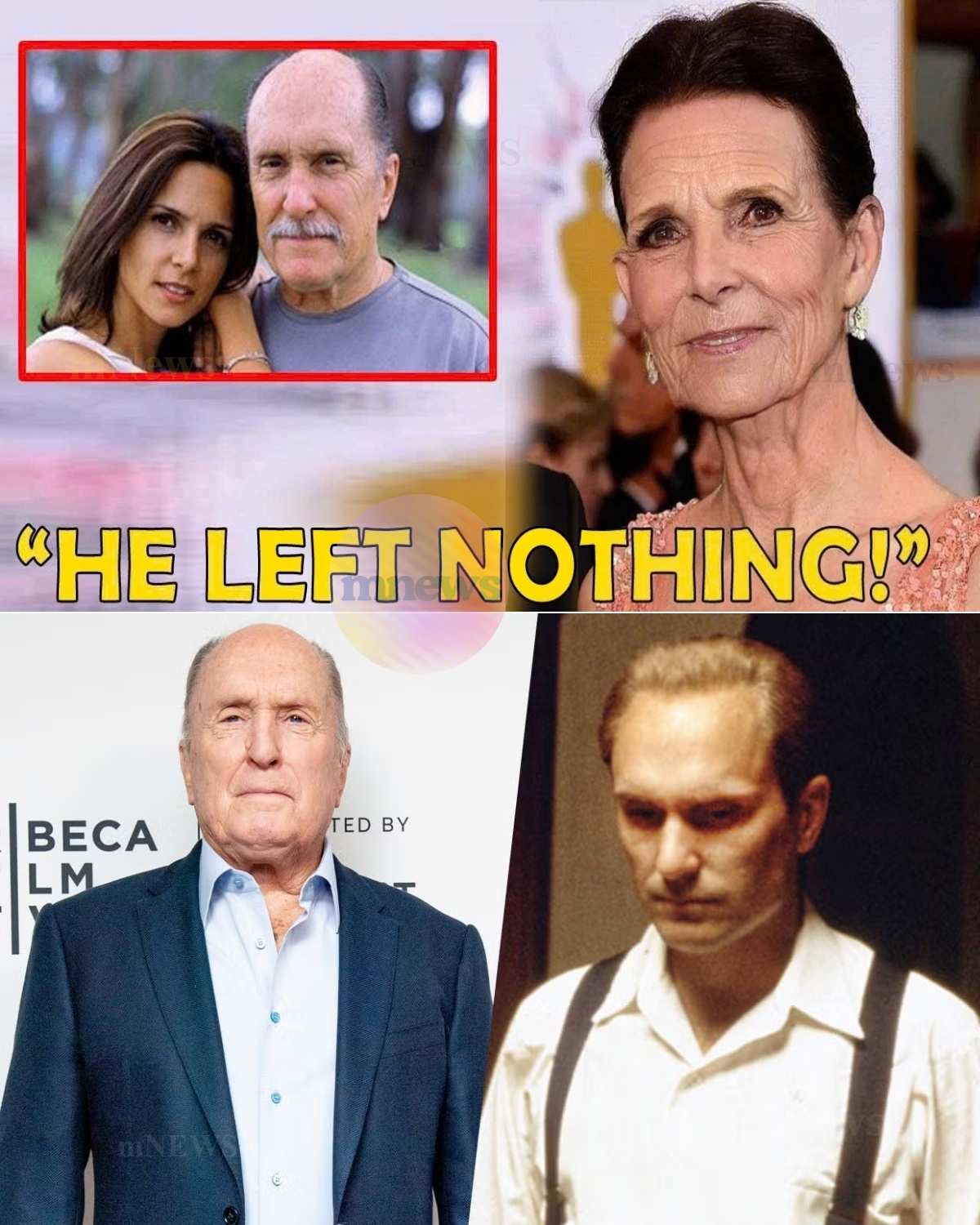
His fortune stands as a testament to a career built on artistic merit rather than tabloid fame. In an industry of meteoric rises and falls, Duvall’s financial success was earned role by role, a slow and steady accumulation mirroring his meticulous approach to performance.
The global outpouring of tributes highlights the emotional resonance of his work. From Tom Hagen’s quiet loyalty to Mac Sledge’s redemption in Tender Mercies, Duvall specialized in portraying deeply human complexity, making each character unforgettable and relatable.
Robert Duvall’s legacy is twofold: a treasury of cinematic art that will educate and entertain for centuries, and a financial empire built with the same quiet, disciplined intelligence he brought to every role. He proved that in Hollywood, substance can indeed build a staggering fortune.