Arizona has executed Richard Kenneth Jerf, 55, ending a 29-year legal saga for one of the state’s most horrific family massacres. The lethal injection was carried out at the state prison in Florence on October 17, 2025, closing a case defined by cold-blooded planning, gruesome violence, and a decades-long wait for finality.
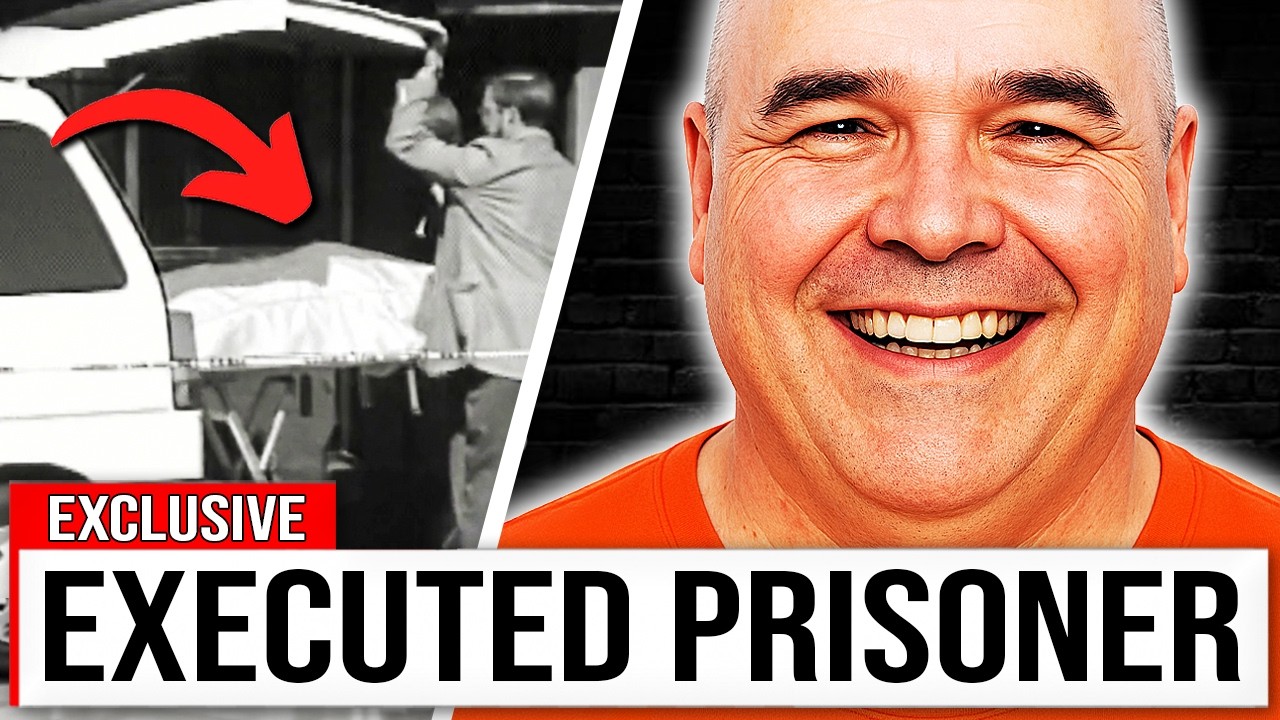
Jerf was pronounced dead at 10:40 a.m. after a procedure that encountered difficulties inserting intravenous lines. His execution followed his 1996 conviction and death sentence for the murders of four members of the Luna family in their Glendale home in September 1993.
The crime’s brutality stunned the community. Jerf, seeking revenge for a burglary he blamed on family friend Albert Luna Jr., arrived at the Luna home armed and disguised with fake flowers. He systematically executed his plan over several hours, holding the family captive before killing them one by one.
His victims were Albert Luna Sr., 47; his wife, Patricia, 42; their daughter, Rochelle, 18; and their young son, Damian, just 5 years old. The sole survivor was the eldest son, Albert Jr., who discovered the horrific scene upon returning home late that night.
Court records depict a methodical and sadistic attack. Jerf bound Patricia and Damian, ransacked the home, and forced Patricia to load valuables into the family car. He then murdered Rochelle in her bedroom, stabbing her and cutting her throat.
When Albert Sr. returned home, Jerf beat him savagely with a baseball bat before later shooting him during a desperate struggle. He finally turned his gun on Patricia and Damian, shooting both in the head after taunting the mother with a choice of who should die first.
 v
v
In a final act, Jerf attempted to set the house ablaze with gasoline and a fuse cord but aborted the plan. He fled in the Luna family car, later seeking treatment for knife wounds inflicted by Albert Sr. during the fight.
His own boastfulness led to his capture. Within days, Jerf called multiple friends and his girlfriend, bragging about the killings in increasingly dark detail. Police arrested him on September 18, 1993, after tracking his whereabouts and finding stolen property and weapons.
Jerf’s path through the legal system was tumultuous. He initially pleaded guilty to all four counts of first-degree murder in 1995 and famously chose to represent himself, a request granted after a psychiatrist deemed him “cold, calculated, and completely in control.”
He was sentenced to death on May 22, 1996, receiving four death sentences. Upon hearing the verdict, Jerf smirked and stated, “They can only kill me once.” His appeals wound through state and federal courts for nearly three decades before being exhausted.
In a letter to reporters last month, Jerf offered an apology but did not seek clemency. “I have some brain dysfunction that likely contributed to the horrible crimes that I committed, but that can never excuse the harm I caused,” he wrote.

On the evening before his execution, Jerf consumed his final meal: a double cheeseburger with lettuce and tomato, deep-fried onion rings with ketchup, and a slice of cherry pie with whipped cream, all sourced from a local restaurant.
In the execution chamber, Jerf, dressed in white with black flip-flops, declined to give a final statement when asked by the warden. The process was delayed as medical staff struggled for approximately nine minutes to establish viable IV lines, a recurring issue in Arizona executions.
Officials stated Jerf’s weight contributed to the difficulty. Once the lines were secured, the lethal injection protocol commenced. Witnesses reported Jerf took several heavy breaths before his chest stopped moving. An official time of death was declared 16 minutes later.
The execution concludes a case that has haunted Arizona for a generation. For the surviving family members and a community shocked by the senseless violence, the long-awaited sentence has now been carried out. The debate over justice, vengeance, and the decades-long delay on death row continues in its wake.