A streak of impossible motion against the black void of space caught the eyes of astronauts aboard an orbiting spacecraft, a fleeting silhouette that resolved into the unthinkable: an aircraft where no aircraft could fly. Their shock was the ultimate testament to a machine and crew performing at the absolute limit of human engineering during one of the Cold War’s most perilous missions.
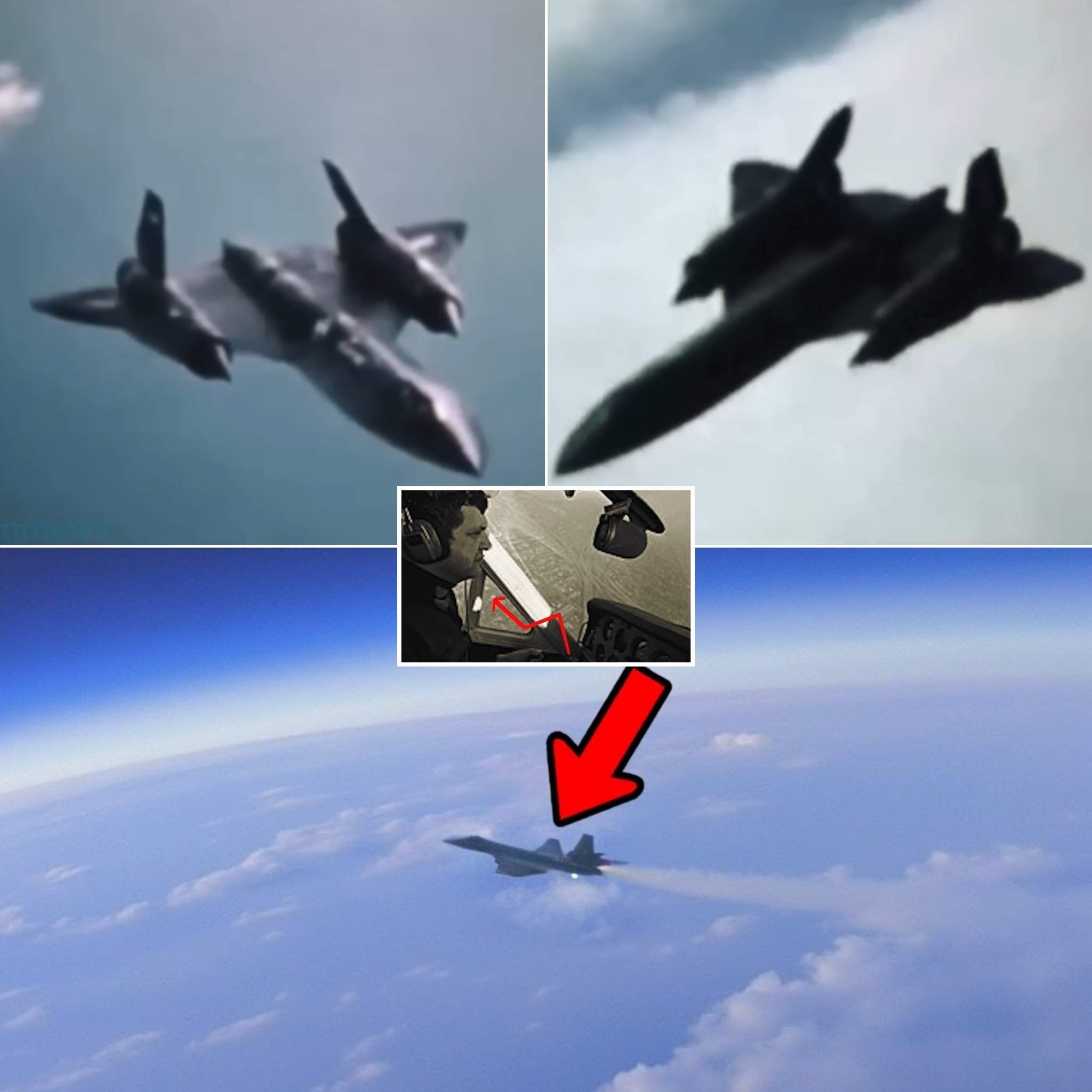
That machine was the SR-71 Blackbird, and on a critical April morning in 1986, it was hurtling over Libya at over three times the speed of sound. Piloted by Major Brian Shul with Reconnaissance Systems Officer Major Walt Watson monitoring systems from the rear cockpit, the duo was conducting a bomb damage assessment following U.S. airstrikes on terrorist-linked targets.
Their high-altitude sanctuary suddenly evaporated. “I’m getting missile launch signals,” Walt’s voice crackled through the intercom. Surface-to-air missiles, capable of Mach 5, were climbing from the desert below to intercept them at 80,000 feet. Standard evasion was impossible; their only option was the aircraft’s defining principle: raw speed.
Shul slammed the throttles into full afterburner. The twin Pratt & Whitney J58 engines, each producing power equivalent to an ocean liner, roared as the Mach indicator surged past 3.2. This decision to accelerate into danger was the Blackbird’s raison d’être, born from a national humiliation years earlier.
The catalyst was the 1960 Downing of Francis Gary Powers’ U-2 spy plane over the Soviet Union. America needed an aircraft invulnerable to interception. The CIA tasked legendary engineer Kelly Johnson of Lockheed’s Skunk Works with an audacious goal: build a plane that nothing on Earth could touch.
Johnson’s team faced monumental challenges. Sustained flight beyond Mach 3 would heat the airframe to over 1,000 degrees Fahrenheit, melting conventional materials. The solution was titanium, sourced through clandestine CIA front companies from the Soviet Union itself. The very nation being spied on unknowingly supplied its key component.

Innovation was relentless. The unique chined shape, initially disliked by aerodynamicists, deflected radar and unexpectedly generated lift. The black paint radiated heat to protect the structure. Every weld had to be perfect; a single flaw meant catastrophe at the edge of space.
The result was an aircraft that functioned as an integrated propulsion system. It was so fast that its primary evasive maneuver was simply to outrun the threat. From its first flight in 1962, it flew with impunity over the world’s most heavily defended territories.
Back over Libya, Shul and Watson were testing every ounce of that capability. The Mach meter climbed: 3.3, 3.45, past 3.5. They were entering uncharted territory for any SR-71 crew. The atmosphere became so thin that the sky turned black and the Earth’s curvature sharpened on the horizon.
It was at this extreme moment, skimming the realm where spacecraft operate, that astronauts in orbit witnessed the Blackbird’s incredible passage. From their vantage, it appeared as a plane in a place no plane belonged, a dark streak moving at impossible velocity against the planet below.
The crew, however, had no time for awe. Missile launch signals continued. Their survival depended on hitting a specific turn point at maximum speed, forcing the pursuing missiles’ guidance computers to miscalculate. The G-forces pressed them into their seats as Shul banked the aircraft away from the threat.

The Blackbird’s immense velocity simply left the missiles behind. They screamed past Tripoli, a sonic boom rattling the city below, and were over the safety of the Mediterranean in seconds. The jet, however, was reluctant to slow from its historic sprint, carrying them miles beyond their planned aerial refueling.
Returning to RAF Mildenhall, the ground crew was stunned. The titanium skin showed unprecedented heat stress patterns. When Walt asked how fast they had truly gone, Shul deferred. The maintenance chief surveyed the aircraft and asked pointedly, “What exactly did you do to my aircraft?” Shul’s reply was simple: “Kept her alive.”
The mission was a complete intelligence success, providing crystal-clear imagery of the strike sites. Analysts discovered an unintended record within the photos: the contrails of the missiles that had chased them, frozen far below their flight path, a silent testament to the speed that had saved them.
The incident witnessed by the astronauts was no accident. It was the culmination of titanium determination, revolutionary design, and unparalleled courage. The SR-71 Blackbird, retired in 1999, never succumbed to enemy fire despite nearly 4,000 missiles launched against it.
Its speed and altitude records remain unbroken. The story of that day over Libya endures as the definitive example of a machine and its crew pushing beyond known limits, a fleeting shadow at the edge of space that represented the pinnacle of aerial reconnaissance and a bold answer to a seemingly impossible question.