A Tennessee man convicted of the 1988 execution-style murders of his girlfriend and her two young daughters has been put to death by lethal injection. Byron Lewis Black, 69, was pronounced dead at 10:43 a.m. Central Time inside the Riverbend Maximum Security Institution in Nashville, concluding a legal saga that spanned nearly four decades.
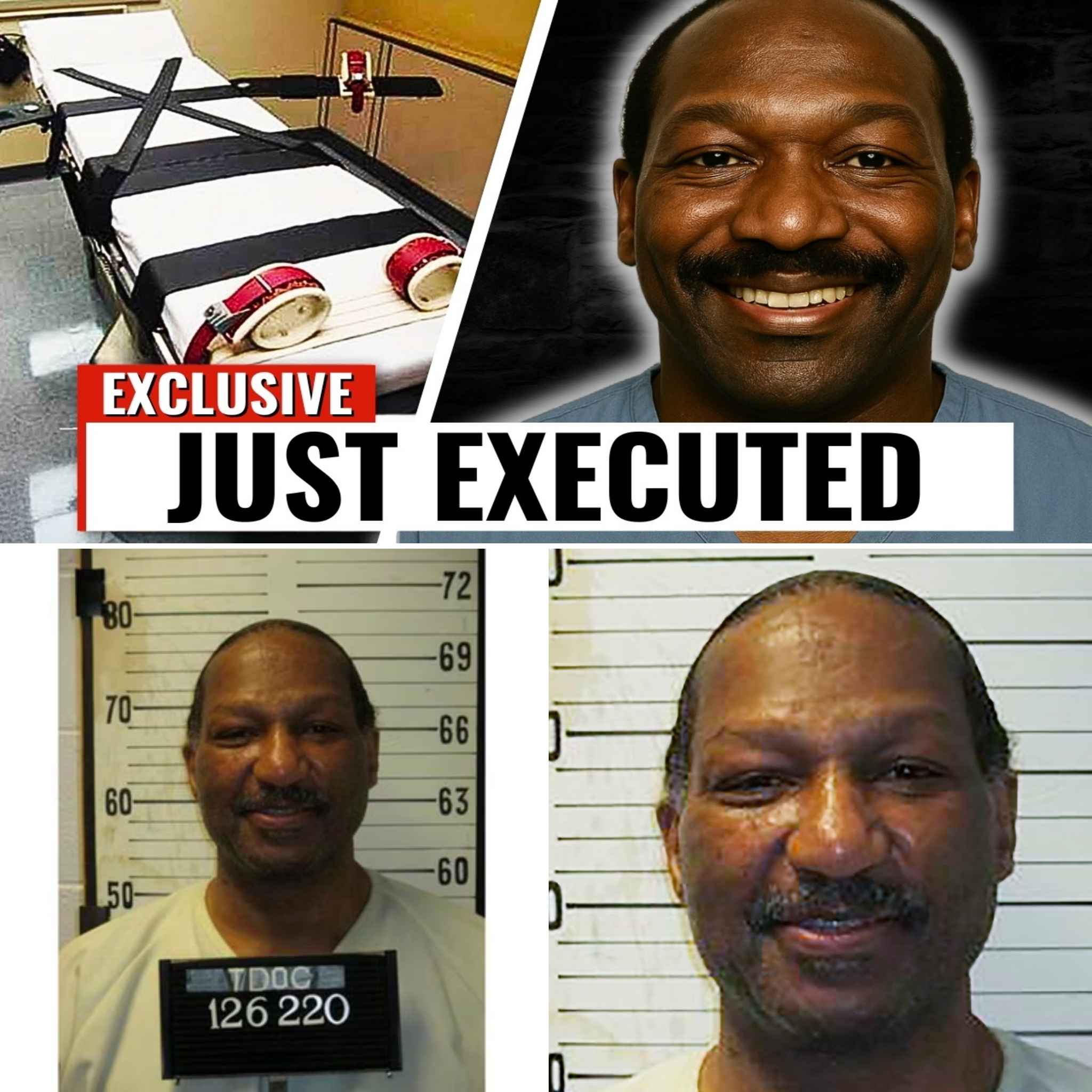
The execution proceeded after Tennessee Governor Bill Lee denied clemency and the U.S. Supreme Court rejected final appeals. Black’s death marks the 28th execution carried out in the United States this year. He offered no formal final statement to witnesses assembled in the death chamber.
According to those present, however, Black turned to a spiritual adviser shortly after the lethal injection began and whispered, “This hurts a lot.” He was executed for the murder of six-year-old Lakesha Clay. He also received life sentences for the murders of her mother and sister.
The crime remains one of the most horrific in Nashville’s history. In the early hours of March 28, 1988, Black entered Angela Clay’s apartment on Wade Avenue. He shot and killed 29-year-old Angela as she slept and murdered her daughters, nine-year-old Latoya and six-year-old Lakesha.
The brutality of the scene was detailed in court. Angela was found shot in the head in her bed. Latoya was beside her, shot at close range in the neck and chest. Lakesha was found in another room with defensive wounds, having suffered for up to 30 minutes.
Black’s relationship with Angela Clay was volatile and marked by prior violence. In December 1986, he was sentenced for shooting and wounding Angela’s estranged husband, Benny Clay. He was serving that sentence under a work-release program that allowed him out on weekends.
On the weekend of the murders, Angela had reportedly considered reconciling with Benny. Black, infuriated, had allegedly threatened to “pull a Sterling Gray,” a reference to a local judge’s murder-suicide. He picked Angela up from her job at Vanderbilt University Hospital that Sunday.
Forensic evidence became the damning link that broke the case. Ballistics testing proved the bullets that killed Angela and her daughters matched the bullet fired into Benny Clay two years prior. This evidence led to Black’s arrest in April 1988.
A Davidson County jury found Black guilty on three counts of first-degree murder on March 8, 1989. The verdict for Lakesha’s murder was delivered on what would have been her seventh birthday. Her father called it the best birthday gift for his daughter.

The jury unanimously recommended death for Lakesha’s murder but deadlocked on the penalty for Angela and Latoya. Judge Walter Kurtz sentenced Black to death by electrocution for Lakesha’s killing and imposed consecutive life sentences for the other two murders.
Decades of appeals followed, focusing heavily on Black’s intellectual capacity. Multiple experts diagnosed him with intellectual disability, citing fetal alcohol syndrome, childhood lead exposure, and possible brain damage. The state’s own expert agreed with this assessment.
Courts ultimately rejected these appeals on procedural grounds, finding his claims were filed too late. This legal reasoning allowed the execution to proceed despite widespread professional consensus regarding his diminished intellectual functioning.
In his final years, Black’s health deteriorated dramatically. Confined to a wheelchair, he suffered from dementia, kidney failure, congestive heart failure, and other chronic conditions. A cardioverter defibrillator was implanted in his chest in May 2024.
For his final meal, Black requested and received mushroom and sausage pizza, donuts, and butter pecan ice cream. The Tennessee Department of Corrections confirmed the menu was provided in accordance with standard protocol for death row inmates.
The execution drew a small group of protesters and supporters outside the prison. Some held signs calling for an end to capital punishment, while others expressed relief that justice was finally being served for the Clay family after 37 years.
Benny Clay, the father of the two murdered girls and Angela’s estranged husband, has long been an advocate for Black’s execution. He witnessed the execution today, stating previously that he needed to see it through for his family.
District Attorney Glenn Funk, whose office prosecuted the case, issued a statement acknowledging the lengthy legal journey. He expressed hope that the execution would bring a measure of closure to the victims’ surviving family members and the community.

Opponents of the death penalty condemned the execution, highlighting Black’s severe health issues and intellectual disability. They argued that carrying out the sentence on a frail, cognitively impaired man represented a failure of the justice system.
The case has been a persistent reference in debates over Tennessee’s death penalty protocols and the definition of intellectual disability in capital cases. Legal scholars expect it will continue to be cited in future litigation.
With Black’s death, Tennessee has now executed eight individuals since resuming capital punishment in 2018. The state currently has 44 inmates remaining on death row, according to the latest official statistics from the Department of Corrections.
The execution chamber at Riverbend Maximum Security Institution was the site of Black’s death. The facility is Tennessee’s only location for carrying out death sentences and houses the state’s death row for male inmates.
Witnesses included media representatives, correctional officials, and family members of the victims. The process was described as proceeding without any visible complications following the administration of the lethal chemical cocktail.
The specific drugs used in Tennessee’s lethal injection protocol are midazolam, vecuronium bromide, and potassium chloride. The combination first induces unconsciousness, then paralysis, and finally cardiac arrest.
Black’s case underscores the extreme duration often involved in capital punishment litigation. From crime to execution, thirty-seven years passed, a period longer than the entire lives of his two youngest victims.
As the news of the execution spreads, reactions continue to pour in from legal experts, victim advocacy groups, and mental health professionals. The complex legacy of the case touches on issues of justice, mercy, and the limits of the law.
The story of the Clay family murders remains a somber lesson in domestic violence escalation. Warning signs, including the prior shooting of Benny Clay, preceded the ultimate tragedy that destroyed an entire family.
For the Nashville community, the case has been a grim landmark for generations. Older residents recall the shock of the 1988 crimes, while newer ones learn of it through the protracted legal battles that just reached their conclusion.
The Tennessee Supreme Court will now receive the official death warrant, signed by the prison warden, confirming the execution was carried out in accordance with state law. This formal document closes the judicial chapter on State of Tennessee v. Byron Lewis Black.
Attention now turns to the enduring impact on all involved. The legal system has rendered its final judgment, but the human cost of the crimes and the punishment continues to resonate far beyond the prison walls today.