A former law enforcement investigator has presented a body of evidence that fundamentally challenges the scientific and cultural understanding of the Bigfoot phenomenon, concluding it is not an animal but an intelligent, possibly hybrid being deliberately evading humanity. David Paulides, a retired officer with decades in SWAT and major crimes, applied forensic methodology to thousands of witness accounts and physical evidence, arriving at a disturbing thesis that bridges forensic science, genetics, and indigenous tradition.

His investigation began not with a search for a cryptid, but while probing mysterious missing persons cases in Northern California’s remote Hoopa Valley. Tribal members and residents provided consistent, detailed accounts of encounters that demanded a professional inquiry. Paulides employed forensic sketch artists, used in police work to composite suspect faces, with multiple independent witnesses. The resulting sketches were strikingly similar and disturbingly humanoid, not apelike.
The analysis of footprint evidence moved beyond simple casting. Paulides focused on anatomical details extremely difficult to hoax, such as dermal ridges—the equivalent of fingerprints—and midtarsal breaks, a foot flexibility humans lack. The scale, stride, and appearance in inaccessible terrain suggested a genuine, massive biped. Yet tracks alone could not speak to intelligence.
That question led to the Sierra Sounds, audio recordings from the 1970s featuring complex vocalizations. Analysis by a retired Navy cryptolinguist concluded the sounds exhibited syntax and structure indicative of language, not mere animal calls, with a vocal range exceeding human capacity. This pointed toward a communicative intelligence.
The most paradigm-shifting evidence came from genetic testing. Paulides cites laboratory analyses of hair and tissue samples where mitochondrial DNA—passed maternally—returned as unequivocally human. However, the nuclear DNA, the full genetic blueprint, matched no known species in genomic databases. This suggests a being with a human maternal lineage but an unknown paternal origin, a hybrid profile biologically inexplicable through known natural means.
This genetic puzzle aligns with centuries of Native American tribal traditions, which Paulides extensively documented. Elders from the Hoopa, Lummi, Salish, and other nations consistently describe Bigfoot not as a beast, but as “another people”—intelligent, social beings with their own language and territories, who long ago chose separation from humans. Some traditions ascribe to them abilities that seem supernatural.
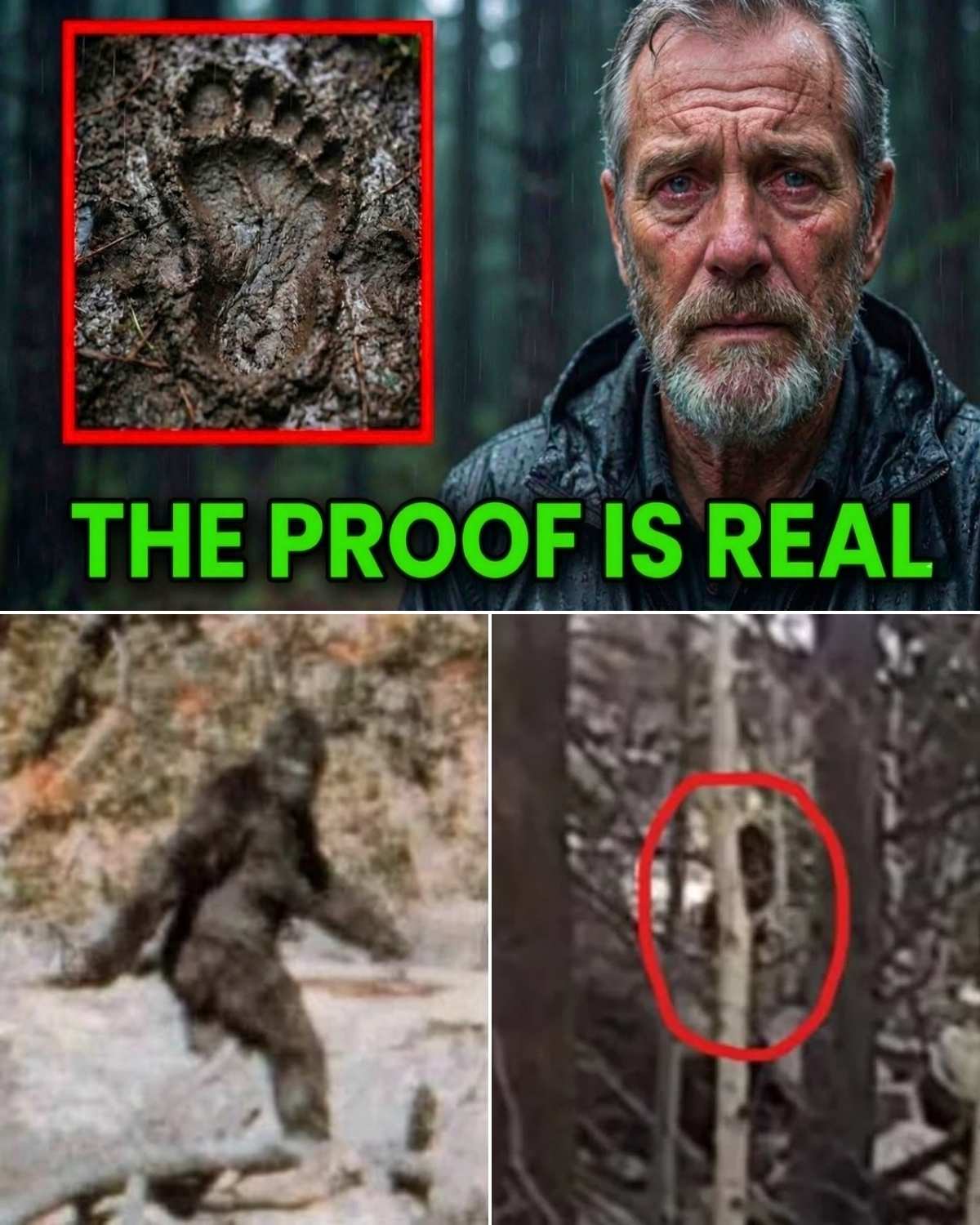
Paulides’ witness files are replete with accounts that defy conventional biology: creatures vanishing in open terrain, electronics failing during encounters, and sudden, overwhelming psychic impressions to leave an area. These reports suggest capabilities that, if valid, place the phenomenon beyond simple zoology.
Furthermore, Paulides points to patterns of official secrecy. Freedom of Information Act requests yield heavily redacted documents, while former officials and park rangers privately hint at classified encounters and evidence suppression. The implications of acknowledging an intelligent, potentially part-human species would create legal, ethical, and land-management crises.
The investigator synthesizes this into a staggering conclusion: Bigfoot is likely an intelligent, non-human people, possibly a hybrid species sharing human DNA, possessing misunderstood capabilities, and executing a millennia-old strategy of concealment from modern civilization. Their elusiveness is not primitive instinct but a calculated response to human expansion and destruction.
Paulides asserts the evidence—forensic, genetic, acoustic, and anthropological—collectively forms a case that mainstream science has refused to confront. The question is no longer about proving existence, but understanding the profound implications of what this being truly represents for human history, biology, and our place in the natural world. He argues we share the continent with a hidden intelligence that may hold a mirror to our own origins, a mystery waiting in the remaining wilderness.