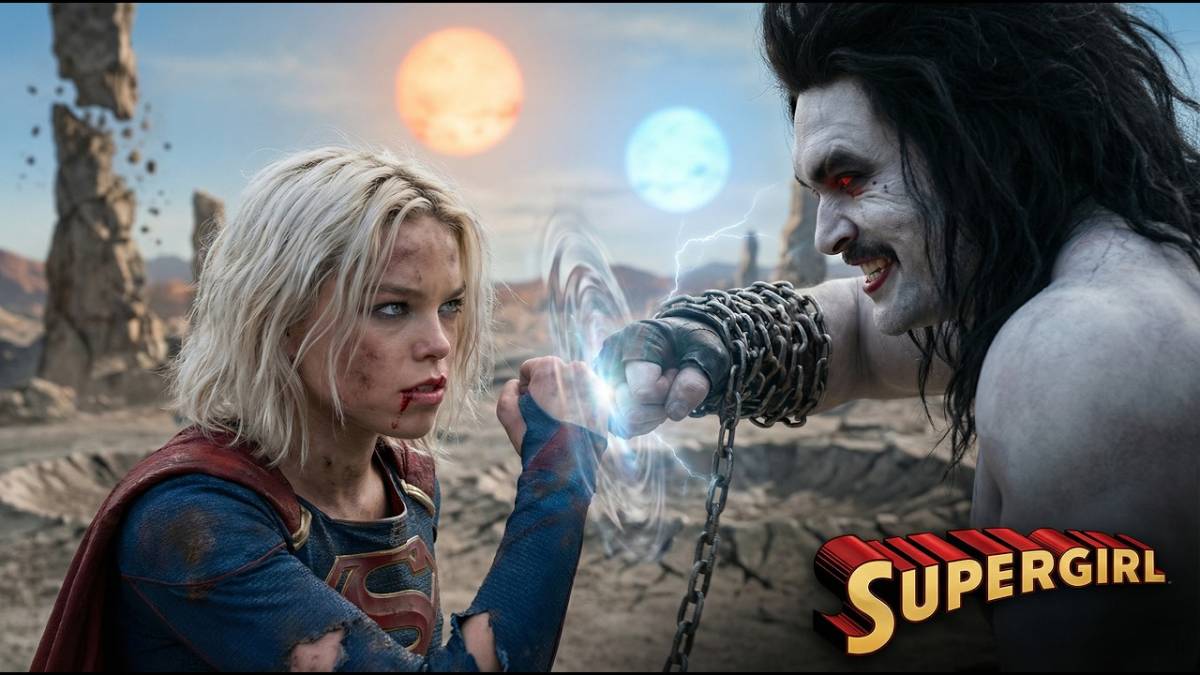
The DC Universe is about to be shattered by a Supergirl unlike any seen before. Warner Bros. has unleashed the full, brutal vision for “Supergirl: Woman of Tomorrow,” confirming a radical, R-rated space epic that redefines the Girl of Steel as a broken, vengeful anti-hero. Slated for release on June 26, 2026, this second film in James Gunn’s DCU promises to be its most audacious cinematic gamble yet.
 Director Craig Gillespie, known for his complex female portraits in “I, Tonya” and “Cruella,” is steering the ship into uncharted territory. He has explicitly labeled the project an “anti-hero story,” a stark departure from the hopeful iconography traditionally associated with the House of El. This is not a tale of salvation, but one of profound trauma and relentless retribution.
Milly Alcock, breakout star of “House of the Dragon,” embodies a Kara Zor-El forged in agony. While her cousin Clark found solace on Earth, Kara spent her formative years witnessing the cataclysmic destruction of Krypton. That core trauma defines her; she is described as broken, using red sun planets to literally drink away her pain, a shocking detail for the character.
The film’s narrative, adapted from Tom King and Bilquis Evely’s celebrated comic, follows Kara on a bloody odyssey across the cosmos. She is joined by a young alien girl, Ruthie, played by Eve Ridley. Their mission is singular and grim: to hunt down Krem of the Yellow Hills, the man who murdered Ruthie’s father.
This interstellar revenge thriller is confirmed as the first DCU film set entirely in space, marking a major tonal and visual shift for the franchise. The recently released Super Bowl trailer established a grim, operatic tone, underscored by Kara’s own chilling philosophy: “He sees the good in everyone, and I see the truth.”
Jason Momoa makes cinematic history, transitioning from Arthur Curry to the infamous Czarnian bounty hunter, Lobo. This casting makes Momoa the first actor in decades to portray both a major DC hero and a villain in live-action films, adding a layer of meta-textual chaos to the already volatile mix.
Opposing them is the brutal villain Krem, portrayed by Matthias Schoenaerts. The supporting cast is equally formidable, with David Krumholtz and Emily Beecham as Kara’s doomed Kryptonian parents, Zor-El and Alura. Their tragic fate is the foundational trauma that fuels Kara’s rage.

James Gunn, architect of the new DCU, has offered unreserved praise for his lead. He called Alcock’s performance “absolutely stunning” and potentially “the best casting I’ve ever done.” This endorsement signals the central importance of this film and this characterization to the entire universe’s future.
The trailer’s ominous tagline, “She’s not here to save you. She’s here for revenge,” serves as a direct manifesto. It explicitly rejects the superheroic norm, positioning Supergirl not as a beacon of hope but as an agent of cosmic vengeance, a force of nature unleashed.
This approach risks alienating traditionalists but aims to explore profound themes of grief, anger, and the moral compromises born from unimaginable loss. It asks what happens when a god-like being is shaped not by love, but by utter devastation.
Production details remain closely guarded, but the commitment to a hard-edged, space-western aesthetic is clear. The film will likely delve into the grimy, morally ambiguous corners of the DC cosmos, far from the sunlit streets of Metropolis.
Industry analysts are already buzzing about the film’s potential to redefine the superhero genre, following a path blazed by projects like “Logan.” By embracing a mature, character-driven narrative, DCU is staking a claim on sophisticated, adult-oriented storytelling.

The pressure is immense, as this represents the second major theatrical release in Gunn’s rebooted universe, following 2025’s “Superman.” Its success or failure will critically impact the momentum of the entire DC slate and its ability to distinguish itself from competitors.
For Alcock, this is a career-defining role, catapulting her from television acclaim to the center of a global franchise. Her ability to convey deep-seated pain and ferocious power will be the absolute cornerstone of the film’s emotional resonance.
Momoa’s Lobo presents a wildcard element, promising a chaotic, darkly comedic counterpoint to Kara’s focused rage. His presence guarantees interstellar conflict on a massive, possibly planet-shattering scale, with alliances likely to be fragile and temporary.
The choice of source material is particularly telling. King’s “Woman of Tomorrow” is renowned for its philosophical depth and deconstruction of heroism, suggesting the film will prioritize psychological complexity over simple spectacle, though spectacle will undoubtedly be present.
Early marketing has masterfully stoked curiosity, framing the film as a genre-bending event. The promise of a “DC movie unlike any ever made” sets a high bar, one that the creative team seems fiercely confident they can clear.

Audience reception to the trailer has been polarized, generating intense debate online. Some fans champion the bold new direction, while others express skepticism about the radical reinterpretation of such an iconic character.
This divisiveness is precisely what the studio may desire, aiming to spark conversation and draw in audiences curious to witness this daring transformation. It is a high-risk, high-reward strategy in an increasingly crowded market.
Ultimately, “Supergirl: Woman of Tomorrow” aims to be more than a superhero film. It seeks to be a profound exploration of trauma wrapped in a visually stunning, intergalactic revenge saga. It positions Kara Zor-El not as a derivative of Superman, but as her own uniquely damaged and formidable entity.
The film’s success hinges on making viewers empathize with Kara’s darkness, to understand the fury that drives her, and to question whether her path of vengeance can lead to any form of redemption or merely perpetuate a cycle of violence.
With its stellar cast, visionary director, and uncompromising source material, the project has all the components of a landmark cinematic achievement. The DCU is not just introducing a new hero; it is launching a grenade into the heart of superhero convention.
All eyes are now fixed on June 2026, when the galaxy will bear witness to the rise of a Supergirl forged in fire and focused on fury. The stage is set for a revolution, and its herald wears a cape stained with the dust of dead worlds.
Source: YouTube