After more than three decades on Alabama’s death row, Anthony Todd Boyd was executed by nitrogen hypoxia Thursday evening for the 1993 kidnapping and murder of Gregory Hugaly, a killing prosecutors said was orchestrated over a $200 drug debt. The 56-year-old maintained his innocence until his final breath, using his last words to condemn the state’s justice system as politically motivated revenge.
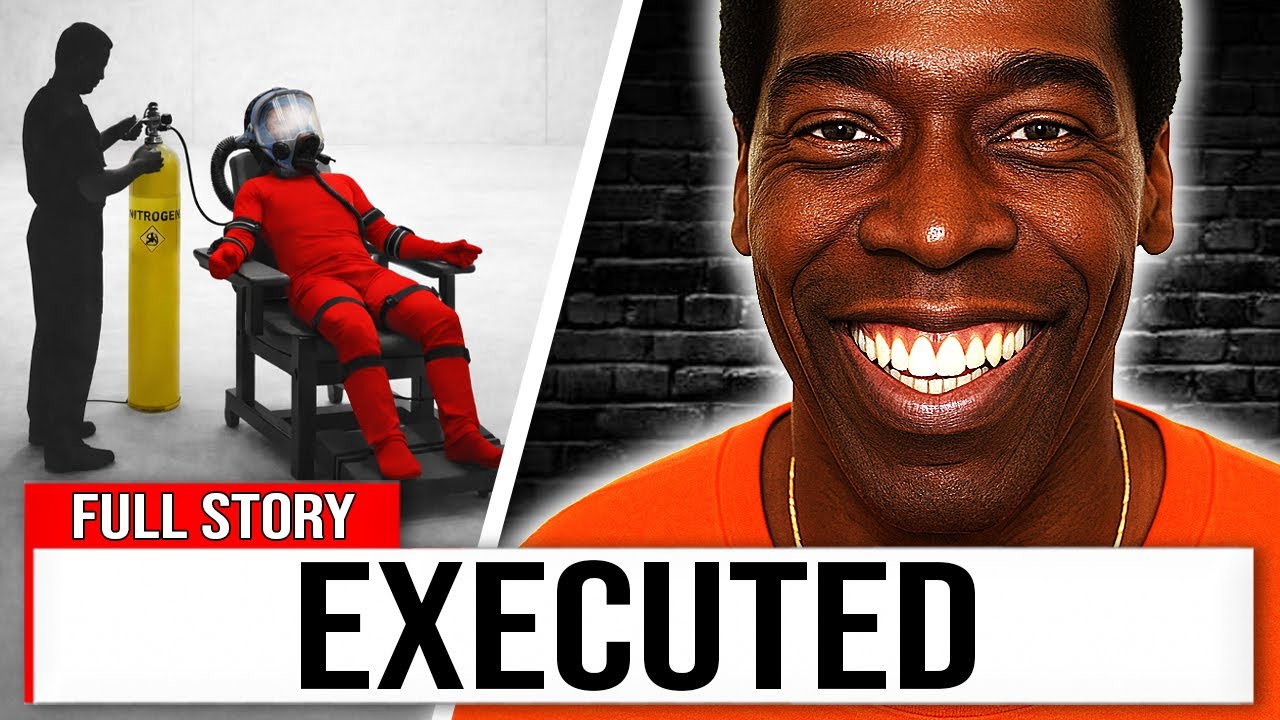
The execution at Holman Correctional Facility marked only the second time in U.S. history the nitrogen hypoxia method was used. Officials pronounced Boyd dead at 6:33 p.m. following a roughly 30-minute procedure witnessed by his brother and media representatives. His death closes one chapter in a case that horrified Talladega County with its brutality.
The crime unfolded on a sweltering July day in 1993. Boyd, then 24, contacted friend Dwinon Quinte Cox, claiming he had been robbed. Agitated, he said he needed a gun and someone to ride with him to find the alleged thief. Cox returned with a Mac-11 pistol, and a deadly hunt began.
Joined by Robert “Shawn” Ingram and later Monnique Marcel Ackles, the group drove through Anniston neighborhoods searching for their target. When that search failed, they spotted Gregory Hugaly, known as “New York,” who owed Boyd approximately $200 for cocaine. The encounter turned violent near an area locals called Happy Tree.
Ingram grabbed the gun, forced Hugaly into a blue Chevy Astro van, and the group drove off with their captive begging for his life. They made a stop for gasoline before proceeding to Hall Grove Ballpark, a quiet field where families gathered on weekends. What followed was methodical torture.
At the ballpark, Hugaly was forced onto a wooden bench. Ackles taped his hands and mouth while Boyd secured his feet, according to trial testimony. With Hugaly bound and pleading, Ingram doused him in gasoline, poured a trail away from the bench, and lit a match. The fire ignited instantly.

For ten to fifteen minutes, the men watched as Hugaly, alive and conscious, burned. Soot found later in his trachea proved he breathed the flames. Only when he rolled off the bench motionless did they leave, dumping his charred body at the public park. The grisly discovery came the next morning.
Jesse Smith found the remains on August 1, 1993, reporting the scene to the Talladega County Sheriff’s Office. While physical evidence was initially scarce, whispers through the community soon led investigators to four names: Boyd, Ingram, Ackles, and Cox. Their stories quickly unraveled under interrogation.
At Boyd’s 1995 capital murder trial, prosecutors painted a picture of deliberate, organized violence meant to send a message. The motive was starkly simple: a $200 drug debt. They argued Boyd was a full participant who helped restrain the victim and later declared, “We’re all in this together now.”
The defense highlighted Boyd’s youth and troubled past but failed to sway the jury. He was convicted of murder during a first-degree kidnapping, a capital offense under Alabama law. On August 5, 1995, the jury recommended death, a sentence the judge formally imposed days later.
His co-defendants met different fates. Robert “Shawn” Ingram, identified as the ringleader who poured the gas and lit the match, also received death and remains on death row. Monnique Marcel Ackles took a plea deal for life without parole in exchange for testimony.
Dwinon Quinte Cox, who supplied the gun, became a state witness and received life with the possibility of parole. He was released in 2009. Boyd alone maintained his innocence through decades of appeals, all rejected by state and federal courts reviewing claims of ineffective counsel and prosecutorial misconduct.
Time moved on outside prison walls. Boyd’s children grew, his grandchildren were born, and multiple family members died during his incarceration. The state finally set an execution date for October 23, 2025—coinciding with his daughter’s birthday.

Alabama’s execution protocol had changed since his sentencing. His death by electrocution was converted to nitrogen hypoxia, a method involving a tight-fitting mask flooding his lungs with pure nitrogen, inducing oxygen deprivation. Boyd requested execution by firing squad, but the courts denied it.
On his final day, Boyd visited with family, including two daughters and his mother. He ate snacks including cheeseburgers, barbecue Fritos, and candy, drinking various juices and coffee. He declined a formal last meal and turned down his dinner tray as the hour approached.
Corrections officers led him into the execution chamber at approximately 5:50 p.m. When the curtain to the witness room opened, Boyd smiled at those present and gave a thumbs-up. Offered a chance for final words, he seized the moment for a defiant proclamation.
“I didn’t kill anybody. I didn’t participate in killing anybody,” Boyd stated firmly. He launched into criticism of the judicial process, declaring, “There’s no justice in this state. It’s all political. It’s revenge-motivated.” He argued closure comes from within, not an execution.
His final message to supporters was, “Keep fighting. I love every single one of y’all.” As the mask was secured, his last audible words were, “Let’s get it.” The nitrogen flow began shortly after. At approximately 5:57 p.m., his body showed physical reactions, including clenched fists and labored breathing.
For at least fifteen minutes, witnesses observed deep, uneven gasps. Movement ceased, but officials continued the nitrogen flow for five full minutes after his heart stopped to ensure death. The curtain closed at 6:27 p.m., and the formal time of death was recorded six minutes later.
Alabama Department of Corrections Commissioner John Hamm confirmed the execution proceeded without the visible distress reported during the state’s first nitrogen execution in January. The procedure has drawn international scrutiny and legal challenges concerning potential cruelty.
With Boyd’s execution, Alabama has carried out its second death sentence using the controversial nitrogen method. The case leaves enduring questions about the nature of justice, the finality of capital punishment, and a brutal murder that shattered multiple lives over two hundred dollars three decades ago.
Gregory Hugaly’s family, who witnessed the execution, has long awaited this outcome, describing him as a loved one lost to senseless violence. Boyd’s family maintains he was wrongly convicted, a claim the courts exhaustively rejected. The debate over whether justice was truly served continues beyond the execution chamber walls.
Source: YouTube