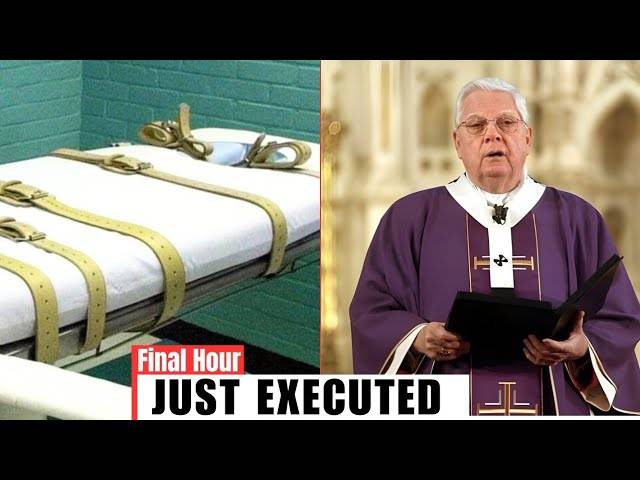
A maximum security prison cell became the final courtroom for one of America’s most notorious predator priests Saturday, as John J. Geoghan was killed by a fellow inmate in a brutal attack that has exposed catastrophic failures in both the Catholic Church and the Massachusetts prison system. The 68-year-old defrocked priest, convicted of molesting a child and accused by more than 130 others, was strangled and stomped to death inside the Souza-Baranowski Correctional Center, mere years into a 9-10 year sentence.
 The assault occurred at 11:48 a.m. within the prison’s protective custody unit, a section designed to shield vulnerable inmates. Joseph L. Druce, a 37-year-old inmate serving life without parole for a separate murder, followed Geoghan into his cell after lunch and jammed the door shut with books and magazines. Despite the facility’s 366 security cameras, correctional officers were powerless to intervene in time.
Druce, who had meticulously planned the killing for over a month, used a t-shirt and socks to strangle the elderly Geoghan before repeatedly jumping on his chest. Five officers were captured on surveillance footage desperately trying to force the barricaded door open. By the time they breached the cell, Geoghan was unresponsive. He was pronounced dead at a local hospital.
The murder concludes a decades-long saga of abuse, cover-up, and institutional betrayal that shattered hundreds of lives. Geoghan’s crimes spanned thirty years across six Boston-area parishes, during which he confessed to church officials on multiple occasions. Internal documents show the Archdiocese of Boston repeatedly relocated him despite knowing his predatory history.
“Justice came from an unexpected source, violent, final, irreversible,” stated a prison source familiar with the investigation. “It happened because every system meant to stop him—first the church, then the prison—failed.” Druce, who suffered childhood sexual abuse himself, reportedly told guards after the attack, “I just saved your kids from being raped.”
 Critical questions are now being raised about prison safety protocols. Officials had received a specific warning that Druce intended to attack Geoghan, yet housed them in the same unit. Furthermore, only one guard was monitoring the protective custody wing at the time of the murder, a severe deviation from standard two-officer procedure.
The killing has ignited immediate investigations by state corrections authorities. Union officials point to dangerous staffing shortages as a root cause. “Budget decisions prioritized cost savings over safety,” a union representative alleged. “This was a preventable tragedy that highlights systemic failures.”
Geoghan’s case was a central catalyst for the global Catholic Church sex abuse scandal. Investigative reporting by the Boston Globe’s “Spotlight” team revealed a systemic pattern of cover-up by Cardinal Bernard Law and other diocesan leaders, who moved accused priests to new parishes instead of defrocking them or alerting police.
Cardinal Law resigned in disgrace in December 2002 but faced no criminal charges. He was relocated to a comfortable position in Rome. For many of Geoghan’s victims, his prison sentence represented a minuscule fraction of the justice they sought. His violent death now denies them any further legal reckoning.

The graphic security footage of the murder response has not been publicly released by the state. However, its very existence underscores the haunting nature of the event: a man whose crimes were hidden by an institution for thirty years died under the constant gaze of a prison’s surveillance apparatus, yet entirely unprotected.
Druce has been charged with murder and remains in custody. He pleaded not guilty at his arraignment, shouting to the courtroom, “Let’s keep the kids safe. Hold pedophiles accountable for their actions.” His trial will likely scrutinize prison operations and the motives behind the killing.
For the families Geoghan destroyed, his death brings a complex and painful closure. “He never answered for the full scope of his crimes,” said the relative of one victim. “He never faced all 130 of us. The system failed at every turn, and now this is the end. There is no peace in it.”
 The scandal exposed by Geoghan’s actions forced unprecedented reforms within the Catholic Church, including mandatory reporting policies and lay review boards. Critics argue these changes remain insufficient and came decades too late for thousands of victims whose lives were irrevocably damaged.
The Massachusetts Department of Correction faces intense pressure to explain the security lapses that allowed the killing. A full review of protective custody protocols, inmate threat assessment, and staffing levels is now underway. The results could lead to significant policy overhauls and potential disciplinary action.
Geoghan was buried in a private ceremony at Holyhood Cemetery in Brookline, Massachusetts, five days after his death. His legacy, however, is one of profound institutional failure. His story demonstrated how a powerful organization could prioritize its reputation over the safety of children for generations.
As the investigations continue, the fundamental question lingers: was this murder, or a twisted form of street justice that the courts never delivered? The official answer will come from a jury. For a public that watched the church’s cover-up unravel, the moral calculus is far more ambiguous.
The case underscores a chilling reality: when institutions charged with protection and rehabilitation fail catastrophically, violence can fill the vacuum. The final chapter of John Geoghan’s life was written not by a judge, but by a fellow convict in a concrete cell, bringing a grim and bloody end to a saga of betrayal.
Source: YouTube