A man who confessed to over 20 racially motivated murders across the United States has been executed by lethal injection in Missouri. Joseph Paul Franklin, 63, was pronounced dead at 6:17 a.m. on November 20, 2013, inside the Potosi Correctional Center, ending a decades-long legal saga.
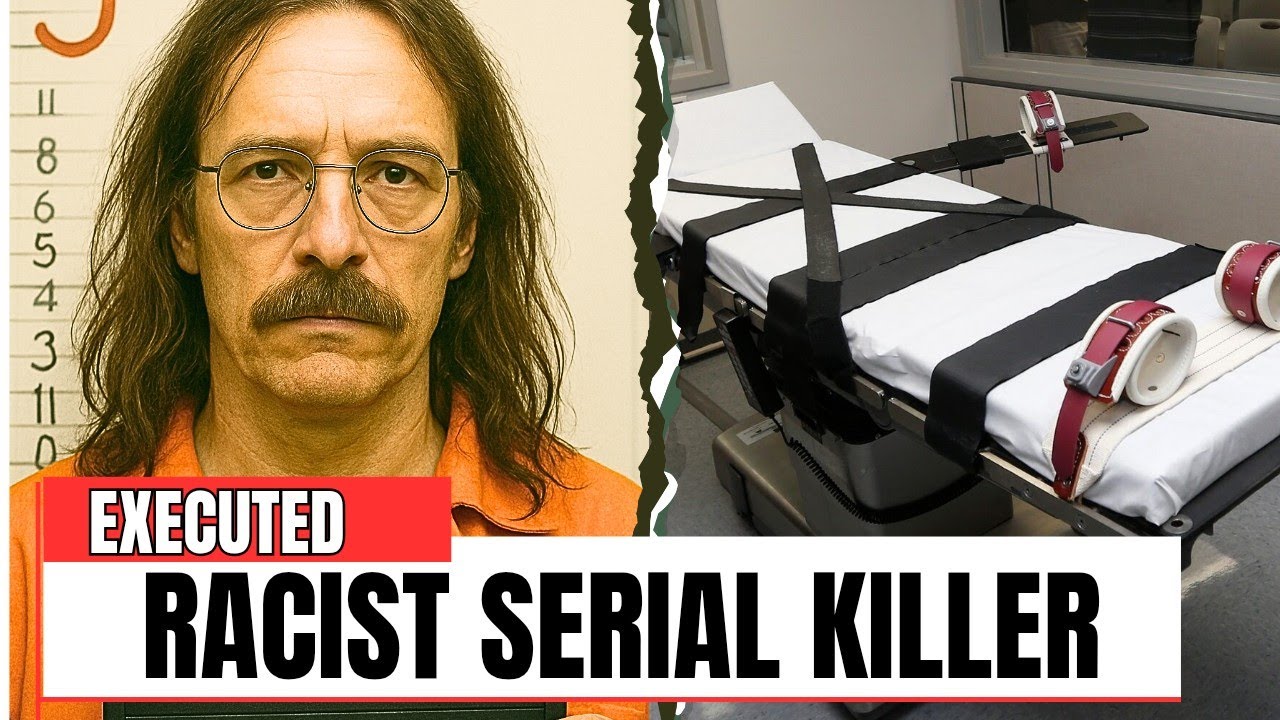
Franklin offered no final statement as he lay strapped to the gurney. When asked by the warden if he had any last words, the inmate remained silent. He declined to make eye contact with witnesses, which included family members of some of his victims, and showed no visible emotion throughout the procedure.
The execution followed a last-minute legal drama that briefly halted the process. A federal judge issued a temporary stay hours before the scheduled execution over concerns about Missouri’s use of the sedative pentobarbital, questioning whether it could cause unconstitutional suffering. The Eighth U.S. Circuit Court of Appeals overturned that stay, allowing the state to proceed.
Franklin spent his final 24 hours under “death watch,” a period of constant, close observation. He ate little of his final meal, a standard prison tray of meatloaf, mashed potatoes, and vegetables. No family or friends visited him, and he made no final requests for spiritual counsel or phone calls.
For over three decades, Franklin lived on death row, convicted for the 1977 sniper killing of Gerald Gordon outside a St. Louis synagogue. That murder was just one in a cross-country campaign of terror Franklin waged from 1977 to 1980, driven by a self-radicalized ideology of white supremacy.
His victims were targeted for their race or religion. They included interracial couples, African American men, and Jewish community members. Among the most notorious attacks were the murders of two young black boys, Dante Evans Brown and Darrell Lane, in Cincinnati, and the shooting of civil rights leader Vernon Jordan in Fort Wayne, Indiana.
Franklin was finally apprehended in 1980 after a botched pawn shop robbery in Florida. His fingerprints and ballistics evidence connected him to a string of unsolved shootings. During interrogations, he confessed openly and without emotion to more than 20 killings, detailing his motives and methods.
Throughout his trials and imprisonment, Franklin displayed a chilling lack of remorse. In a recent jailhouse interview, when asked about the two boys in Cincinnati, he stated, “Uh, no. I don’t really think about them.” He acknowledged approximately 22 murders but expressed an inability to make amends.

“I wished I could go back and change things, but there’s no way I can do it,” Franklin said in the interview. “If I had some way to make amends to them, I would try to do that. You know what? Being locked up in here on death row with an execution date a week away, I can’t really do a whole lot for them.”
His journey to violence began in a troubled Alabama childhood. Born James Clayton Vaughn Jr., he later changed his name, adopting parts from Nazi propagandist Joseph Goebbels and founding father Benjamin Franklin. He drifted across America, immersing himself in extremist literature and honing sniper skills.
Franklin’s killing spree was, in his own warped view, an attempt to start a race war. He operated with meticulous planning, often firing from long distances before disappearing. His ability to evade capture for years was a testament to his mobility and the difficulty law enforcement faced in connecting the disparate crimes.
After his arrest, a complex web of state and federal prosecutions began. While he was convicted and sentenced to death in Missouri, he received multiple life sentences in other jurisdictions for crimes, including the murders in Madison, Wisconsin, and Johnstown, Pennsylvania.

In his final years, Franklin engaged in numerous appeals and claimed to have renounced his racist beliefs. He argued that lethal injection constituted cruel and unusual punishment. These efforts delayed his execution for years but ultimately proved unsuccessful.
Missouri Governor Jay Nixon affirmed the execution’s purpose following Franklin’s death. “The cowardly and calculated shootings committed by Joseph Paul Franklin were fueled by racial and religious hate,” Nixon stated. “Today, justice has been served.”
For the families of Franklin’s victims, his death closes a painful chapter but does not erase their loss. Many have lived with the trauma for over thirty years, waiting for the day the justice system fulfilled its final sentence. The execution was carried out without incident, witnessed by a small group through a glass pane.
The chamber fell silent after the pronouncement of death. The curtains were drawn, concluding the life of a man whose name became synonymous with a particularly virulent brand of domestic terrorism. His death marks the end of one of the most extensive and hate-driven serial murder cases in modern American history.
Franklin’s case remains a stark study in the genesis of homegrown extremism and the long, arduous path to judicial resolution. It underscores the profound and lasting impact of hate crimes on communities and families across state lines, a shadow that lingered for decades until this morning’s final, quiet breath.
Source: YouTube