In a grisly culmination of a tragic saga, Napoleon Beasley was executed by lethal injection on May 28, 2002, at the Walls Unit in Huntsville, Texas, ending a seven-year standoff on death row. His killing of businessman John Luttig sparked national debate on juvenile capital punishment.

At just 25 years old, Beasley’s death marked him as the 18th juvenile offender executed in America since 1976 and the 11th in Texas alone. His crime, committed at 17, was a cold-blooded carjacking murder that reverberated through legal and social systems across the nation.
On a quiet April night in Tyler, Texas, John Luttig, a 63-year-old oilman and civic leader, was shot twice in the head by Beasley while stepping out of his car. Luttig’s wife narrowly escaped death by playing dead. The Mercedes Beasley stole was his ultimate target.
The victim was the father of Judge J. Michael Luttig, a prominent federal appellate judge who had clerked for Supreme Court Justice Antonin Scalia. This connection intensified scrutiny and added a rare judicial complexity to the case, eventually influencing Supreme Court deliberations and appeals.
Beasley’s background painted the picture of a promising young man with ambitions to attend Stanford Law and serve in the Marines. He was Grapeland High’s senior class president, an athlete, honor student, and churchgoer. Yet, beneath this facade, he led a double life shadowed by crime and 𝒹𝓇𝓊𝑔 dealing.
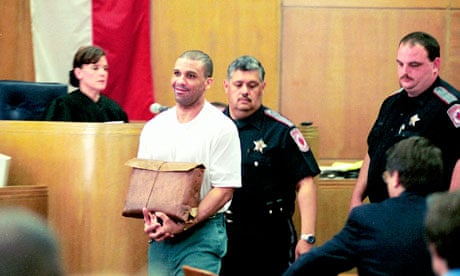
The night of the murder, Beasley, armed and determined, maneuvered with two accomplices hunting for a Mercedes to steal. His violent plan escalated into murder when he confronted John Luttig in his driveway, a decision that would seal his fate for years to come.
Subsequent police investigations, aided by FBI involvement, swiftly identified Beasley and his partners. Both accomplices, Donald and Cedric Coleman, testified against Beasley in exchange for life sentences, while he faced the ultimate charge of capital murder, backed by overwhelming evidence including his own admissions.
Beasley’s 1995 trial 𝓮𝔁𝓹𝓸𝓼𝓮𝓭 𝒶𝓁𝓁𝑒𝑔𝒶𝓉𝒾𝓸𝓃𝓈 of racial bias, with an all-white jury convicting the black teenager. Defense claims highlighted racially charged juror comments, yet the court proceeded. The jury sentenced Beasley to death, a verdict that sparked widespread controversy given his juvenile status at the time of the crime.

During seven long years on death row, Beasley’s character transformed remarkably. He expressed deep remorse, apologized to the Luttig family, and questioned the fairness of executing someone for a crime committed as a minor. His case garnered international condemnation and calls for clemency from human rights groups and religious leaders alike.
Despite these appeals, including a Supreme Court deadlock and last-minute stays, Texas officials moved resolutely forward. Governor Rick Perry declined intervention, framing the execution as necessary to deliver justice, fueling impassioned protests outside the Walls Unit in the hours before Beasley’s lethal injection.

In his final moments, Beasley declined to speak aloud, but his written statement resonated powerfully. He acknowledged his guilt, lamented the senselessness of his act, and implored for second chances, exposing the paradox of a justice system that takes lives yet preaches redemption.
Beasley’s execution reignited fierce debate over juvenile justice and the death penalty. Three years later, the Supreme Court’s landmark Roper v. Simmons decision constitutionally banned executing offenders under 18, a ruling that came tragically too late to save him or other juvenile inmates.
The Luttig family mourned deeply, balancing personal loss with public calls for justice. Judge J. Michael Luttig maintained his support for the penalty, while Napoleon’s family grappled with grief and a complex legacy defined by tragedy, transformation, and a national reckoning on capital punishment.
Napoleon Beasley’s case remains a stark cautionary tale: a gifted youth undone by a violent moment, a judicial system’s controversial response, and a society wrestling with questions of retribution, redemption, and the true meaning of justice. His story echoes in ongoing dialogues on law and morality.
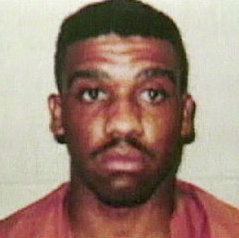
The night Napoleon Beasley died, two families were shattered—one by murder, the other by execution. Both lives cut short, their intertwined fates underscore the deep wounds inflicted by violence and an unyielding justice system. The echoes of this case continue challenging America’s capital punishment policies.
Source: YouTube