A Tennessee congressman has issued a stark warning that classified information on Unidentified Aerial Phenomena is so alarming its public release would cause national panic and sleepless nights. Representative Tim Burchett made the explosive claim following a series of confidential briefings with multiple U.S. government agencies, stating the withheld details are of profound gravity. His comments fuel an already intense bipartisan push in Congress for full transparency on UFOs, now formally termed UAPs, suggesting the truth is far more unsettling than official accounts have ever acknowledged.
“If the American people knew what I was shown, this country would have come unglued,” Burchett stated bluntly. “You’d be up all night.” The Republican lawmaker, a long-time advocate for government disclosure on extraterrestrial matters, did not provide specific details from the classified sessions. He described being briefed by what he called “alphabet agencies” on unexplained phenomena, implying a level of coordination and secrecy that extends beyond any single department.
Burchett further intensified the mystery by suggesting a sinister reason for continued secrecy. He indicated that individuals with direct knowledge of these phenomena have allegedly disappeared or died under unexplained circumstances. This assertion paints a picture of a subject so sensitive it is protected by a veil of intimidation, preventing insiders from coming forward with what they know. The congressman revealed he had personally urged former President Donald Trump to release all UFO-related information to the public during his administration.
These revelations arrive amid unprecedented congressional action on the UAP issue. Bipartisan efforts have led to hearings, the establishment of official reporting channels, and legislative mandates for greater disclosure from the Pentagon and intelligence community. The shift in tone from fringe topic to serious national security concern marks a significant turning point in the decades-long debate over what the government truly knows.
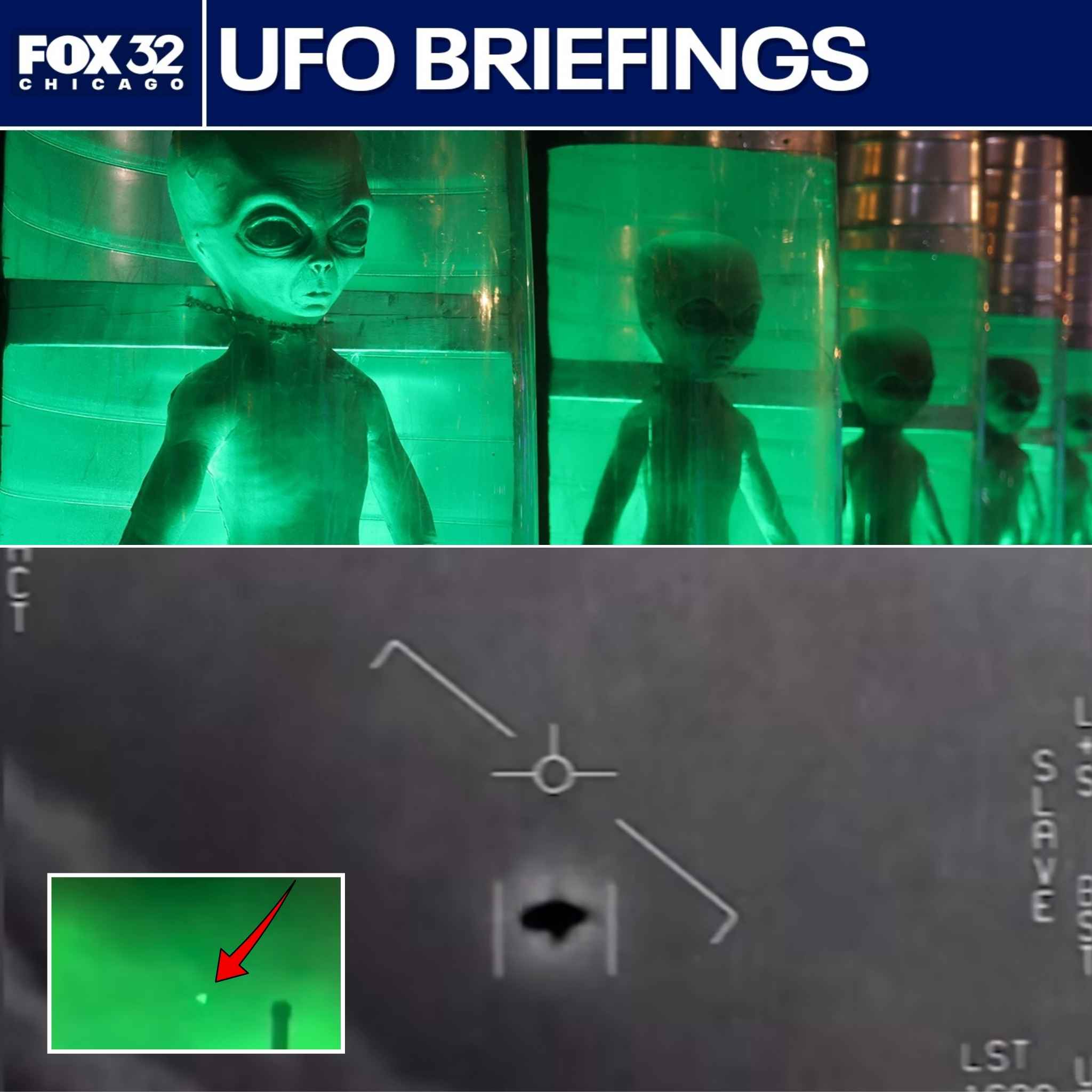
Public intrigue is simultaneously fueled and frustrated by the visual evidence released so far. While the U.S. Department of Defense has declassified several videos, including the now-famous “Tic Tac” and “Gimbal” footage captured by Navy pilots, the images are often grainy and dark. Pilots have testified to objects exhibiting physics-defying capabilities, such as instantaneous acceleration and hypersonic travel without sonic booms, far beyond any known human technology.

This contrast between compelling witness testimony and ambiguous visual proof creates a persistent dilemma. In an age of ubiquitous high-definition cameras and constant surveillance, the public questions why clearer documentation of these advanced craft remains elusive. The technological paradox—objects displaying capabilities centuries ahead of our own yet only captured in blurry footage—deepens the mystery and skepticism surrounding official narratives.
The philosophical implications of Burchett’s warnings extend beyond government secrecy. His statement taps into a fundamental human anxiety about our place in the cosmos. If non-human intelligence is not only real but already operating in our skies with impunity, it fundamentally challenges humanity’s perceived sovereignty and technological mastery. The potential for societal disruption upon confirmation is a key reason often cited for maintaining secrecy.
Scientists and logicians often point to the sheer scale of the universe as statistical near-certainty for other life. With billions of galaxies, each containing billions of stars and planets, the odds seem overwhelmingly in favor of extraterrestrial existence. However, the gap between microbial life or distant civilizations and the notion of them visiting Earth is vast, hinging on theories about faster-than-light travel or dimensional manipulation that remain in the realm of theoretical physics.
A counterpoint, often cited to assuage public fear, is the “argument from non-destruction.” If such advanced entities have been present for decades, as some reports suggest, and have not initiated overt hostility, their intentions may be neutral or even benign. They could be engaged in long-term observation, scientific study, or simply possess motives beyond human comprehension. This logic, however, offers little comfort against the unknown.
The role of modern technology, particularly artificial intelligence and advanced sensor systems, is becoming central to the investigation. Proponents of disclosure argue that new AI-driven analysis of radar data, satellite imagery, and military sensor logs could finally provide irrefutable, high-quality evidence. The same technology also complicates the issue, as sophisticated deepfakes and computer-generated imagery make authenticating any new public footage increasingly difficult.

Burchett’s call for transparency reflects a growing sentiment in Washington that the American public’s right to know outweighs the potential risks of panic. This movement argues that democratic accountability requires honesty about a phenomenon that violates sovereign airspace with regularity and poses potential threats to aviation safety and national security. The continued classification, they contend, fosters distrust and allows for unchecked speculation.
The international dimension cannot be ignored. Other nations, including China and Russia, are undoubtedly conducting their own investigations into UAPs. The race for understanding—and potentially reverse-engineering any recovered technology—adds a layer of great-power competition to the mystery. Full U.S. disclosure could prompt similar revelations abroad, potentially rewriting global scientific and strategic paradigms overnight.
For now, the public is left with a chilling soundbite from a sitting congressman and a growing archive of puzzling videos. The gap between what trusted officials like Burchett hint at in private and what is confirmed in public grows wider, straining the credibility of institutions. The promise of further congressional hearings and mandated reports offers a glimmer of hope for concrete answers, but the process remains slow and guarded.
Ultimately, Representative Burchett’s warning serves as a potent catalyst for the ongoing debate. It transforms the UAP discussion from an abstract inquiry about lights in the sky to a urgent question about the limits of government secrecy and humanity’s preparedness for a profound truth. Whether his alarming characterization is borne out by future disclosures remains to be seen, but his words have undoubtedly raised the stakes, ensuring the public will watch the skies—and Washington—with heightened anticipation and concern. The quest for clarity continues, driven by the fear that what we don’t know could be the most important discovery in human history.
Source: YouTube