A new era of lunar exploration is no longer a question of if, but who, and for the first time, the full scope of one nation’s decades-long strategy is coming into sharp, startling focus. China’s meticulous, step-by-step conquest of the Moon is not merely for prestige; it is a calculated campaign to secure the ultimate strategic resource: the keys to the solar system itself.
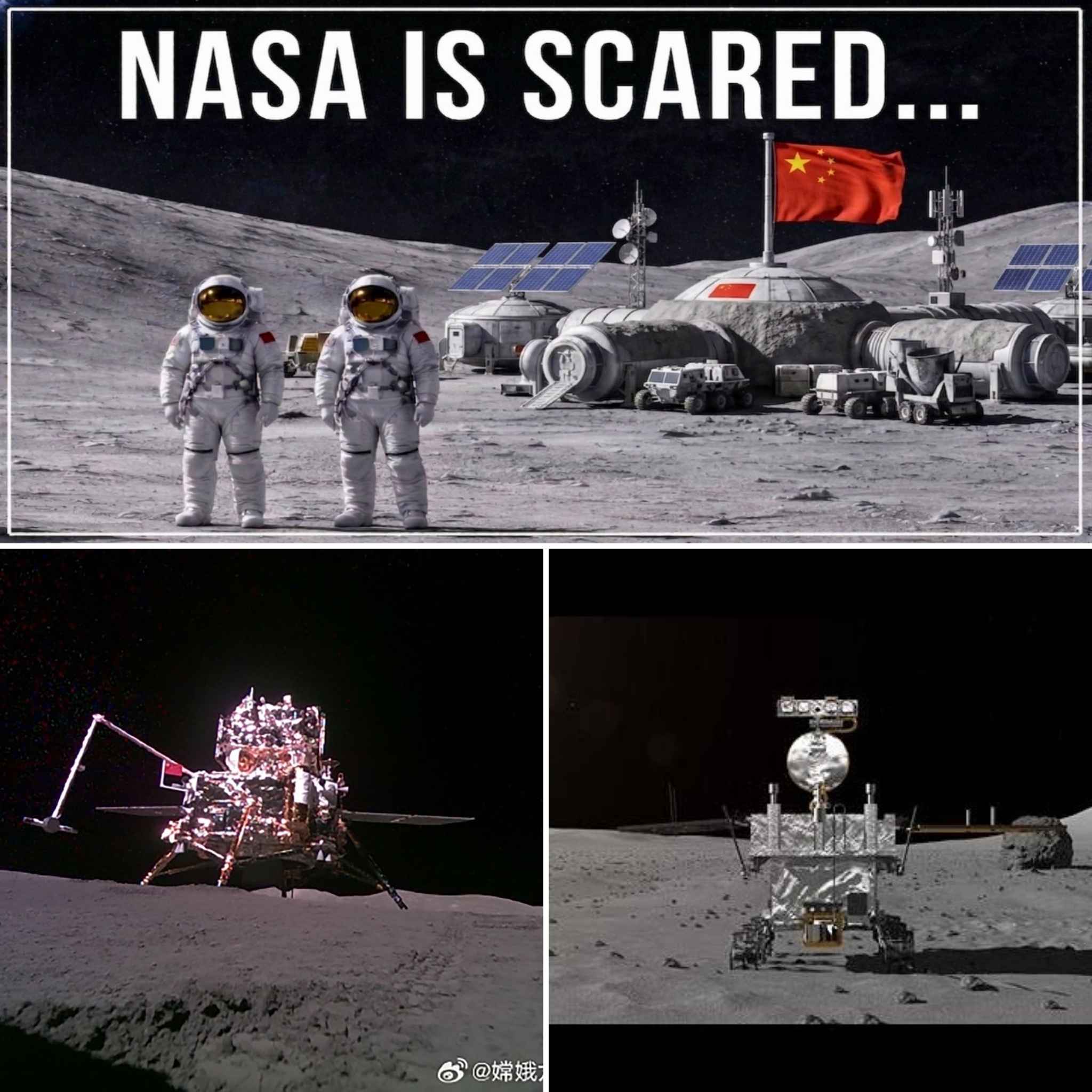
For nearly two decades, China has executed a masterclass in long-term space planning, moving with a patience that has baffled outside observers accustomed to spectacle. While others announced grand return plans, China worked silently through a four-phase blueprint: orbit, land, return samples, and build. Each mission, from the Chang’e 1 orbiter in 2007 onward, was a deliberate brick in a foundation few fully appreciated.
The early missions mapped the lunar surface in unprecedented detail. The Chang’e 3 lander and its Yutu rover in 2013 then shattered scientific consensus, discovering a new type of volcanic rock that proved the Moon’s geological history was far more complex and varied than the Apollo samples had suggested. The Moon was not a monolithic rock, but a world with a diverse, untold story.
China then achieved what was long considered impossible. In 2019, Chang’e 4 made the first-ever soft landing on the lunar far side, deploying a rover into the vast South Pole-Aitken basin. This feat, enabled by a pre-positioned relay satellite, was a stunning demonstration of technical prowess. It was merely a prelude.
In 2024, Chang’e 6 performed a staggering technological ballet on that hidden far side. It landed, collected samples, launched an ascent vehicle, docked in lunar orbit, and returned the cargo to Earth—a first in human history. The returned rocks, nearly 2.9 billion years old, further rewrote the timeline of lunar volcanic activity.

Yet, these historic achievements are not the final objective. They are reconnaissance missions for the true prize: the lunar south pole. Here, in craters plunged into permanent, billion-year darkness, temperatures sink below -200°C. Scientists are now certain these deep-freeze traps hold vast reserves of water ice, delivered by ancient comets and perfectly preserved.
The presence of water ice changes everything. It is not merely a resource for drinking; it is the feedstock for the future. When split into oxygen and hydrogen, it becomes breathable air and powerful rocket fuel. A station capable of harvesting this ice transforms the Moon from a destination into an interplanetary gas station.
Launching from the Moon’s weak gravity is exponentially cheaper than from Earth. Thus, a fueled lunar depot could slash the cost and complexity of missions to Mars and beyond. Whoever controls this resource gains an insurmountable strategic advantage in the next century of space exploration. China is now moving to claim it.
The next phase is already in motion. Chang’e 7, slated for 2026, is arguably the most ambitious robotic lunar mission ever conceived. It will deploy a suite of assets, including a revolutionary hopping probe designed to leap into those permanently shadowed craters. This nimble robot, immune to the darkness that cripples solar-powered rovers, will directly sniff for and analyze water ice deposits.
Confirmation of accessible ice will trigger the next critical step: learning to build with what the Moon provides. Chang’e 8, planned for around 2029, will pioneer in-situ resource utilization (ISRU). Experiments will test manufacturing bricks from lunar soil, extracting oxygen from minerals, and potentially using 3D printers to construct infrastructure autonomously.

This robotic groundwork paves the way for the culmination of China’s entire lunar program: the International Lunar Research Station (ILRS). This planned permanent base at the South Pole is intended to begin construction in the early 2030s, growing from a robotic outpost to a habitable station supporting human crews for extended stays.
Concurrently, China’s human spaceflight program is advancing at a relentless pace. The new Long March 10 rocket and Mengzhou crew spacecraft have passed critical tests. The architecture for crewed landings, involving dual rocket launches and lunar orbit rendezvous, is taking shape, with the first Chinese astronauts expected on the surface before 2030.
The implications are profound. This is not a symbolic flag-planting exercise. It is the systematic establishment of a functioning, sustainable foothold that turns the Moon into a strategic asset. The nation that controls this lunar beachhead will dictate the economics and logistics of deep-space travel for generations.
Dozens of nations have already expressed interest in joining China’s ILRS project, suggesting a potential shift in the geopolitical landscape of space. While the United States leads the Artemis Accords, China is building a parallel, tangible coalition centered on a shared physical infrastructure.
The message is now clear. China’s lunar program, once dismissed as derivative, is a long-game strategy of breathtaking scale and ambition. Every orbiter, every rover, every sample return has been a single move in a decades-long campaign to secure humanity’s off-world future. The race is no longer about who visits next, but who stays, builds, and controls the gateway to everything beyond. The foundation for that future is being laid right now, in the silent dust of the Moon.
Source: YouTube