A seismic shift is occurring in archaeology as artificial intelligence begins to decipher languages lost for millennia, revealing truths that are fundamentally rewriting human history. From the ashes of Vesuvius to the deserts of Peru, machines are listening to whispers from civilizations we thought were silent forever, and what they are saying is unsettling experts.
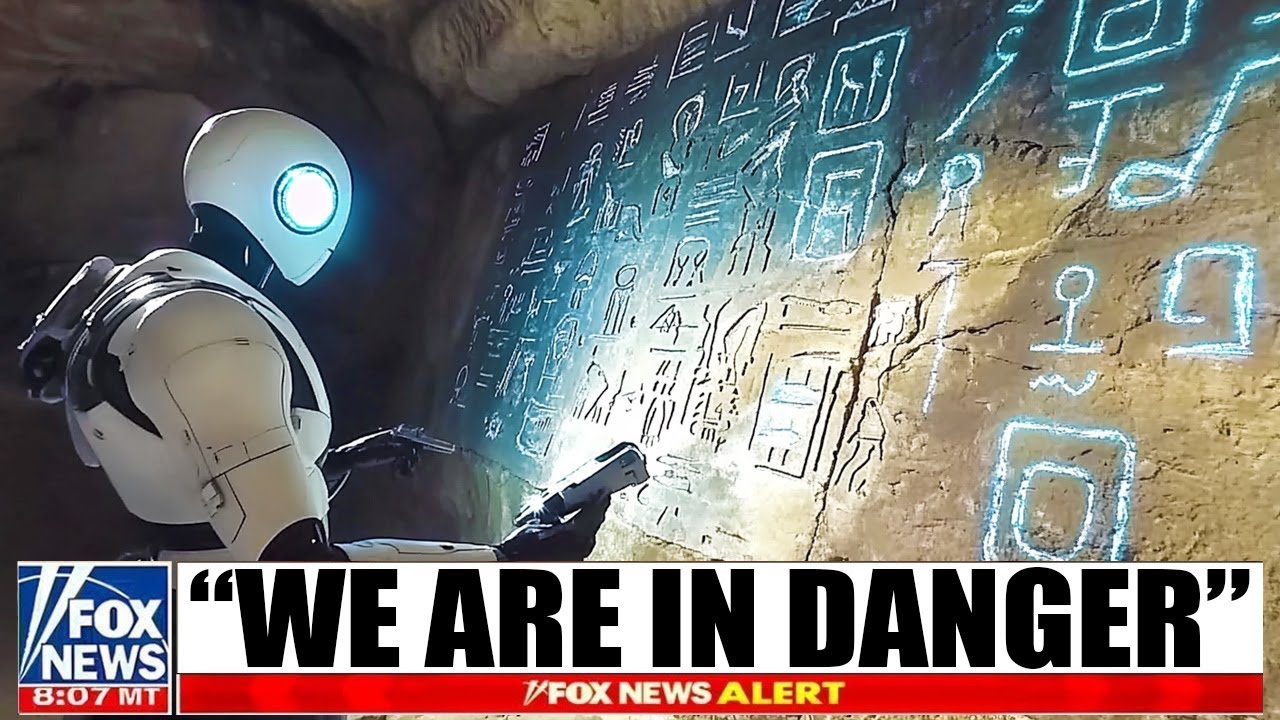
The breakthrough extends globally. In Eastern Europe, AI pattern recognition has confirmed that the 7,000-year-old Danube script is a structured language, potentially making it the oldest writing system on Earth. Its intentional syntax, decoded from pottery fragments, suggests a sophisticated culture flourishing while much of humanity was in its infancy.
Meanwhile, the infamous Herculaneum scrolls, carbonized and unreadable since 79 AD, have begun to yield their secrets. A team, spearheaded by 21-year-old Luke Farritor, used machine learning to virtually unroll the papyri, winning the Vesuvius Challenge. They have now decoded over 2,000 Greek letters, recovering the philosophical musings of Philodemus on pleasure from the ashes.
In the Middle East, AI is processing ancient Akkadian cuneiform at an unprecedented scale. Models from Tel Aviv and Ariel Universities act as a “Google Translate” for the 5,000-year-old Semitic tongue, rapidly translating trade logs and literary epics like Gilgamesh from hundreds of thousands of clay tablets, amplifying the voice of humanity’s oldest recorded civilization.
Even foundational religious texts are being re-examined. AI analysis of the Dead Sea Scrolls in 2021 revealed the Great Isaiah Scroll was the work of two scribes, not one, suggesting organized scriptoriums and challenging long-held assumptions about the production of these sacred texts.
The most profound mysteries are now under assault. The 4,500-year-old Indus Valley script, long considered indecipherable without a Rosetta Stone, has been shown by AI Markov models to possess a clear, language-like structure. Similarly, AI is chipping away at Proto-Elamite from Iran and Meroitic from Sudan, detecting grammatical patterns in scripts that have defied experts for over a century.

This technological revolution is not limited to ink and clay. In Peru, AI image recognition scoured satellite imagery of the Nazca desert, discovering 303 new geoglyphs in mere months—a task that took humans nearly a century to accomplish for 430. The algorithms found depictions of humans, whales, and ritual scenes invisible to the naked eye.
Elsewhere, AI is interpreting non-textual languages. Researchers are using statistical modeling to analyze Inca khipus—complex knotted cords—searching for narrative meaning beyond simple accounting. The possibility that these strings encode stories, not just numbers, could revolutionize the understanding of Andean history.
The recovery effort also targets deliberately erased knowledge. For palimpsests—manuscripts scrubbed and rewritten—new AI techniques using deep generative networks can isolate and resurrect the original text. This has already recovered lost works by Archimedes hidden beneath medieval prayers, promising a flood of rediscovered classical knowledge.
Some efforts are a race against time to preserve culture. The women’s script Nushu, nearly extinct, is being revived by AI trained on just 35 sample pairs, translating its unique songs of sorrow and resilience into modern Chinese and ensuring its survival.

Yet, for all its power, AI meets its match in deliberate obscurity. The 600-year-old Voynich Manuscript, with its otherworldly illustrations and cryptic text, has resisted the most advanced algorithms. Theories of scrambled Hebrew or “Proto-Romance” have been proposed and debunked, leaving the book’s purpose an enigma that continues to defy both machine and human intellect.
The acceleration is staggering. Where Linear B took decades for a human genius to crack, AI models now achieve 67% cognate alignment with modern Greek in moments. Similarly, AI deciphered the ancient Semitic language of Ugaritic by aligning it with Hebrew in a matter of hours.
As neural networks now analyze the isolated Etruscan language and the unified Cypriot-Minoan script, detecting grammatical rules from thousands of inscriptions, a new era of historical understanding dawns. These tools do not tire, offering cold, statistical clarity to mysteries carved in stone.
The collective result is a terrifying and exhilarating revelation: our historical record is profoundly incomplete. The narratives of civilization’s rise, the spread of ideas, and the very origins of communication are being dismantled and reassembled in real time. AI is not just assisting archaeology; it is conducting a grand interrogation of the past, and the answers are challenging everything we thought we knew. The ancient world is speaking, and it has much more to say.
Source: YouTube