SAN QUENTIN, Calif. — A decorated U.S. Marine, awarded the Purple Heart for wounds sustained in one of Vietnam’s most brutal sieges, was executed by lethal injection early Tuesday at San Quentin State Prison, concluding a two-decade legal battle that forced a national reckoning on combat trauma, justice, and the fate of broken veterans.
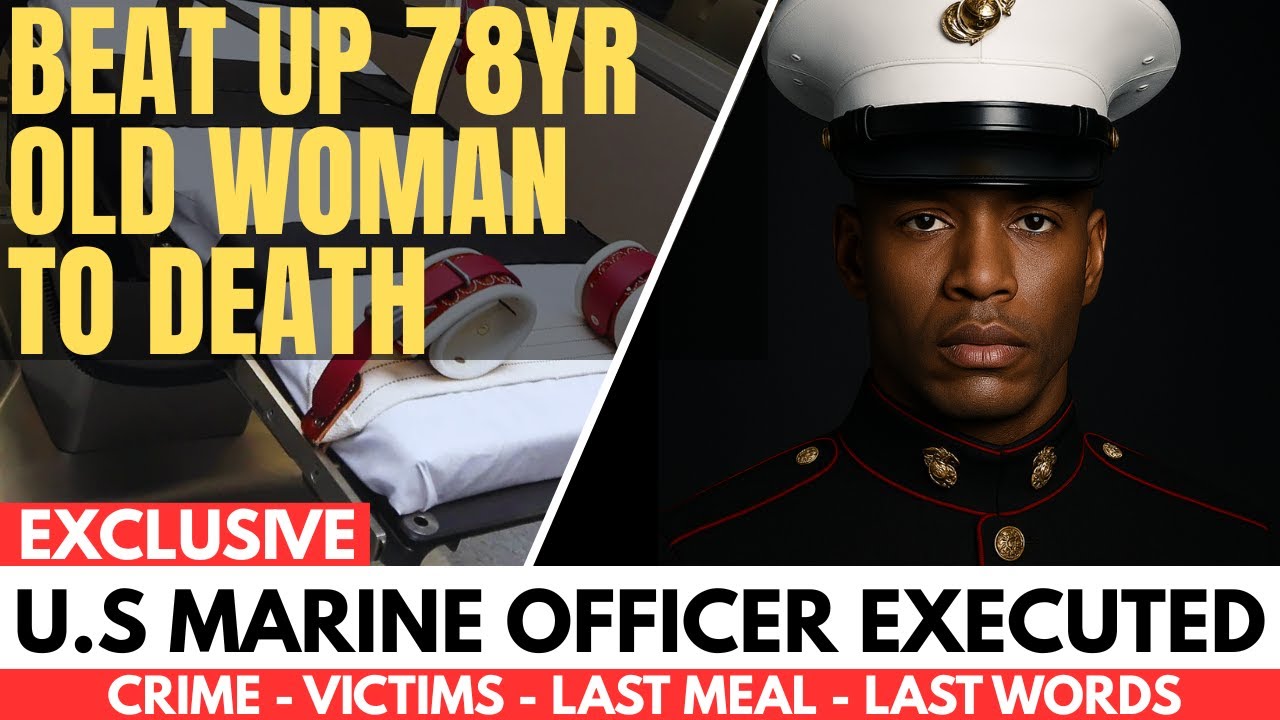
Manuel “Manny” Babbitt, 50, was pronounced dead at 12:33 a.m. on May 4, 1999, just one day after his birthday. His final act was to refuse a last meal, requesting instead that the $50 allotted for it be donated to homeless Vietnam veterans. Strapped to the gurney, his last words were a quiet, “I forgive all of you.”
Babbitt’s execution capped a tragic trajectory from the battlefields of Quang Tri Province to the death chamber. Deployed in 1968, he survived the 77-day hellscape of the siege at Khe Sanh, where he was gravely wounded. He returned home with severe, undiagnosed post-traumatic stress disorder, a ghost haunted by the war.
“He didn’t return home a hero. He returned a ghost,” a family member later recounted. For years, Babbitt spiraled through homelessness, hospitals, and deepening instability, receiving no meaningful mental health support from the Veterans Administration or other institutions.
The crime that condemned him occurred in 1980 in Sacramento. Babbitt broke into the home of 78-year-old Leah Schendel, a burglary that escalated into a violent assault leading to her death from a heart attack. He was later linked to a string of robberies and a sexual assault.
At trial, his defense did not contest his involvement but argued he was a casualty of war. Psychiatrists testified that his PTSD had rewired his brain, causing dissociative blackouts and psychotic episodes where he believed he was back in combat. They contended that Schendel may have been perceived as an enemy threat.

The prosecution acknowledged his service but painted him as a calculating predator. The jury convicted him and sentenced him to death. For nearly 20 years on death row, Babbitt’s case became a lightning rod. Veterans’ groups, mental health advocates, and anti-death penalty activists rallied, arguing the state was executing a man it had first broken and then abandoned.
The controversy intensified in 1998 when the military, reviewing his records, formally awarded Babbitt the Purple Heart for his combat wounds—a medal received behind bars. The award ignited a firestorm over the state’s moral contradiction in honoring and then killing the same man.
Pleas for clemency reached the desk of Governor Gray Davis, who rejected them. “A Purple Heart does not excuse murder,” Davis stated, allowing the execution to proceed. The decision cleaved public opinion, framing a stark debate between absolute justice for a horrific crime and mercy for a psychologically shattered veteran.
In the execution chamber, the scene was one of somber finality. Babbitt, who had spent his birthday in a holding cell adjacent to the death chamber, was calm. The donation of his last meal stood as a poignant, final rebuke to the system he believed failed him and countless others.
His body was returned to his hometown of Wareham, Massachusetts, where he was buried with full military honors—a hero’s rite for a condemned killer. The dichotomy of the ceremony underscored the unresolved tensions his case exposed.
The execution has provoked immediate and fierce reaction nationwide. Headlines blare, “From War Hero to Death Row,” as editorials question the ethics of executing veterans with severe, service-connected mental illness. Veterans’ organizations have condemned the outcome as a catastrophic failure of care.
“This case is not an anomaly; it’s a symptom,” stated the head of a national PTSD foundation. “Manny Babbitt was a walking casualty long before that crime. We train men to kill, break their minds in the process, and then punish them when that brokenness manifests. Where was the intervention?”
Conversely, advocates for victims and supporters of capital punishment maintain that the sentence was just. “Leah Schendel was a beloved grandmother, brutally victimized in her own home,” a family spokesperson said. “His service was honorable, but his crime was monstrous. Justice was served for her.”
Legal scholars predict Babbitt’s case will become a cornerstone in ongoing debates over abolishing the death penalty for the severely mentally ill. It raises profound questions about criminal culpability when a defendant’s mind has been ravaged by trauma inflicted in the nation’s service.
As the sun rose over San Quentin, the complex legacy of Manuel Babbitt was left to the public conscience. He remains a polarizing symbol: a Marine who fought for his country, a killer who took an innocent life, and a broken man whose final message was one of forgiveness and a plea to remember the forgotten.
The state of California has carried out its sentence, but the national conversation it demanded about duty, damage, and redemption has only just been reignited. The question of how a society treats the wounds of war that no medal can heal now hangs heavily in the air.
Source: YouTube