A groundbreaking DNA analysis has finally resolved one of the most persistent and sensitive mysteries in American presidential history, confirming a secret Abraham Lincoln vowed to take to his grave. The genetic evidence conclusively proves his mother, Nancy Hanks Lincoln, was born out of wedlock, a fact carrying devastating social and legal consequences in 19th-century America that Lincoln feared could destroy his political career.
 For over a century, historians bitterly contested the origins of Lincoln’s mother. The debate centered on a confidential admission Lincoln made around 1850 to his law partner, William H. Herndon. In a buggy ride in Illinois, Lincoln confessed, “My mother was a bastard, was the daughter of a noble man, so-called of Virginia.” He implored Herndon to keep the secret while he lived, understanding the explosive political weapon illegitimacy represented.
Herndon honored the request until after Lincoln’s assassination, publishing the claim in his 1889 biography, Herndon’s Lincoln. The revelation sparked outrage and denial from Lincoln’s family and many scholars, creating a schism in historical research. One faction, led by historian Louis A. Warren, argued Nancy was the legitimate daughter of a widow named Lucy Shipley Hanks. The paper trail was ambiguous, relying on scant frontier records.
The key documentary evidence was a 1789 Mercer County, Kentucky, grand jury indictment against a woman named Lucy Hanks for fornication, meaning she had given birth while unmarried. The court dismissed the charges in 1790, just after Lucy married Henry Sparrow. This timeline strongly suggested Nancy, born circa 1784, and her sister were born before that marriage.
To settle the debate, a team of genealogists led by Suzanne Hallstrom turned to mitochondrial DNA. This genetic material is passed unchanged from mothers to their children, tracing an unbroken maternal line. The researchers located living female-line descendants from two groups: those descended from Ann Lee Hanks, Lucy’s mother, and those descended from the Shipley sisters, whom Warren claimed were Lucy’s true siblings.

The laboratory results, revealed on the 150th anniversary of Lincoln’s assassination in 2015, were definitive. Every descendant from Ann Lee Hanks shared an identical, rare mitochondrial DNA signature. The Shipley descendants showed completely different, common European DNA. The two groups shared no recent maternal ancestry, utterly disproving the Shipley theory.
Lucy Hanks was indeed a Hanks by birth. Nancy Hanks Lincoln was, as Lincoln whispered, the illegitimate daughter of Lucy Hanks and an unknown father. The 150-year-old historical feud was over, validated by modern science. Yet the genetic data revealed a second, profound surprise that reached back millennia.
The haplogroup shared by all the Hanks-line descendants was X1C, an extraordinarily rare lineage in colonial American families. This genetic marker is most commonly found in North Africa, the Horn of Africa, and the Near East, with its highest concentration among the Druze populations of the Levant. It is virtually absent from Northern Europe.

This finding does not indicate recent ancestry from these regions but illuminates the deep, ancient migrations that shaped all human populations. It conclusively shatters the myth of pure, isolated European bloodlines in early America, revealing a far more complex and interconnected genetic heritage than traditional narratives have allowed.
The social context of Lucy Hanks’s indictment reveals why Lincoln guarded this truth so fiercely. In 18th and 19th century America, illegitimacy was not merely a stigma; it was a legal disability. A child born out of wedlock was filius nullius—nobody’s child—with no right to inherit, no claim to a father’s name or property. Unwed mothers faced criminal prosecution, public whipping, fines, and imprisonment.
In politics, such a background was potent ammunition. Opponents wielded accusations of immoral ancestry to destroy reputations and question a man’s fitness for office. Lincoln, a shrewd politician, knew his rise from frontier poverty to the presidency was improbable enough without this vulnerability. The secret was a threat to the Union he would later fight to preserve.
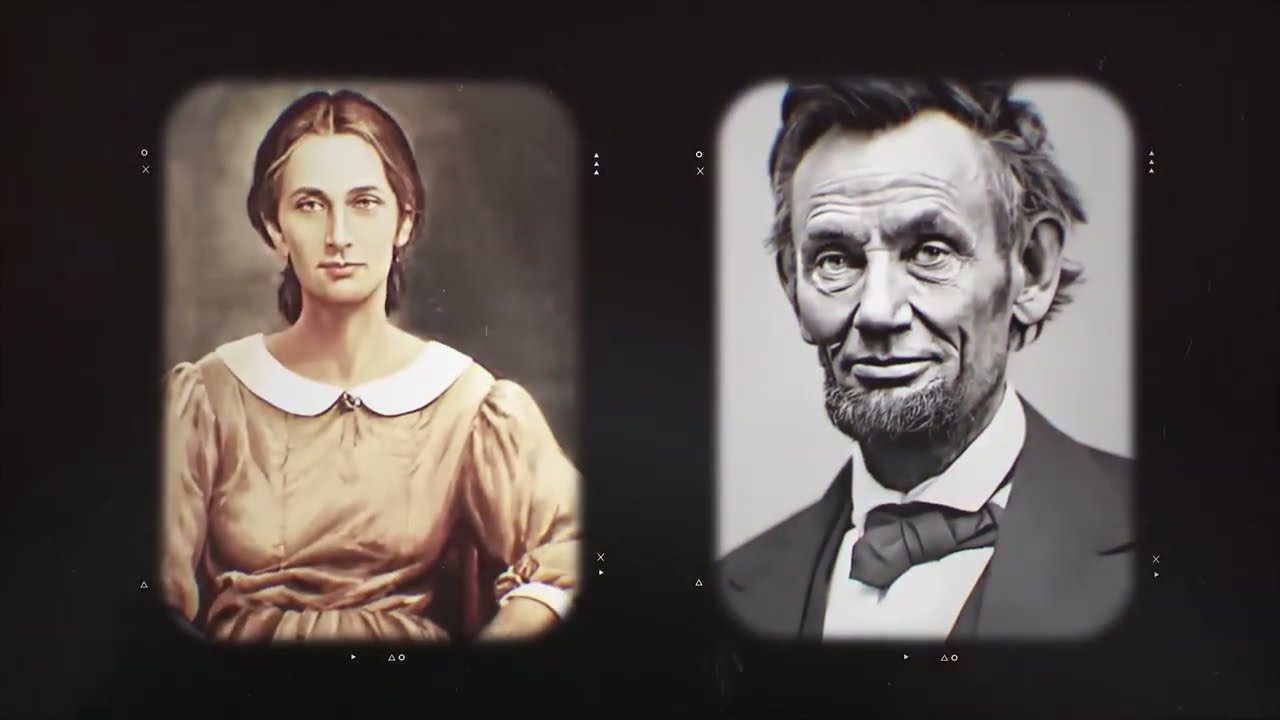
Nancy Hanks’s life was shaped by this stigma. Raised by her grandparents and later her aunt and uncle, she carried her mother’s maiden name, a tell-tale sign of her status under English common law. Despite this, contemporaries described her as intelligent, deeply religious, and capable. She married Thomas Lincoln in 1806 and died of milk sickness in 1818 when Abraham was nine.
Lincoln’s reverence for her was profound and lifelong. “All that I am or ever hope to be, I owe to her,” he said, a sentiment echoing his earlier confession to Herndon. The DNA confirmation adds poignant depth to that statement, underscoring the immense burden of secrecy he carried alongside his ambition.
The disturbing core of this story is not a genetic anomaly but the brutal social machinery that punished women like Lucy Hanks and marginalized children like Nancy. It is a system that forced a future president to conceal a fundamental truth about his own family. Lincoln’s greatness lies not in spite of these origins, but perhaps because of the resilience they demanded.
His achievements—preserving the Union, abolishing slavery, articulating a new birth of freedom—were accomplished by a man who knew a single courthouse document could be used to undermine his moral authority. The DNA evidence finally confirms the truth he could only share in a hushed confidence, revealing not a scandal but a testament to overcoming a prejudice that once held the power to erase lives from history’s record.
Source: YouTube