At 12:01 a.m. on May 10, 2002, Lynda Lyon Block became the first woman executed by the state of Alabama in 45 years. Her death by electrocution at Holman Correctional Facility brought a violent, nine-year legal saga to a close, one that began with the cold-blooded murder of an Opelika police sergeant in a Walmart parking lot.
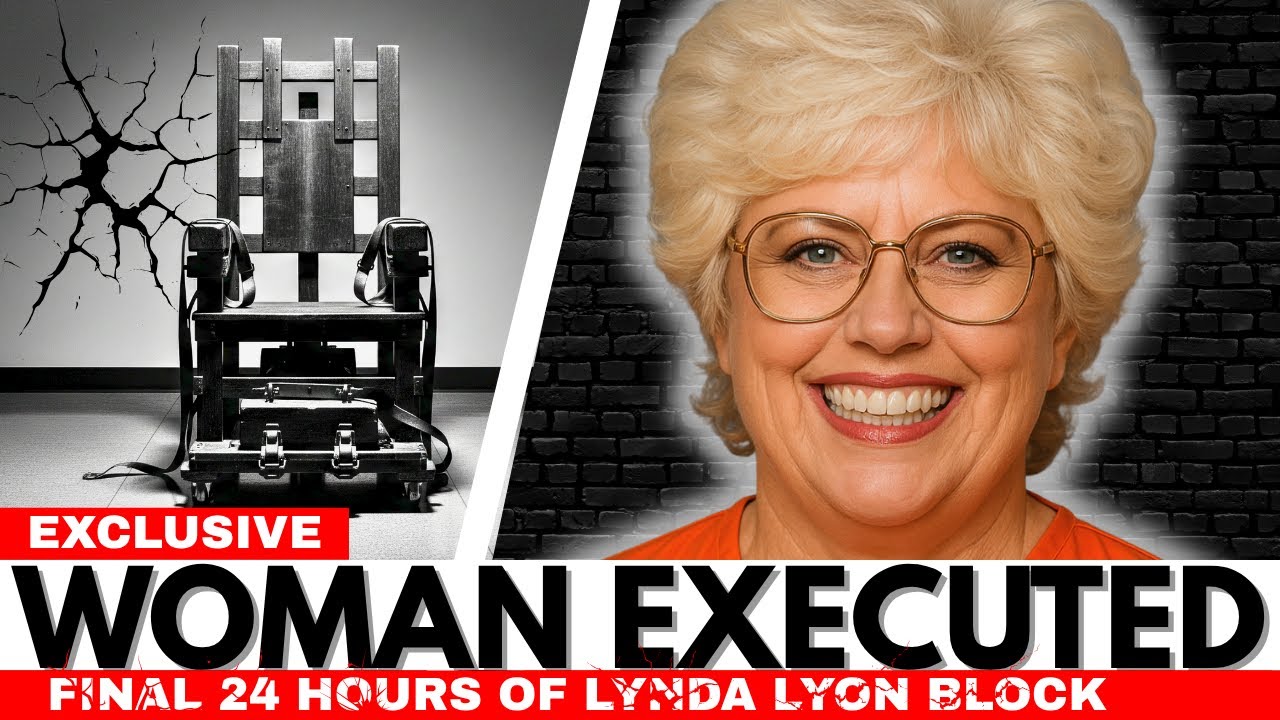
The execution proceeded without final words or a special last meal request. Officials pronounced Block dead at 12:10 a.m. following the administration of 1,900 volts. Her death marks a grim milestone as the last woman to be executed in Alabama by the electric chair without the option of an alternative method.
The path to the execution chamber began on October 4, 1993. Sergeant Roger Lamar Motley, Jr., a respected Opelika officer, responded to a welfare check concerning a young boy in a car. The vehicle was occupied by Block’s common-law husband, George Sibley, a fugitive with strong anti-government views.
What began as a routine interaction escalated with terrifying speed. Sibley argued with Motley over producing identification before drawing a weapon and firing. The officer returned fire, wounding Sibley, and retreated for cover behind his patrol car. The gunfire drew Lynda Block from a nearby pay phone.
Witnesses described Block’s approach as calm and predatory. She crouched, drew her own weapon, and fired at the wounded officer. After her first shot struck him, she reloaded with what one observer called “ruthless precision” and fired again. The second, fatal bullet hit Sergeant Motley in the chest.
Crucially, Motley had given his bulletproof vest to another officer earlier that day. He collapsed and died on the pavement as Block and Sibley, along with Block’s son, simply walked away from the scene, leaving a trail of witness testimony and forensic evidence.

The investigation moved with swift certainty. Block and Sibley were arrested within 48 hours. Both eventually confessed to their roles. Block’s statement to police was chillingly matter-of-fact, claiming she acted because the officer “was going to take my son away from me.” She displayed no remorse.
Her trial in 1994 revealed a life of escalating violence and defiance. Once a secretary for the Key West Humane Society and publisher of a political magazine called Liberatis, Block’s civic involvement masked a turbulent personal history marked by abusive relationships and criminal activity.
Just a year before Motley’s murder, Block and Sibley had broken into her ex-husband’s apartment, tied him to a chair, and stabbed him in the chest. They were fugitives from justice on those assault charges when the fatal encounter with Sergeant Motley occurred.
The prosecution’s case was overwhelming. Despite a defense arguing coercion and an abusive relationship with Sibley, the jury found Block guilty of capital murder. The sentencing phase highlighted her lack of emotion and the calculated nature of the killing.

On December 21, 1994, Lynda Lyon Block was sentenced to death. George Sibley received a life sentence. Block’s subsequent years on death row were defined by a series of failed appeals, including claims of mental incompetence, all rejected by the courts.
The execution’s aftermath leaves profound and lingering questions about justice and closure. For the family of Sergeant Roger Motley, the pain remains a heavy burden. “He was a good man,” his mother stated through grief. “He didn’t deserve this. He was just doing his job.”
The case forces a stark examination of how a woman involved in charity and community service could descend into calculated murder. It underscores the devastating finality of violence and the long, arduous pursuit of justice through the legal system.
Alabama’s execution of Lynda Lyon Block closes a specific chapter of legal history but opens enduring debates about the death penalty, the roots of criminality, and the true meaning of justice for victims and society. The echoes of the gunshots in Opelika continue to resonate.
Source: YouTube