A shocking series of judicial failures and medical malfunctions has allowed condemned prisoners across centuries and continents to survive their own state-sanctioned executions, raising profound ethical and legal questions about the machinery of death. From botched lethal injections to miraculous survivals on the gallows, these cases stand as grim testaments to the fallibility of capital punishment.
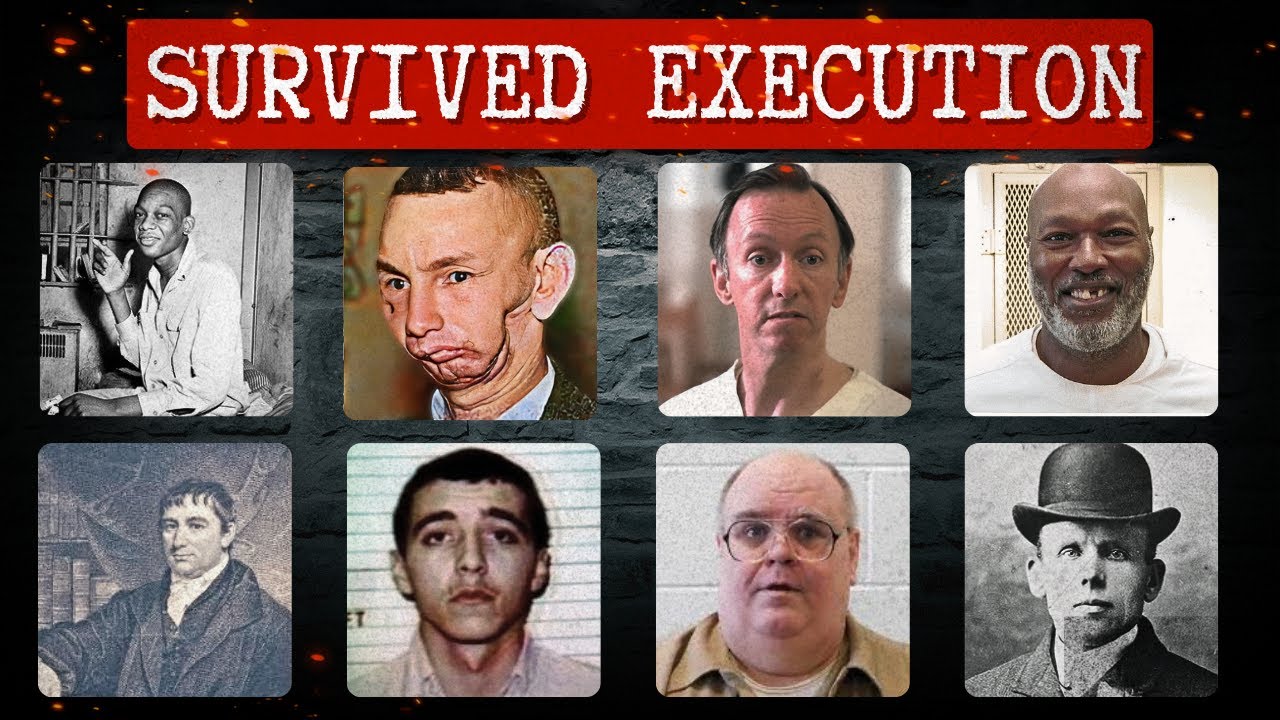
The most recent case comes from Alabama, where inmate Kenneth Smith was subjected to a pioneering and controversial execution by nitrogen hypoxia on January 25th, 2024. This followed a horrific, failed lethal injection attempt in 2022, where executioners spent four hours repeatedly and painfully jabbing needles into his arms, hands, and clavicle. Smith’s final statement, muffled by the execution mask, declared, “Tonight Alabama made humanity take a step back.”
Smith’s ordeal is not an isolated incident in Alabama. Just months earlier, on September 22nd, 2022, the state failed to execute Allan Eugene Miller by lethal injection. For nearly two hours, executioners pierced his limbs in a futile search for a vein, leaving him bleeding and strapped to a gurney before abandoning the procedure. Miller was ultimately executed by nitrogen hypoxia in September 2024.
Ohio witnessed a similarly traumatic scene in 2009 with inmate Romell Broom. Executioners spent over two hours attempting to find a viable vein for lethal injection, causing extreme pain through repeated needle sticks. The state was forced to halt the execution, granting Broom a reprieve that lasted until his death from COVID-19 in 2020, having evaded the executioner’s needle.
The electric chair, a symbol of irrevocable power, has also failed. In a notorious 1946 case, 17-year-old Willie Francis survived a jolt of 2,000 volts in Louisiana’s portable electric chair, reportedly due to improper setup by a drunken guard. His lawyer appealed to the Supreme Court, arguing a second attempt would constitute cruel and unusual punishment. The appeal failed, and Francis was successfully executed a year later.

Historical records are replete with even more astonishing survivals, often attributed to divine intervention. In 1803, convicted robber Joseph Samuel was hanged in Sydney three separate times in one day. Each time, the rope inexplicably broke or loosened. A stunned governor, examining the intact ropes, commuted his sentence to life imprisonment, agreeing with the crowd it was a sign from God.
England’s gallows claimed another unlikely survivor in 1885 with John Lee. Despite three attempts to open the trapdoor beneath him, the mechanism failed each time only when Lee stood upon it. Dubbed “the man they could not hang,” his sentence was commuted to life. He was later released after new evidence emerged, though his ultimate fate remains a mystery.

Perhaps the most medically miraculous case is that of Anne Green, hanged in Oxford in 1650 for infanticide. After dangling for 30 minutes and being placed in a coffin for dissection, doctors noticed a pulse. She was resuscitated, fully recovered, and later pardoned, going on to marry and have children.
Even the firing squad is not foolproof. Mexican soldier Wenceslao Moguel, executed during the revolution, survived being shot eight or nine times and a final point-blank shot to the head. He played dead, later crawled to a church, and was nursed back to health, living the rest of his life permanently disfigured.
These harrowing accounts, spanning from 1650 to the present day, expose a disturbing reality: the line between execution and torture can vanish in a haze of incompetence, faulty equipment, and human biology. Each survival forces a painful public reckoning, challenging the very notion of a humane and efficient death penalty and leaving an indelible mark on the history of criminal justice. The condemned who lived continue to haunt the system that failed to kill them.
Source: YouTube