A 3,000-year-old stone monument, carved by a pagan king centuries before the birth of Islam, has resurfaced as a pivotal piece of evidence in a centuries-old theological debate, directly challenging a core Islamic claim regarding the integrity of prior scriptures. The Black Obelisk of Shalmaneser III, an Assyrian victory pillar, provides startling independent corroboration of the Biblical narrative, presenting a formidable archaeological counterpoint to the Quranic assertion of textual corruption in earlier holy books.
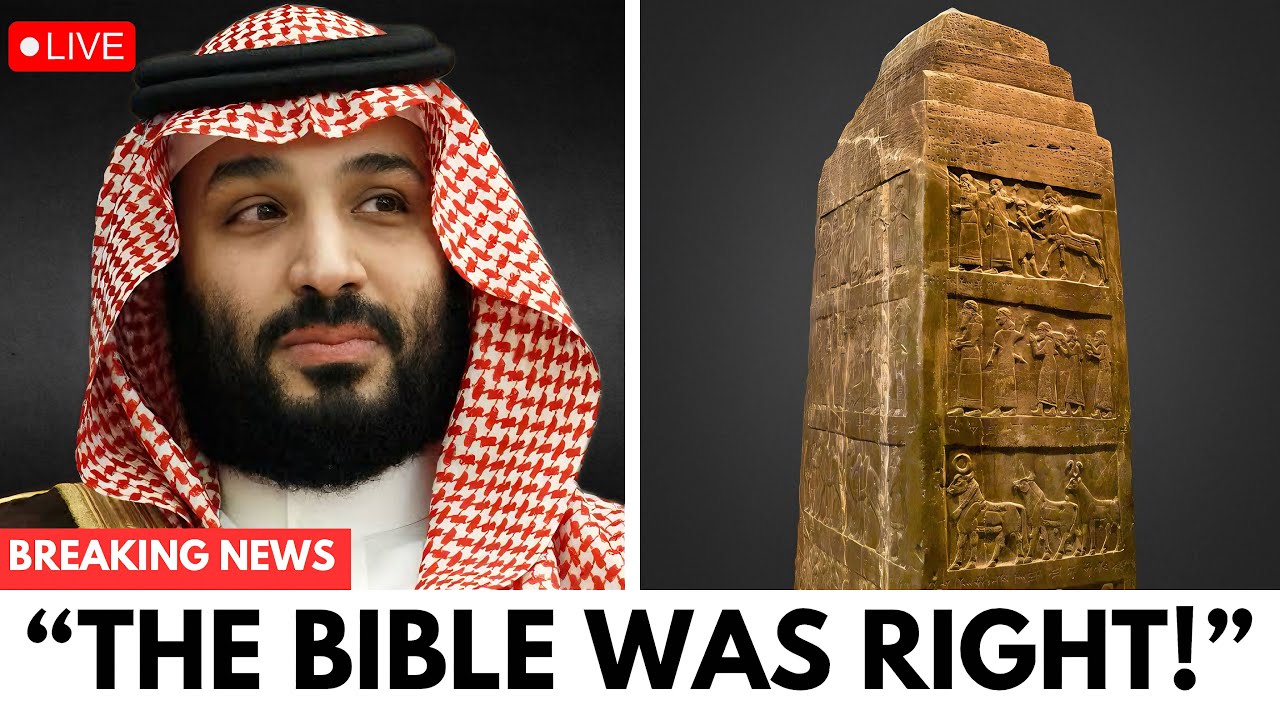
Unearthed in 1846 from the ruins of Nimrud, the ancient Assyrian capital, the six-foot black limestone obelisk lay forgotten for millennia. Archaeologists initially regarded it as another royal artifact boasting of military conquests. Its true significance, however, was locked within its intricate cuneiform inscriptions and detailed bas-relief panels, awaiting translation.
The monument meticulously documents the tributes paid by five subjugated kings to the Assyrian ruler Shalmaneser III, who reigned in the 9th century BC. Each panel is a frozen moment of imperial dominance, depicting servants bearing gold, exotic animals, and rare treasures from vanquished lands. Its purpose was unequivocal: to proclaim the absolute power of the Assyrian Empire.
It is the second register of carvings that sent shockwaves through the worlds of archaeology and theology. The panel depicts a foreign king prostrating himself, face to the ground, before the standing figure of Shalmaneser. Accompanying the scene is a concise Akkadian inscription that, when deciphered, identified the supplicant in unambiguous terms.
The inscription records the receipt of tribute from “Jehu, son of Omri.” This name is a direct match for King Jehu of Israel, a major figure described in the Second Book of Kings. Historians widely acknowledge this carving as the earliest known contemporary depiction of an Israelite. The enemy of Israel had inadvertently preserved his image and name for posterity.
The Biblical account portrays Jehu as a transformative and violent reformer, anointed to overthrow the corrupt dynasty of Ahab and Jezebel and eradicate Baal worship from Israel. His story is one of divine mandate and bloody revolution, culminating in the statement, “Thus Jehu destroyed Baal from Israel” (2 Kings 10:28).
The obelisk’s tribute list—including silver, gold, golden vessels, tin, and spears—offers a tangible, archaeological receipt for a historical event. While the Bible details Jehu’s religious purge and internal coup, it does not mention this payment to Assyria. This omission itself is telling, highlighting the Biblical text’s focus on theological narrative over political minutiae.

Critically, the Assyrians were not chroniclers of Israelite history for its own sake; they were its geopolitical adversaries and conquerors. Their record is an independent, hostile witness. They had no theological investment in preserving the accuracy of Israel’s scriptures, yet their monument confirms the existence, name, and approximate timeframe of a specific Biblical king.
This independent confirmation strikes at the heart of a foundational Islamic theological position. The Quran, revealed over 1,400 years after the obelisk was carved, repeatedly states that earlier divine scriptures—the Torah (Tawrat) and Gospel (Injil)—were corrupted (tahrif) by their adherents over time, necessitating the final, perfect revelation in Arabic.
The Black Obelisk presents a profound empirical challenge to this claim. Here is a physical artifact, predating Islam by nearly two millennia, created by a polytheistic empire with no stake in Judeo-Christian disputes. It objectively validates a specific person and polity from the Biblical narrative, exactly where the Old Testament places them.
The implications are significant for historical and textual criticism. It suggests that the core historical framework of the Biblical account, at least for this period, was accurately preserved and transmitted for centuries, long before the Quranic revelation. The stone acts as a fixed point in history, anchoring the Biblical text to a verifiable archaeological reality.
Furthermore, the obelisk illuminates the nature of Biblical historiography. Unlike the boastful and often exaggerated royal annals of Assyria, the Biblical record of Jehu is strikingly candid. It celebrates his eradication of Baal worship but also criticizes his failure to abandon other sins, a level of critical introspection absent from most ancient royal chronicles.

Today, the Black Obelisk resides in the British Museum, a silent sentinel from the age of empires. To the casual observer, it is a masterpiece of ancient propaganda. To scholars and theologians, it is a Rosetta Stone connecting archaeology and scripture, a pagan king’s boast that became one of the Bible’s most powerful external validations.
The discovery underscores a fundamental principle of archaeology: artifacts often speak truths their creators never intended. Shalmaneser III sought only to glorify his own power for eternity. Instead, his monument now testifies to the historical reliability of a narrative he would have dismissed, fueling a debate that would not begin until millennia after his empire turned to dust.
This confrontation between stone and scripture continues to resonate. It moves the discussion beyond theological assertion into the realm of material evidence, asking how claims of later textual corruption can be reconciled with earlier, independent corroboration of the very texts said to be altered. The obelisk does not settle theological faith, but it irrevocably shapes the historical context in which that faith is debated.
The enduring power of the Black Obelisk lies in its silent, immutable testimony. In an age of digital ephemera, it is a tangible link to a world of kings and prophets, its carved lines offering a fixed point of reference in the swirling currents of historical and religious interpretation. It reminds us that the past, though often buried, is never truly silent.
Source: YouTube