A Texas man has been executed for a brutal 1983 murder, maintaining his innocence with his final breath and naming another individual as the true killer, in a case plagued by persistent doubts over evidence and witness identification. Carlos Deluna, 27, received a lethal injection at the Huntsville Unit on December 7, 1989, for the fatal stabbing of Wanda Lopez, a single mother working at a Corpus Christi gas station.
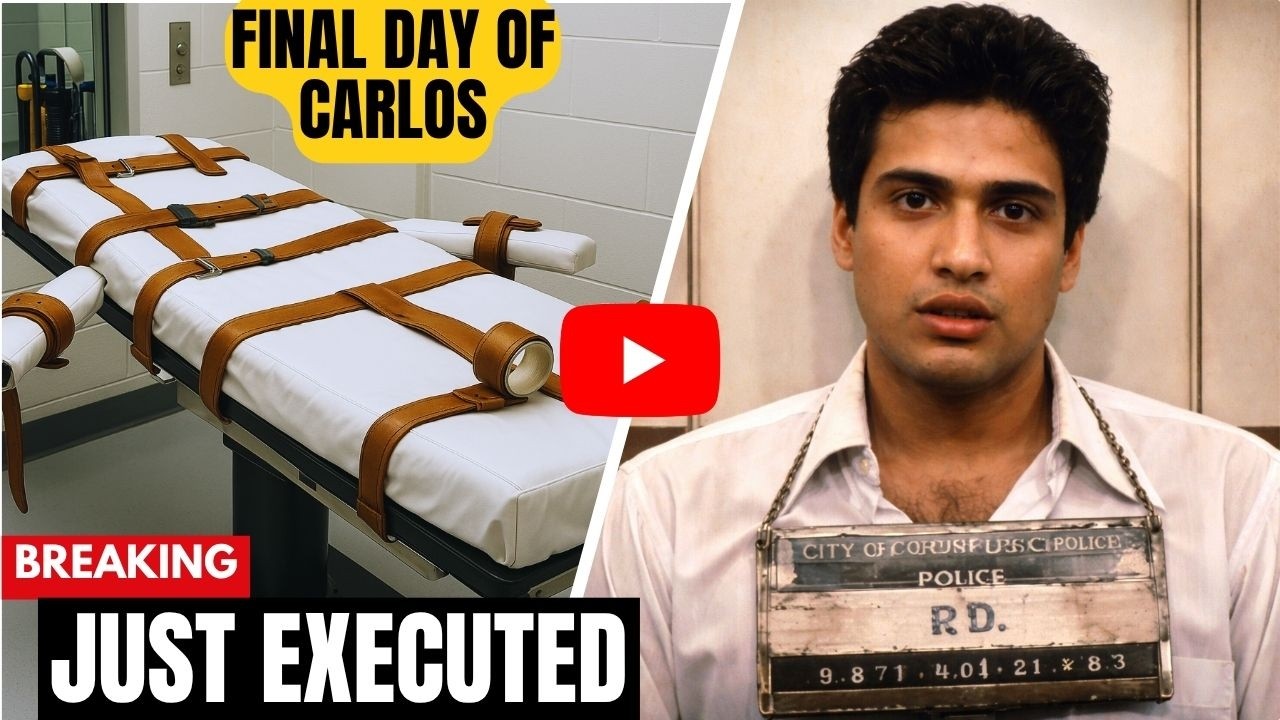
The crime that sent Deluna to death row was captured in harrowing detail. On February 4, 1983, Lopez called 911 from the Sigmor Shamrock Gas Station, whispering that a man with a knife was inside. Dispatchers heard a struggle and her screams before the line went dead. Police arrived to find Lopez critically wounded; she died shortly afterward.
Officers, searching nearby, found Deluna hiding under a pickup truck roughly 40 minutes after the attack. He was shirtless and shoeless, and appeared intoxicated. Despite his proximity to the scene, police found no murder weapon on him and, critically, no blood on his person or clothing—a glaring inconsistency given the violent, close-quarters nature of the crime.
Deluna immediately professed his innocence, telling officers another man named Carlos Hernandez was responsible. This claim was largely dismissed by investigators. The prosecution’s case instead relied heavily on a single eyewitness, Kevin Baker, who identified Deluna after police brought him to view the shirtless suspect handcuffed in a patrol car.
Baker later expressed uncertainty, stating his identification was influenced by police suggestion. His initial description of a mustached, disheveled drifter fleeing northwest did not match Deluna, who was clean-shaven and had been seen east of the station earlier that night wearing a white button-down shirt and dress pants.

At trial, the emotional 911 recording was played for the jury. The prosecution argued Deluna killed Lopez during a robbery, though no money was taken. They presented Baker’s identification and, pivotally, asserted that Carlos Hernandez was a “phantom,” a fabrication by Deluna. The defense highlighted the lack of physical evidence but was unaware of information undermining the state’s narrative.
Unknown to the defense, Carlos Hernandez was a real person with a history of knife violence. Just two months after Lopez’s murder, Hernandez was arrested behind a convenience store carrying a knife. Police informants had also reported Hernandez confessed to the killing, information never pursued. One prosecutor had prior knowledge of Hernandez from another stabbing case.
Deluna’s background played a significant role in his portrayal. Growing up in poverty with a record of non-violent theft, he was on parole at the time of the murder. Described as having low intellectual functioning, he was seen by authorities as a habitual offender, a perception that may have hastened the focus on him as the prime suspect.
After a swift trial and brief deliberation, the jury found Deluna guilty and sentenced him to death. Over nearly six years on death row, his appeals were consistently denied. He never wavered from his account, insisting Hernandez was the real killer in a system that had deemed the man a fiction.

In his final hours, Deluna was visited by a chaplain and met with legal staff. For his last meal, he requested fried chicken, French fries, white bread, a hamburger, and a soda. He was then escorted to the execution chamber, where he delivered a final statement.
“I want to say I hold no grudges. I hate no one. I love my family. Tell everyone on death row to keep the faith and don’t give up,” Deluna said. He then reiterated his longstanding claim: “I am innocent, innocent, innocent. I did not kill anyone. God is my witness, I am an innocent man, and something very wrong is taking place tonight.”
The lethal injection was administered shortly after his statement. He was pronounced dead at 12:12 a.m., closing a case that continues to be scrutinized for its reliance on a single, compromised eyewitness identification, the dismissal of an alternative suspect with a violent history, and the complete absence of physical evidence linking Deluna to the crime scene.
Decades later, investigations by journalists and legal scholars have revealed that Carlos Hernandez was not only real but was known to locals as a violent individual who bragged about killing Wanda Lopez and getting away with it because “they got the other Carlos.” Hernandez died in prison in 1999 of natural causes.
The execution of Carlos Deluna stands as a somber chapter in Texas judicial history, a permanent punishment carried out amid unresolved questions that continue to challenge the finality of the state’s ultimate sanction. The case underscores the profound consequences when doubt is not thoroughly investigated before a life is irrevocably taken by the state.
Source: YouTube