The retired probation officer spent decades reading criminals for a living, yet he saw nothing dangerous in the young man standing at the dock with a pregnant wife and a small child. That misreading cost Thomas Hawks and his wife Jackie everything. On November 15, 2004, the couple who had scrimped and saved their entire adult lives to retire early and live on the sea vanished without a trace from their 55-foot yacht named Well Deserved, a vessel that represented decades of hard work and the peaceful chapter they had finally reached. The man they trusted, a former child actor with a minor connection to the Mighty Morphin Power Rangers franchise, is now sitting on death row, convicted of orchestrating one of Orange County’s coldest murder-for-financial-gain cases. Skylar DeLeon, who has since transitioned and now goes by Skylar Preciosa, used the image of a wholesome young family as a weapon, a credibility performance so precise that it fooled a man professionally trained to see through deception.
Thomas Hawks had spent his career as a probation officer in California, a job that required years of watching people at their worst, reading deception, managing risk, supervising men and women the court no longer trusted to move freely through the world. He was trained professionally to see through people, and that detail matters a great deal in understanding the depth of this betrayal. Jackie Hawks was different in tone, warm, steady, deeply rooted in family, but she shared the same quality Thomas had, a life built carefully, on purpose, without shortcuts. Together, they had done the hard part, work, responsibility, decades of showing up, and then, finally, they stepped away from it. They bought the 55-foot yacht and named it Well Deserved, a statement that was not accidental, an exhale after a long time holding their breath. They sailed the Sea of Cortez and the Pacific coast for nearly two years of open water, slow mornings, and a life that finally belonged to them. This was not luxury for its own sake, it was the specific peace that only comes after you have earned it.
By 2004, they were ready for the next chapter. A grandchild was coming, their first, waiting in Arizona. The plan was simple, sell the yacht, move closer to family, trade the water for something smaller, quieter, nearer to the people they loved. It was the kind of decision millions of people make, ordinary, reasonable, safe. Private yacht sales operate almost entirely on trust, with no dealership or neutral showroom involved. A buyer contacts a seller, they arrange a meeting, and often a sea trial, a test run, just the two parties out on open water making a deal. The asset is worth hundreds of thousands of dollars, yet the process of selling it is built on a handshake and a good impression. That gap between the value of what is being sold and the informality of how it is sold is exactly the kind of opening that a certain type of person knows how to use. Thomas and Jackie Hawks were not naive, they were experienced, grounded, and careful, and that is the part that makes this case so difficult to process.
What happened to them did not happen because they were careless. It happened because someone studied them and then arrived looking like exactly what they needed. Most people picture danger a certain way, loud, erratic, obvious, but Skylar DeLeon was none of those things. As a child, DeLeon had a minor connection to Mighty Morphin Power Rangers, not a starring role, not a character anyone remembers, a peripheral appearance, the kind of credit that sits quietly on a resume. It means very little in adulthood, but the framing stuck because the contrast is too sharp to ignore, a franchise built entirely on heroism versus a person who would later orchestrate one of Orange County’s coldest murder cases. Set the Power Rangers angle aside, what actually defined Skylar DeLeon was something far more operational, role shifting. From an early age, DeLeon demonstrated a consistent pattern of presenting whatever version of yourself the situation requires, reading the room and becoming it.
This skill has a name in behavioral science, impression management taken to its extreme, the ability to construct credibility from nothing, to build a version of yourself that exists entirely to be believed. DeLeon had refined it into something close to an instrument. When DeLeon approached the Hawks about the Well Deserved, the presentation was precise, not alone, never alone. Beside DeLeon stood Jennifer Henderson, his wife, visibly pregnant, and a small child. Think about what that image signals to two people trying to sell a boat to a good family, stability, responsibility, a young couple starting something. The Hawks were not selling to a stranger, they were, in their minds, helping a young family find a home on the water. That reframing from transaction to generosity was not accidental, it was constructed. Jennifer Henderson was not a passive figure, she would later be convicted and sentenced to life without the possibility of parole for her role in the Hawks murders. The children present during those early meetings were, according to prosecutors, used deliberately as decoys in a credibility performance designed to lower every possible guard.

There was also John Fitzgerald Kennedy, brought in later by DeLeon, not for his social skills but for the opposite. Kennedy was described in court proceedings as the physical enforcer, the muscle, the part of the plan that did not need to be charming at all, only present when charm was no longer required. This is the part of the case that criminologists find instructive. DeLeon’s primary weapon was not force, it was credibility theater, the construction of a believable, non-threatening identity maintained long enough to get close. Physical force only entered the picture after the performance had already done its job. There is a question this case leaves open, not loudly, just sitting there, is a person more dangerous when they look violent or when they look safe? Veteran cops and prosecutors who worked this case have said they have rarely seen colleagues so personally affected because the victims were so great, and the polarity of good versus evil in this story is really amazing.
November 15, 2004, Newport Beach, California. The morning began the way these things always begin, normally. A seller meeting a buyer, a boat, open water, the last practical step before a sale closes. Test runs on private vessels are routine. The buyer needs to assess the boat’s condition, the engine, the handling, the feel of being on it. The seller needs to demonstrate everything works. For a live-aboard yacht, a boat that has functioned as someone’s home, the transaction carries an intimacy that a normal property sale does not. You are not walking through a house, you are stepping into someone’s life, their galley, their berth, their charts still pinned to the wall. The Hawks had lived on the Well Deserved, it was not just an asset, it was the physical container of two years of earned freedom, and now they were bringing a buyer aboard. The group that went out that morning was small, Thomas and Jackie Hawks, Skylar DeLeon, John Fitzgerald Kennedy, and Alonzo Machain.
Jennifer Henderson was not on the boat. That separation was deliberate. Her role, the warm, pregnant wife, the face of a trustworthy family, had already served its purpose. What came next required different people. The boat moved out from Newport Beach, past the harbor, into open water. Here is what changes once you cross that line. On land, proximity to other people is the default, noise carries, someone is always nearby, there is always a door. On open water, especially far enough out that the coastline thins to a suggestion, those assumptions disappear. No witnesses passing by chance, no one within range of a voice, no easy way back. Isolation at sea is not dramatic, it is simply arithmetic, distance from help. The route took the Well Deserved off Newport Beach toward the waters between the coast and the Catalina area, open Pacific fair, enough out that the ordinary geometry of rescue no longer applied. Somewhere on that water, the morning stopped being ordinary.
There is something the outline of this case requires you to sit with, not the violence, that comes later, but the silence just before it. Two people who had spent decades being careful moving through a morning that looked from every angle exactly like what it was supposed to be, a routine, a formality, the last step. The trap does not announce itself, that is the point, that is always the point. At some point on that water, the performance ended. No transition, no warning. The mask simply came off. The buyer was no longer a buyer, the yacht was no longer a home, and Thomas and Jackie Hawks were no longer sellers, they were targets, and they had been from the beginning. What followed was not a confrontation, it was a procedure. The Hawks were subdued and restrained, handcuffed, bound. According to some accounts, their eyes and mouths were covered, removing not just movement but their ability to communicate, to appeal, to be seen as people rather than a problem to be resolved.

John Fitzgerald Kennedy was the physical enforcer in this sequence. His role was containment, the brawn, as court proceedings later described him, while DeLeon managed the part that had always been DeLeon’s specialty, the paperwork. Documents were produced on that boat, formal documents, a title transfer for the Well Deserved, power of attorney, financial control. The Hawks were made to sign them. Pause on that because it is the detail most people miss when they think about what kind of crime this was. This was not a robbery interrupted by violence. The paperwork was not incidental, it was the point. The signatures, forced, obtained under complete physical control, were the mechanism by which a life’s worth of assets transferred hands. In the language of property law, those documents said I am giving this willingly, but in reality they were obtained at the end of a situation with no exit. This is what forensic criminologists sometimes describe as a hybrid crime, one that uses the infrastructure of a legitimate transaction to execute something that is at its core a taking by force.
The Hawks were not just victims of violence, they were made to participate, legally, on paper, in their own dispossession. That is a different category of violation. Alonzo Machain was also on the boat, present through all of it. He would later become the most important person in the prosecution’s case, not because of what he did but because of what he remembered and what he eventually agreed to say. The sequence on that boat moved through its stages with the eerie logic of something pre-rehearsed, restraint, documents, compliance extracted, one door closing, then another, then another, until there were no doors left. There is a category of crime that investigators call evidence elimination homicide, where the intent is not just to kill but to remove the proof that a killing occurred. What happened on the Well Deserved on November 15, 2004, belongs in that category. After the documents were signed, after every legal mechanism for transfer had been activated, Thomas and Jackie Hawks were brought to the edge of their own yacht.
An anchor was secured to their bodies, and they were put into the water, alive. Their bodies were never recovered. Take a moment with that sentence, not because it needs elaboration but because it does not. The Pacific Ocean off the California coast reaches depths exceeding a mile in places. In conditions like that, a weighted body does not resurface, it is simply gone. The ocean becomes not a location but a disposal system. With no body comes no forensic evidence, no cause of death officially established, no physical proof that a murder even occurred. That absence was not accidental, it was the design. The prosecutorial framing of this case, offered during related proceedings, was direct. This was among the most cold-blooded crimes the prosecutors on this case had encountered. Drowning, restrained, weighted, deliberate, was described as among the most prolonged and terrifying ways to die. Those words were not offered for drama, they were offered to make the jury understand what the absence of bodies actually meant, that the method was chosen precisely because of what it would prevent, truth, recovery, closure.
For the Hawks family, the absence of remains meant something beyond the legal. There was no funeral in the traditional sense, no body to bury, no final location, no moment of physical goodbye. Grief in cases like this has no anchor of its own, it stays open, unresolved at the cellular level, because the mind keeps waiting for confirmation that never arrives. In bodyless homicide prosecutions, a subset of cases that test the limits of circumstantial evidence law, conviction is possible but the road is considerably harder. Prosecutors must prove death occurred without a body, prove identity of the perpetrator without physical evidence from the scene, prove method and motive through testimony, documents, and inference. It is exactly the kind of case that can collapse before trial, unless someone who was there decides to talk, which brings us to what the anchor method almost achieved, almost. When the Well Deserved returned to Newport Beach, Thomas and Jackie Hawks were not on it. That was all anyone knew. No distress call had gone out, no Coast Guard response, no collision report, no storm, just a boat and an absence where two people used to be.
In the early days, the case looked like a missing person situation, and missing person situations at sea carry a particular kind of ambiguity because the ocean offers explanations that dry land does not. Maybe there was an accident, a fall overboard, a medical emergency. Maybe they left voluntarily, sold the boat privately, cut contact, started over somewhere, it happens. Maybe the sale simply went quiet and no one had thought to follow up yet. That ambiguity is not a flaw in the investigation, it is a feature of crimes designed this way. When there is no body, there is no confirmed death. When there is no confirmed death, there is no confirmed crime. The absence creates a window, sometimes weeks, sometimes months, during which the people responsible can move, spend, and disappear into the gap between missing and murdered. Thomas and Jackie had children, a son named Ryan Hawks who would later become one of the most visible faces of this case, present at sentencing, quoted in press coverage, carrying the weight of a grief that had no clean edges.
The Hawks were gone, but their money was still moving. That was the first crack. In the days following the disappearance, financial activity connected to the Hawks accounts began drawing attention. Unusual transactions, attempts to access funds, movement that did not match the pattern of a couple who had quietly sailed off somewhere or stepped away from their old life on their own terms. Some of that activity pointed toward Mexico, attempts to reach the Hawks finances from across the border, consistent according to prosecutors with someone trying to extract value quickly before questions became official. This is a known behavioral pattern in financially motivated crimes. The violence is contained, but the spending is not. Offenders who plan meticulously for the act itself often underestimate how visible the aftermath becomes because greed operates on a different timeline than caution. The body can be hidden, the money has to be used. Then came the documents, title transfers, power of attorney paperwork, the legal instruments that had been signed on the water under conditions no court would ever recognize as voluntary were now being processed as though they were legitimate.
Investigators began examining them, and the inconsistencies were not subtle. The signatures were there, the dates were there, but the surrounding paper trail, the sequence, the timing, the circumstances of execution, did not hold together under scrutiny. DeLeon’s account of events began showing similar fractures, details that did not align, a story that shifted slightly depending on who was asking and when. This too follows a documented pattern. In financial crimes that escalate to violence, investigators often note that the cover story, constructed in advance like the crime itself, still requires real-time maintenance, and real-time maintenance under pressure is where rehearsed narratives begin to fail. What investigators were beginning to see was not a disappearance, it was a theft wrapped around a murder, with paperwork used as both the weapon and the attempted alibi. The question was no longer whether something had happened to Thomas and Jackie Hawks, the question was becoming something colder, how long had this been building and who else knew? Alonzo Machain was on the Well Deserved that morning, present through the restraints, the documents, the anchor, all of it.
At some point, facing the weight of what he knew and what investigators were beginning to piece together, Machain talked. What he provided was not just confirmation, it was a map. He rebuilt the sequence from the inside, the trust-building phase, the polite young family, the test run arranged, the Hawks guard completely down. The sea trial, moving away from shore, away from witnesses, into the geometry of isolation. The restraints, the moment the transaction ended and the procedure began. The documents, signatures extracted under complete physical control. The false anchor, the water. For prosecutors building a murder case without a single recovered body, Machain’s account was the difference between a strong suspicion and a provable crime. Bodyless homicide prosecutions are won or lost on exactly this kind of testimony, an insider who was present, who can place specific people at specific moments, who can explain not just what happened but how it was planned. With that testimony, the full architecture of the conspiracy came into focus. Skylar DeLeon was the architect, the one who identified the target, constructed the identity, managed the approach.
Jennifer Henderson was the face of the family illusion, not on the boat that day but essential to everything that made the boat trip possible. John Fitzgerald Kennedy was the physical enforcer, present for the part of the plan that required force rather than performance. Myron Gardner was described in later reporting as the connector, the person who helped bring DeLeon and Kennedy into the same orbit, not the one who carried out the killings but part of the web that made them possible. What Machain’s testimony revealed was not a spontaneous act, it was a conspiracy with defined roles, each person serving a specific function, each function necessary to the outcome. That level of organization, the deliberate assignment of trust building to one person, physical force to another, logistics to a third, is what investigators and prosecutors kept returning to. This was not improvised, it was staffed, and it came apart because one person inside it decided that silence was no longer worth the cost. That is how most of these cases break, not through forensic brilliance alone but through the simple, reliable fact that the more people share a secret, the shorter its lifespan.
The Hawks murders did not begin with the Hawks. In 2003, a full year before the Well Deserved left Newport Beach for the last time, a man named John Peter Jarvi crossed paths with Skylar DeLeon. Jarvi was not a wealthy man, but he had something and DeLeon had identified it. The approach was familiar in structure, if not in setting. DeLeon presented an opportunity, an investment deal, the kind described as easy, low risk, with returns that made the effort seem minimal. Jarvi was drawn in, taken to Mexico, and there, according to prosecutors, he withdrew approximately $50,000 for the supposed deal. He was later found near a roadside, his throat had been cut, the money was gone, and Jarvi was gone. The method, lure, isolate, extract, eliminate, had been tested successfully. This is the detail that reframes the entire Hawks case because it removes the possibility that what happened on the Well Deserved was a first offense, a plan conceived in desperation, executed by someone who did not fully know what they were capable of. It was not.
By the time DeLeon approached Thomas and Jackie Hawks, the method had already been used, already refined, already proven to work. Criminologists who study escalation in financially motivated offenders note a consistent pattern. The first offense establishes capability, the second refines it. What changes between them is not the impulse, that remains constant, what changes is the scale of the target and the sophistication of the approach. Jarvi yielded $50,000 and required relative simplicity. The Hawks offered a yacht worth hundreds of thousands, bank accounts, and transferable assets, and required a more elaborate identity construction, a larger team, and a more careful method of disposal. Same logic, larger architecture. The Hawks case was not an explosion, it was not a first dark impulse breaking through, it was a business model tested in Mexico in 2003, scaled up in Newport Beach in 2004. When Machain’s testimony brought all of this into a courtroom, when the Jarvi case was placed beside the Hawks case, the picture that emerged was not of a person who had made a terrible choice, it was of a person who had made the same choice twice, with better equipment the second time.
The trial began with something almost no courtroom ever hears. In his opening statement, DeLeon’s own defense attorney stood before the jury and told them directly his client was guilty, not we question the evidence, not the prosecution has not met its burden, guilty of all three murders. The strategy was not surrender, it was a calculated decision, the only one available when the evidence against a defendant is so overwhelming that contesting it would destroy any remaining credibility with the jury. The goal was not acquittal, it was survival, spare his life. That was the entire defense. The jury heard it all the same. In 2008, Skylar DeLeon was convicted on three counts of first degree murder. The special circumstances finding, financial gain, multiple victims, made the death penalty eligible from the moment the verdict was read. In November 2008, the jury returned the death verdict. Formal sentencing followed in 2009. The co-defendants were resolved separately. Jennifer Henderson, the pregnant wife, the face of the family illusion, was convicted and sentenced to life without the possibility of parole. John Fitzgerald Kennedy, the enforcer, also received a death sentence in related proceedings.
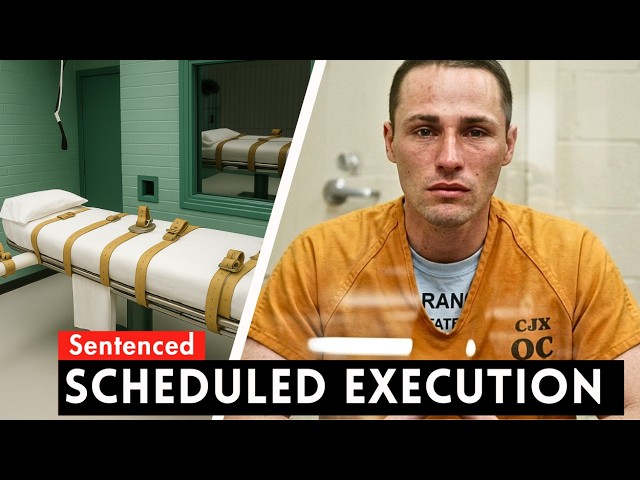
By every legal measure, the case was closed. Guilty verdicts, death sentences, justice on paper delivered. Except California’s relationship with its own death penalty is complicated in ways that matter here. As of 2026, California has not executed anyone since 2006. In 2019, Governor Gavin Newsom issued a moratorium on executions and ordered the state’s execution chamber closed. The condemned inmate list in California currently holds over 600 people. The death sentence exists as a legal designation, the execution does not follow. Skylar DeLeon, now legally Skylar Preciosa, having transitioned and undergone gender affirming surgery in 2023 while incarcerated, remains on that list, condemned, alive as of March 2026, not facing any imminent execution date. The transition drew renewed public attention to the case, debate about prison policy, identity, and the obligations of the state. That conversation is real, but it is worth being precise about what this case is at its center. It is not about DeLeon’s identity, it is about Thomas and Jackie Hawks, a retired probation officer and his wife, a yacht named Well Deserved, a decision to sell a boat and move closer to family, and the people who turned that ordinary decision into the last one they ever made.
The jury reached finality, the state did not. They named it Well Deserved, not as a boast but as truth. Thomas and Jackie Hawks had worked for that life, waited for it, earned it. The yacht was not just a boat, it was proof that they had finally reached the peaceful chapter most people only hope for. That is what makes this case linger. They were not targeted because they were careless, they were targeted because they were stable, because they had something worth stealing, because they were the kind of people who would offer trust to a polite young family at the dock. Their decency became the opening. That is the deeper horror here. We like to believe danger announces itself, that something in a face, a voice, a history will warn us before it is too late, but in this case it did not. Danger arrived with a smile, a handshake, a family image carefully designed to feel safe, and a plan already in place. Thomas and Jackie Hawks have no grave, no recoverable place where their family can stand and say this is where they are. The ocean took that too. What remains is the verdict and the question that never fully leaves, was this just greed, or was trust itself the weapon all along?
Source: YouTube