In a groundbreaking discovery beneath a modern Israeli prison, archaeologists have unearthed a stunning 1,800-year-old mosaic that reveals early Christian worship practices. This extraordinary find, located in Megiddo—biblically known as Armageddon—features an inscription declaring Jesus as God, challenging long-held beliefs about the timeline of early Christian theology.

The mosaic was uncovered during a 2004 construction project aimed at expanding the prison. Archaeologists, adhering to protocol, began excavating the site, expecting to find typical Roman artifacts. Instead, they stumbled upon a hidden Christian worship space that had remained concealed for centuries.
This sacred site, marked by a beautifully crafted mosaic floor, tells the story of early Christians who gathered in secret to celebrate their faith. The mosaic’s centerpiece bears a striking inscription: “The God-loving Akeepus has offered the table to God Jesus Christ as a memorial.” This bold declaration predates the Council of Nicaea, revealing the deep-rooted belief in Jesus’ divinity among his earliest followers.
The context of this discovery is profound. Megiddo, revered in Christian eschatology, is prophesied as the battleground of the final confrontation between good and evil. The placement of this mosaic at such a significant site raises questions about the early church’s understanding of Jesus and the nature of faith during perilous times.
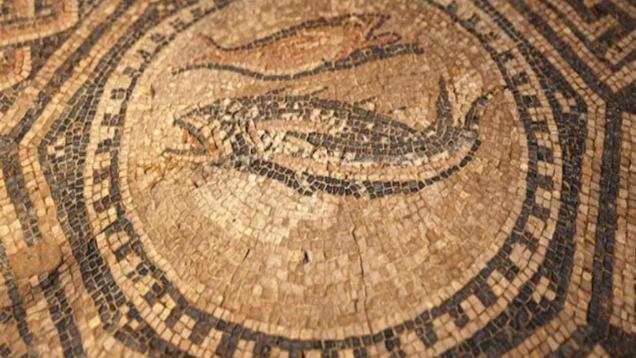
Over the course of four years, more than 60 inmates participated in the excavation, collaborating with archaeologists to reveal this extraordinary piece of history. Their efforts unearthed not just a floor but a testament to the courage and conviction of early Christians who risked everything to worship.
The mosaic is adorned with symbols, including a fish—a well-known Christian emblem. This imagery not only reflects the community’s identity but also serves as a reminder of their mission to share the Gospel, even in the face of persecution. The fish, an acronym for “Jesus Christ, Son of God, Savior,” underscores the early believers’ understanding of Christ’s divinity.
This discovery challenges contemporary narratives that suggest the deification of Jesus was a later development. Instead, the mosaic stands as archaeological evidence that the belief in Jesus as God was already firmly established in the hearts of his followers nearly two centuries earlier.

The implications of this find resonate today, offering a powerful reminder of the roots of Christian faith. It serves as a clarion call for believers to reflect on the cost of their faith and the legacy left by those who came before them.
As the world grapples with increasing skepticism toward faith, the Megiddo mosaic speaks to the enduring truth of early Christianity. It invites us to consider the depth of conviction that led early believers to inscribe their faith into the very foundations of their worship spaces.
This monumental discovery not only enriches our understanding of early Christianity but also inspires a renewed commitment to faith in a time when such convictions are often challenged. The story of the Megiddo mosaic is not just a chapter in history; it is a living testament to the power of belief that continues to resonate today.