A 4,000-year-old skeleton unearthed in China has delivered a genetic bombshell, revealing a lineage with no clear match to any known human population on Earth today. The discovery, emerging from a routine excavation at a prehistoric settlement site, is forcing a profound reassessment of ancient East Asian history and the complex tapestry of early human migration.
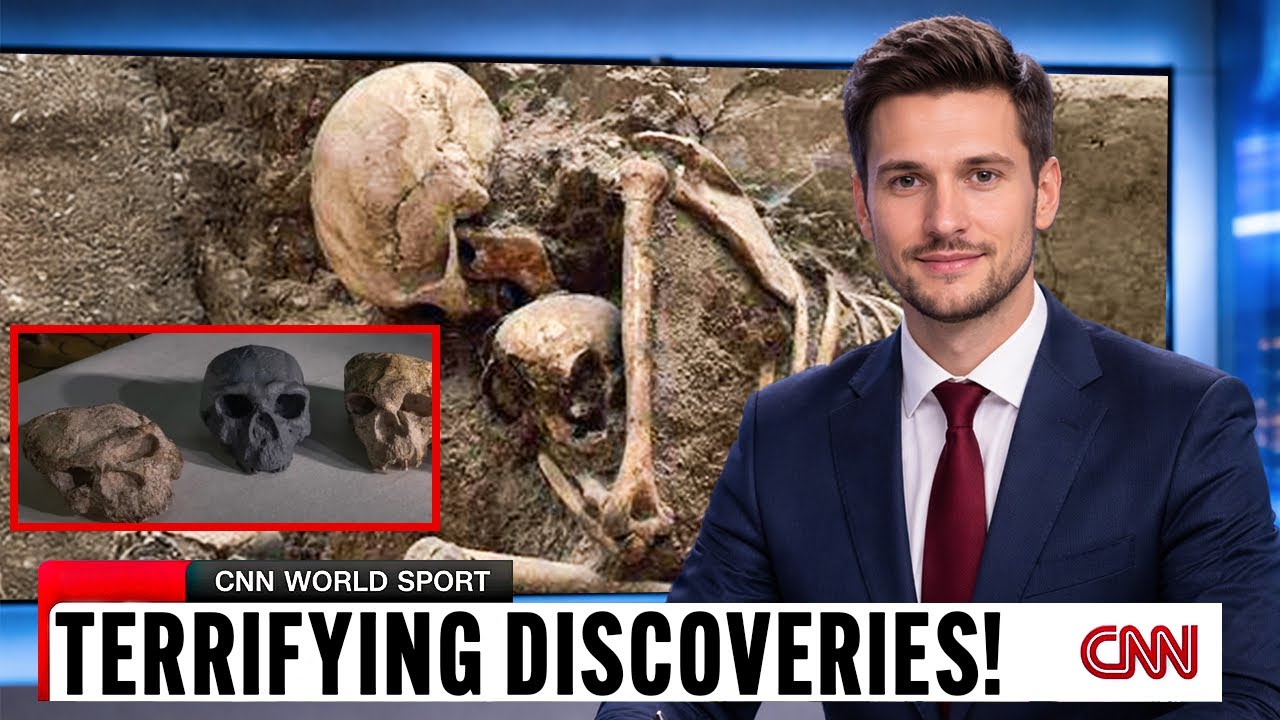
Initial analysis of the remarkably preserved remains showed nothing out of the ordinary, with burial practices and artifacts consistent with the period. The seismic revelation came from advanced paleogenomic testing. When scientists compared the extracted DNA to vast databases of modern and ancient populations, they found significant portions of the genome that could not be neatly aligned.
This genetic outlier presents an immediate and compelling scientific puzzle. The individual was unequivocally human, buried with care among a community, yet their ancestral signature appears to be a ghost in the machine—a thread in the human story that seems to have been snipped from the historical record. Researchers emphasize this does not indicate a non-human origin, but rather a human lineage that has since vanished or been dramatically diluted.
The find catapults us into a pivotal era of Chinese prehistory, a time of dramatic social and technological change. Around 2000 BCE, communities were transitioning, with agriculture solidifying and early bronze work emerging. This was a landscape of immense regional diversity, where distinct populations thrived along the Yellow and Yangtze River systems, their lives shaped by local climates and resources.
Geneticists explain that the unfamiliarity of the genome is a product of time and turbulent human movement. The vast genetic databases used for comparison are inherently incomplete, built primarily from populations that survived into the modern era or left clear descendant lines. Entire communities have been lost to history through absorption, displacement, or extinction.
“This individual’s DNA is like a single page from a massive, burned library,” explained one researcher involved in the study, who spoke on condition of anonymity prior to formal publication. “We can read parts of it, but the full context of the volume it came from is lost. It represents a branch of humanity that flourished but did not pass its genes on in a recognizable form to people living today.”

The discovery underscores a revolutionary shift in understanding ancient China. Rather than a simple, continuous lineage, the region was a dynamic mosaic of populations. Repeated waves of migration, intermarriage, and cultural exchange over millennia have constantly reshaped the genetic landscape, obscuring earlier diversity.
Archaeological context suggests the person lived a typical life for the time, with bone wear indicating strenuous labor and a diet of coarse grains. They were integrated into a social fabric, mourned and buried according to contemporary custom. This normalcy makes the genetic data even more striking, highlighting how biology can conceal lost histories even when material culture suggests continuity.
The implications are staggering for the narrative of human settlement in East Asia. It suggests that the genetic ancestry of modern populations in the region is the product of a far more complex series of interactions than previously modeled, with some contributing groups leaving no direct modern descendants. This skeleton is a tangible remnant of one such group.

Scientists are now racing to conduct further analyses, hoping to pinpoint where this genetic lineage fits. Was this population isolated in a remote valley? Were they a widespread group later overwhelmed by subsequent migrations? Each hypothesis carries weight for reconstructing prehistoric demographics. The team is also examining other skeletons from the same site to determine if this was an anomaly or a representative of a larger community.
This finding is part of a broader pattern emerging from ancient DNA studies worldwide, where genomes from thousands of years ago often resist easy classification. Each discovery chips away at simplistic stories of human history, revealing a past filled with dead-end branches and forgotten peoples whose lives were full but whose legacy faded.
The research team cautions against sensationalist interpretations of an “alien” genome, stressing that the mystery is historical, not biological. The true enigma is not what the person was, but what happened to their people. Their DNA is a direct message from a lost chapter, challenging us to rewrite our understanding of the deep human past with greater humility and complexity.
As the investigation continues, the scientific community awaits a peer-reviewed publication, which will provide full data and detailed comparisons. This skeleton has irrevocably shifted the goalposts, proving that the ancient world held diversities we are only beginning to fathom. The search for answers continues, with every bone fragment and soil sample holding potential clues to this 4,000-year-old genetic riddle.
Source: YouTube