STARKE, Fla. — Oscar Ray Bolin Jr., the serial killer convicted in the brutal murders of three Tampa-area women in 1986, was executed by lethal injection at Florida State Prison Thursday night, ending a three-decade legal saga marked by ten jury verdicts, overturned convictions, and a controversial prison marriage.
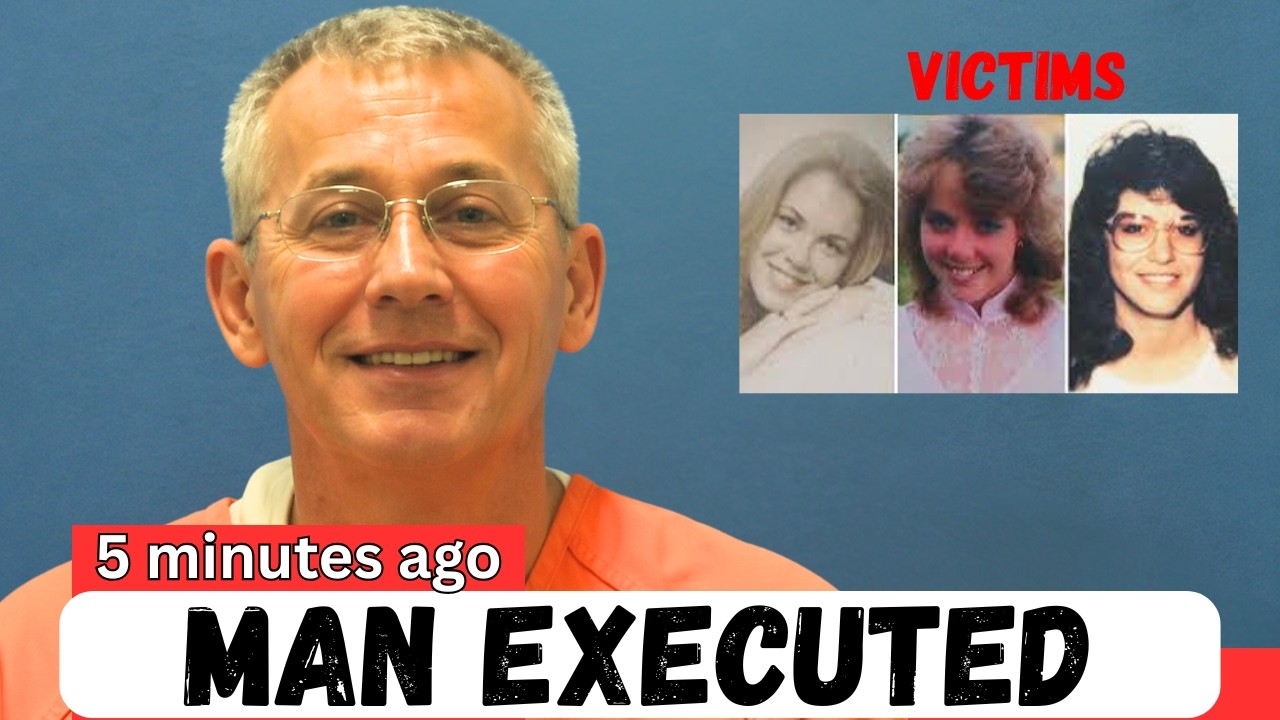
The execution, carried out at 10:16 p.m. on January 7, 2016, followed a last-minute appeal to the U.S. Supreme Court that delayed the procedure for over four hours. Bolin, 53, was pronounced dead after a 12-minute injection process witnessed by the families of his victims. He declined to make a final statement.
Bolin spent more than 24 years on death row for the murders of Terri Lynn Matthews, 26, Stephanie Collins, 17, and Natalie Blanche Holley, 25. All three women were abducted during routine errands in 1986 and stabbed to death. Their cases remained unsolved for nearly four years.
A break came in 1990 via an anonymous tip to an Indiana crime line from the husband of Bolin’s ex-wife, Cheryl Hefner. The tipster stated Bolin had confessed to the murders. This led investigators to Bolin’s teenage half-brother, Philip, who witnessed Matthews’ killing, and to Hefner herself, who admitted helping dispose of evidence.
Bolin, a transient carnival worker and truck driver, was already serving 22 to 75 years in an Ohio prison for the 1987 abduction and rape of a waitress when Florida authorities filed murder charges. While jailed in Florida, he was caught plotting to kidnap the family members of sheriff’s officials to aid his escape.
His first trials in the early 1990s resulted in three death sentences. Those convictions were overturned in 1995 when the Florida Supreme Court ruled Hefner’s testimony was inadmissible under spousal privilege. This launched a marathon of retrials that saw Bolin convicted ten separate times by ten different juries.
Throughout the legal turmoil, Bolin maintained his innocence. “Not one of those verdicts was right,” he said. The night before his execution, in a recorded interview, he stated, “My conscience is clear. I did not murder these women.”

His most vocal defender was Rosalie Martinez, a former mitigation specialist for the public defender’s office who met him in 1994. She left her husband and four daughters, married Bolin in a 1996 telephone ceremony while he wore an orange jumpsuit, and spent two decades campaigning for his innocence as a private investigator.
“Oscar came into my life and I thought, this is bigger than anything I’ve ever done. I want to save his life,” she said. Her advocacy placed her in direct conflict with the victims’ grieving families, who saw her as seeking notoriety.
The forensic case against Bolin faced significant controversy. Key hair and fiber evidence, analyzed by FBI analyst Michael Malone, was later discredited. A 2014 Justice Department report identified Malone as having fabricated reports and given false testimony, listing Bolin’s case among 52 flagged for review.
Bolin’s attorneys also pointed to a confession from Ohio inmate Steven Kasler, who claimed responsibility for Matthews’ murder before committing suicide in 2014. Courts denied a stay based on these issues, and Governor Rick Scott signed Bolin’s death warrant in October 2015 for the murder of Terri Lynn Matthews.
On his final day, Bolin met for three hours with his wife, Rosalie, and shared a last meal of ribeye steak, baked potato, salad, garlic bread, lemon meringue pie, and Coca-Cola. He ate approximately half of the food offered.
As the scheduled 6 p.m. execution time passed, families waited while the Supreme Court considered a final appeal. It was rejected without comment just after 10 p.m. Kathleen Reeves, Matthews’ 78-year-old mother, was among the witnesses.

“I’m always prepared for Rosalie to pull a rabbit out of the hat,” Reeves said beforehand. She had earlier visited her daughter’s grave, placing a copy of the death warrant within a bouquet. “It was the last thing I could do for her,” she said.
Following the execution, Reeves addressed reporters. “We miss you, Terry. You were the sunshine in our lives,” she said. When asked if justice was served, given that Bolin was executed for only one of the three murders, she replied, “It doesn’t matter. He only dies once.”
Donna Whitmer, mother of Stephanie Collins, said, “I stood in the Florida night and said, ‘ We all miss Stephanie every day. I can’t have her back, but I’ll have sweet memories.” Natalie Holley’s mother did not live to see the execution, having died in 2012.
Rosalie Bolin did not attend, issuing a written statement calling the execution heartbreaking and predicting it would create “invisible victims.” Bolin’s attorney, Bjorn Brunvand, wept outside the prison, calling the death penalty barbaric.
The case leaves behind unresolved questions about forensic integrity and the finality of justice. Ten juries found guilt beyond a reasonable doubt, yet key scientific testimony was later proven unreliable. The state proceeded, closing a chapter on crimes that haunted Tampa for a generation.
Bolin was the first person executed in the United States in 2016. His death leaves a complex legacy, a story not of three murders, but of three decades of grief, relentless advocacy, contested evidence, and a search for closure that, for the families, may only be partial.
Source: YouTube