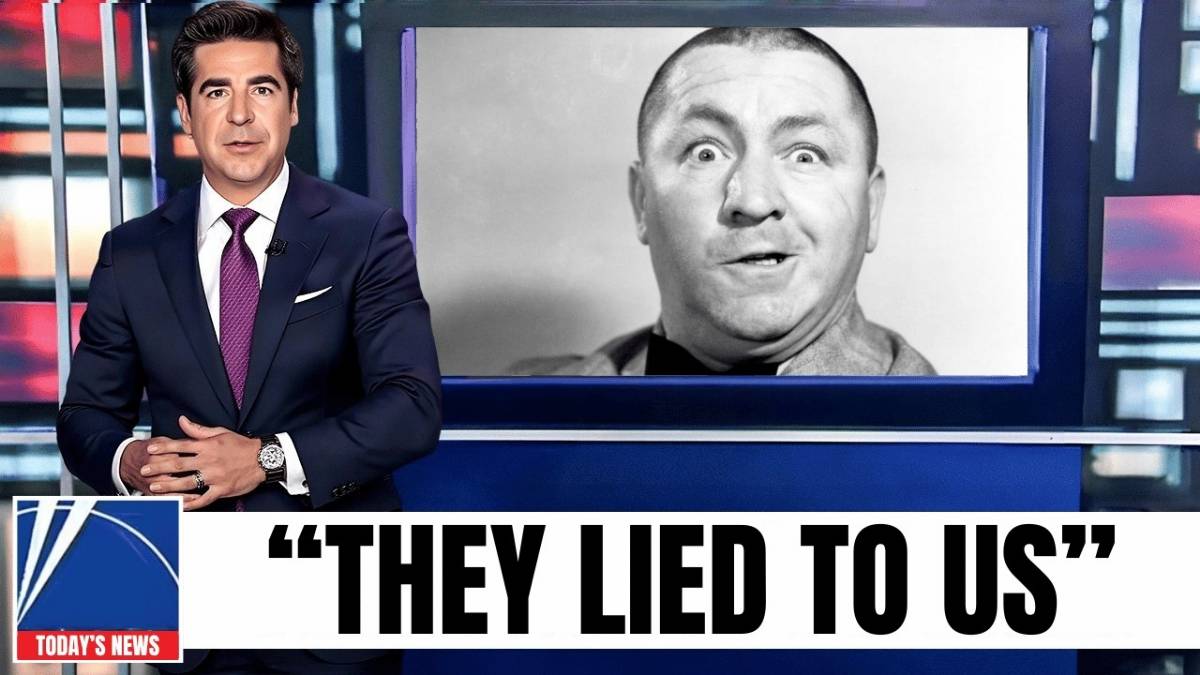
The physical collapse of Jerome “Curly” Howard on the set of “Half-Wits Holiday” in 1946 was not a sudden tragedy but the inevitable detonation of a decade-long physiological war, a war waged inside the body of the most explosive physical comedian in American history, and a war he was never given a chance to win. For years, the official narrative surrounding the Three Stooges star was one of mystery, a rapid and unexplained decline that robbed the world of a comedic genius at the age of 48. But the evidence, drawn from production logs, medical records, and the brutal mechanics of the Columbia Pictures short-subject machine, paints a far more damning picture. The mystery is solved, and the answer is a condemnation of the system that built him, used him, and ultimately discarded him. Curly Howard was not a victim of bad luck or a singular catastrophic event. He was a victim of industrial-scale physical abuse, a performer whose body was systematically broken down by the very demands of his art, a process accelerated by a studio system that prioritized output over human life.
 The collapse on the set of “Half-Wits Holiday” was the final, visible fracture in a structure that had been crumbling for years. The scene being filmed was unremarkable by Stooges standards, a routine cascade of physical misunderstandings and escalating chaos. But the rhythm was off. Between takes, Curly exhibited a fatigue that went beyond the normal exhaustion of a hard day’s work. His recovery time slowed. The precision of his movements, the instinctive timing that had defined his performance for over a decade, began to slip. Then, the machine stopped. Curly Howard, the man who could turn a simple stumble into a symphony of slapstick, could no longer stand. He had suffered a major stroke, a cerebrovascular event that severed the connection between his comedic instinct and his physical capability. The camera was still rolling, but the heart of the Three Stooges had been ripped out.
The stroke was not a bolt from the blue. It was the culmination of years of cumulative trauma, a slow-motion car crash visible only to those who knew where to look. The demands placed on Curly Howard by the Columbia Pictures short-subject system were not merely strenuous; they were physically impossible to sustain over the long term. The studio operated on an assembly-line model, churning out multiple shorts per month with minimal rehearsal and a relentless emphasis on physical gags. Curly was the engine of this machine. His comedy was kinetic, built on rapid falls, sudden spins, exaggerated collapses, and a willingness to absorb escalating chaos as a matter of professional routine. He was not just a participant in the gags; he was the structural center of them. Directors like Jules White built entire sequences around Curly’s ability to react, to escalate, to turn a simple trigger into a full-body explosion of motion. This was not a sustainable performance technique. It was a form of physical labor that would have been illegal in a coal mine.
The war years, from 1942 to 1946, turned this unsustainable pressure into a systematic assault on his health. The United States entry into World War II did not slow down the Stooges; it accelerated their workload to a breaking point. The trio was sent on grueling USO-style tours, performing live shows for troops in temporary facilities across the country. These were not the controlled environments of a soundstage. They were high-stakes, high-repetition performances where the same physically intensive routines were executed multiple times a day for different audiences. There was no edit button in a live show. Every fall, every collision, every exaggerated reaction had to land in real time. When the tours ended, the studio work resumed. There was no recovery period. The group oscillated between live performance cycles and film production cycles, both demanding the same high physical output. Curly Howard was performing his most demanding routines, day after day, week after week, with no meaningful rest. The human body is not designed for this. It is a machine that requires maintenance, and Curly’s machine was being run into the ground.

The physical toll was compounded by a personal life that offered no sanctuary. Curly’s marriages were short and turbulent, providing little emotional stability. His first marriage to Julia Rosenthal ended quickly. His second, to Elaine Ackerman, coincided with his most productive years but ended in divorce by 1940, leaving him with a daughter but a fractured personal life. Biographical accounts describe increasing financial impulsiveness, a pattern of spending that added another layer of instability to an already precarious existence. More critically, alcohol became a central coping mechanism. After days of punishing physical labor on set, Curly would seek relief in bars and nightclubs, using alcohol to decompress from the intensity of his performance. This was not recreational drinking; it was a form of self-medication, a way to manage the fatigue and strain that his body was under. But alcohol, combined with the chronic hypertension that was already developing, created a toxic cocktail that accelerated his physical decline. He was literally drinking to forget the pain of a job that was slowly killing him.
The symptoms of this decline were visible long before the 1946 stroke, but they were ignored or misinterpreted by a system that had no incentive to see them. Weight fluctuations were noted. Periods of visible fatigue between filming cycles became more common. Colleagues described a performer who was often subdued and fatigued off-camera, a stark contrast to the explosive persona he projected on screen. This divergence between the public and private Curly Howard is the key to understanding his tragedy. On screen, he was indestructible, a force of nature. Off screen, he was a vulnerable individual, increasingly unable to cope with the demands of his own life. The studio system, which operated with far less transparency than modern entertainment industries, did not intervene. There were no wellness checks, no mandated rest periods, no recognition that the most valuable asset in their comedy pipeline was being systematically destroyed. The machine did not slow down. It simply replaced the broken part.

After the stroke, Curly’s career as a full-time Stooge was effectively over. He made a few limited appearances, most notably a cameo in “Hold That Lion” in 1947, but these were carefully adjusted to reflect his changed condition. He was no longer the driver of physical comedy. The group adapted, bringing Shemp Howard back into the act to fill the gap. But for Curly, the decline was irreversible. His health condition required ongoing assistance. He spent his final years with his wife, Valerie Newman, in a state of medical instability. The strokes continued. His ability to participate in professional work was eliminated. In 1952, at the age of 48, Curly Howard died. The official cause was a cerebral hemorrhage, the final chapter in a multi-year decline that began with that first collapse on the set of “Half-Wits Holiday.” His death was not an isolated event. It was the end point of a process that had been set in motion years earlier, a process driven by the relentless demands of the Columbia Pictures short-subject machine.
The question of preventability is not just a historical curiosity; it is a moral indictment. Modern medical understanding points to a combination of neurological and cardiovascular risk factors, including chronic hypertension, heavy alcohol use, and extreme physical stress. In the 1940s, the understanding of these conditions was limited. But the fundamental problem was not a lack of medical knowledge. It was a lack of will. The studio system was designed for efficiency, not for the well-being of its performers. Curly Howard was a cog in a machine, and when that cog began to fail, the machine did not stop to fix it. It simply found a new cog. The system that built him, that profited from his unique physical genius, also destroyed him. The mystery of Curly Howard’s death is solved. It was not a mystery at all. It was a predictable, preventable tragedy, a direct consequence of the brutal economics of early Hollywood.

The evidence is overwhelming. The production schedules, the physical demands of the gags, the lack of recovery time, the alcohol use, the hypertension, the strokes. It all points to a single, unavoidable conclusion. Curly Howard was worked to death. He was a performer who gave everything he had to his art, and the system took everything he had and asked for more. The Three Stooges shorts that we cherish today, the moments of pure, unadulterated physical comedy, were built on the suffering of a man who was never given a chance to rest. The joy he brought to millions was extracted from his own body, a debt that was never repaid. The final chapter of his life is not a story of mystery. It is a story of exploitation, a cautionary tale about the price of genius in a system that values output over humanity. The Curly Howard mystery is finally solved, and the answer is not good. It is a tragedy, a preventable tragedy, and a stain on the legacy of the industry that created him.
The legacy of Curly Howard is complex. He is remembered as one of the greatest physical comedians of all time, a performer whose instinctive timing and explosive energy redefined slapstick. But that legacy is now inseparable from the circumstances of his death. The laughter he generated was born from pain. The falls, the spins, the collapses, were not just gags. They were the physical manifestations of a body under siege. The system that created him also destroyed him, and the mystery of his decline is a mystery only to those who refuse to see the truth. The evidence is clear. The conclusion is inescapable. Curly Howard died because the machine that used him had no mechanism for mercy. The mystery is solved, and it is a tragedy that should never have happened. The final irony is that the very thing that made him great, his physicality, is what killed him. He gave his body to his art, and his art consumed him. The Curly Howard mystery is finally solved, and the answer is a warning that echoes through the decades. The price of genius is sometimes too high.
Source: YouTube