Florida executed notorious serial killer Glen Edward Rogers on May 15th, 2025, ending nearly 30 years of legal battles and public intrigue. At 62, Rogers died by lethal injection in Florida State Prison, leaving behind a chilling message to President Trump and promising answers to unresolved questions resonating across victims’ families and law enforcement.
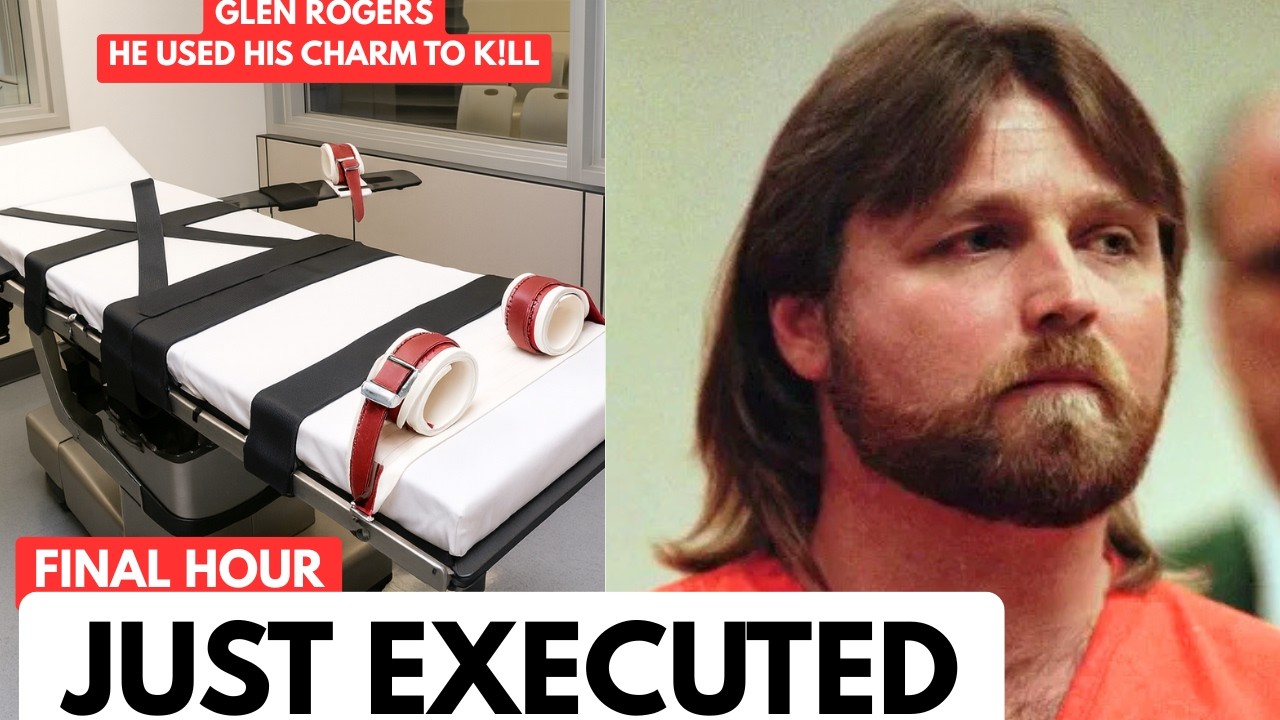
Rogers’ execution marked a grim conclusion to a violent chapter in American criminal history. Known for a brutal 1995 killing spree spanning multiple states, Rogers was convicted of murdering at least four women. His name had surfaced in the darkest conversations about serial killings and decades-long justice delayed.
Born in 1962 in Hamilton, Ohio, Rogers’ early life was marred by 𝓪𝓫𝓾𝓼𝓮 and instability. His turbulent childhood with a cruel mother and struggles with ADHD likely shaped his descent into violence. Expelled before age 16, his early adulthood was marked by abusive relationships, petty crimes, and escalating aggression.
By the mid-1990s, Rogers had transformed into a deadly predator. Over six weeks in 1995, he murdered at least four women, all single mothers with children, across California, Mississippi, Florida, and Louisiana. He used charm to lure victims, then unleashed horrific violence that left families shattered.
The first confirmed victim, Sandra Gallagher, was strangled and burned alive in Van Nuys, California. Next, Linda Price was found dead in her Mississippi apartment bathtub. Two days later, motel staff discovered Tina Marie Cribbs stabbed in Tampa, Florida. His final known victim, Andy Giles Sutton, was slashed to death in Louisiana.
Rogers remained a fugitive until a high-speed chase in Kentucky ended in his capture. Police cornered him driving a stolen car linked to one of the victims — a dramatic arrest widely broadcasted and marking a turning point in one of the nation’s most notorious manhunts.
After his arrest, Rogers shocked authorities by claiming responsibility for nearly 70 murders. While investigators dismissed exaggerations, his confessions complicated the case. He was convicted of murders in Florida and California, sentenced to death in both states, and spent three decades appealing his sentences without success.
A peculiar postscript to Rogers’ story involved a controversial claim in 2012. His brother alleged Rogers confessed to the 1994 murders of Nicole Brown Simpson and Ron Goldman. Despite media attention and a 2019 dramatized film, law enforcement and families firmly rejected this assertion, underscoring the ongoing complexities around Rogers’ narrative.

In his final days, Rogers cited decades of 𝓪𝓫𝓾𝓼𝓮 and contested the methods used in lethal injection. Multiple appeals to the Florida Supreme Court and the U.S. Supreme Court were denied. On execution day, his only visitor was his wife, while his brother said a poignant farewell from a distance.
Rogers’ last meal was unassuming—pizza, chocolate cake, and soda. Minutes before his death at 6:16 p.m., he delivered a cryptic final statement, addressing victims’ families and President Trump. He promised “answers” to lingering questions, a chilling uncertainty that ensures his story won’t fade quietly.
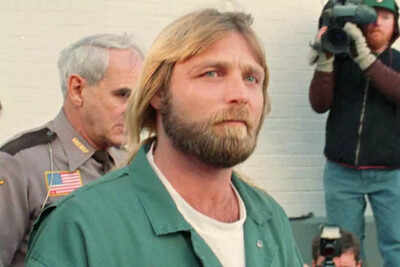
Families of Rogers’ victims expressed a mixture of relief and frustration. Many, having waited decades for justice, saw his execution as closure. Yet some lamented Rogers’ lack of remorse and the eerie calmness that surrounded his death. For them, decades of pain officially entered a new chapter of reckoning.
The execution highlighted broader debates on capital punishment’s efficacy and morality, especially in cases marked by long appeals and unresolved mysteries. Rogers’ life and death remain a disturbing study of violence, evasion, and the elusive search for truth behind grisly crimes.
Glen Edward Rogers leaves behind an envelope of darkness marked by four brutal murders, decades of speculation, and unsettling promises. Whether he held further secrets or simply craved attention until his last breath remains an open question haunting law enforcement and victim families alike.
As Rogers took his final breath in that sterile prison chamber, the state of Florida concluded a decades-long effort to deliver justice. Yet, the ghost of his cryptic words lingers—will those “answers” ever emerge, or will the chilling legacy of Glen Edward Rogers stay forever buried with him?