The state of Texas executed James Broadnax by lethal injection on April 30, 2026, for the brutal 2008 murders of two Christian music producers, Steven Swan and Matthew Butler, a crime committed for a mere $2 in cash. The execution, carried out at the Huntsville Unit, concluded a 17-year legal odyssey marked by Broadnax’s chilling televised confessions, a last-minute claim of innocence from his cousin, and a final marriage behind bars just weeks before his death. Broadnax, 37, gasped and convulsed for approximately five minutes before losing consciousness, according to official reports, as the lethal dose of pentobarbital took effect at 6:26 p.m.
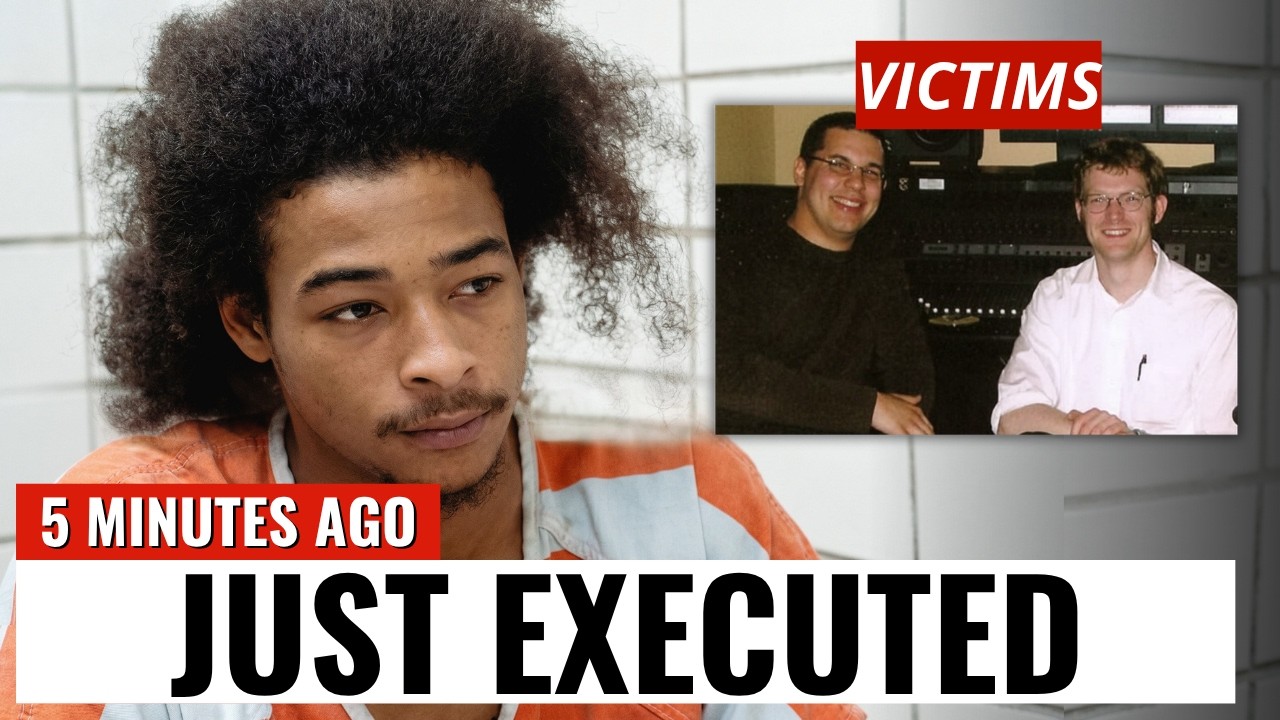
The crime unfolded in the early hours of June 19, 2008, in Garland, Texas, a suburb of Dallas. Broadnax and his cousin, Dearius Cummings, both 19 at the time, had taken a train from southeast Dallas with the intent to rob. They targeted the area believing it was populated by wealthy white residents. After wandering for hours, they encountered Swan and Butler outside their recording studio, Zion Gate Record Studio. The cousins engaged the producers in a 30-to-45-minute conversation about music, gaining their trust before briefly leaving. However, when they realized public transportation had stopped running for the night, they returned with a violent plan to steal a vehicle.
Cummings told Broadnax he needed to shoot the victims. As they approached, Cummings asked for a cigarette. Without warning, Broadnax opened fire, shooting Swan twice. When Swan fell and attempted to get back up, Broadnax shot him once more. Butler tried to flee, but Broadnax shot him four times. Both men died on the pavement from gunshot wounds to the head and chest. The attackers then searched the victims’ pockets, finding only $2 in cash. The most valuable item stolen was Swan’s 1995 Ford Crown Victoria, which they used to flee the scene. Hours later, the cousins arrived at a Dallas apartment, where they bragged to family members, showing Swan’s driver’s license as a trophy.
Broadnax’s arrest came swiftly after an acquaintance reported them to police. They were located in the stolen vehicle in Texarkana, about 150 miles away. What followed was a series of television interviews in which Broadnax, with chilling coldness, admitted to being the shooter. “I decided to go hit a lick,” he said in one interview. “One of the best spots to go, ’cause that’s where all the rich white folk stay at.” He described the murders in graphic detail, stating he felt no remorse and even asking for the death penalty, saying he did not want to continue living and potentially harming others in prison. These statements led to his trial being moved forward and separated from his cousin’s.

The trial took place in 2009. The defense attempted to soften Broadnax’s statements, arguing he was under the influence of severe marijuana intoxication at the time of the crime and during the jailhouse interviews. The court rejected these arguments, concluding that his statements demonstrated he was a dangerous criminal who should be sentenced to death. On October 14, 2009, a Dallas County jury found Broadnax guilty of capital murder for the deaths of Swan and Butler. Cummings was tried separately in 2011. Although also found guilty of capital murder, the state chose not to seek the death penalty against him as he was not the shooter and did not display the same attitude in interviews. He was sentenced to life in prison and is currently held at the Coffield Unit in Tennessee Colony, Texas.
Broadnax spent nearly 17 years on Texas death row at the Polunsky Unit in Livingston. During that time, he turned to poetry and writing, showing signs of apparent remorse and transformation. He was recognized by both prison authorities and other inmates as a mentor to younger prisoners. In January 2026, the Texas Department of Criminal Justice scheduled his execution for April 30 of that year. A particularly striking event occurred on April 14, 2026, just 16 days before his execution, when Broadnax married Tiana Kresniki, a British law graduate who became one of his main supporters. The ceremony took place at the Polunsky Unit with the couple separated by a glass panel.
The most dramatic turn came in March 2026, just weeks before the scheduled execution. Cummings submitted an affidavit admitting that he was the sole shooter. Cummings stated that he had convinced Broadnax to initially take the blame because Broadnax had no prior criminal history and they believed he would receive a lighter sentence. This decision was made while both were under the influence of drugs. “I know that he doing that he’s we was in this crime together but he’s on the other side of things that I should have been with him getting a death penalty that should have been me,” Cummings said in a recorded statement. “So I feel like this is a outlet to get it out to whoever listen to whoever going to listen as far as who y’all dealing with to tell the story as it should be told that it was me. You know that I was the killer and bro just stood in my place.”
Texas authorities did not change their position. The Court of Criminal Appeals refused to halt the execution, arguing that doubts about who fired the shots should have been raised years earlier and also pointing to the weight of Broadnax’s televised confessions from 2008. On April 30, 2026, the execution was carried out following the strict protocol of the Texas Department of Criminal Justice. Broadnax was transferred from the Polunsky Unit to the historic Huntsville Unit. Outside the prison, the atmosphere was tense. Vigils and protests were organized across several Texas cities, reflecting the support of more than 80,000 online petition signers, as well as backing from over 60 religious leaders who had called for clemency.

Inside the prison, Broadnax spent his final hours in contact with his spiritual advisers and his wife, Tiana. At 3:00 p.m., he was placed in complete isolation. The execution began shortly after 6:00 p.m. local time when he was escorted into the death chamber and strapped to the gurney. Two intravenous lines were inserted for the administration of a lethal dose of pentobarbital. At 6:26 p.m., the drug began to flow. According to reports, he appeared to gasp and convulse for around five minutes before losing consciousness and ultimately dying. When asked for his final words, he delivered a long statement addressed to the victims’ families and to his supporters.
“To the family, I have prayed for years that any of my decisions have not caused heaviness in your hearts or burdens in your spirits. I have prayed to God for your forgiveness. Regardless of what you think of me, I hope that prayer has been answered. But no matter what you think of me, Texas got it wrong. I am innocent. The facts of my case should speak for themselves. Period. Let this moment be what finally sparks the revolution that will be televised. None of this was worth it. Queen EMTT, I love you. My promise still stands. It always will. Keep fighting. Stay strong. Put God first. Never stop believing. I love you forever and a day. I love you, Queen. Peace, love, and light. That is what I stand for. God bless you all.”
The term “Queen Emit” was identified as an affectionate reference to his wife, Tiana Kresniki, who witnessed the execution. Seven family members of the victims were present, including the parents of Steven Swan and Matthew Butler. Terresa Butler, Matthew’s mother, maintained that the execution represented necessary justice, rejecting claims of innocence made by the defense. Broadnax’s wife, Tiana Kresniki, was the primary defense witness present. Reports described her reaction as deeply emotional. She pressed against the glass, repeatedly shouting, “I love you!” as her husband lost consciousness after the procedure ended. She had to be assisted out of the viewing area by officials.
The case has sparked intense debate. Many people argue that the recordings in which Broadnax admitted to the crimes sound like they are from a 20-year-old trying to be framed due to the aggressive attitude he displays. Others say this is just an act to avoid his execution. The execution of James Broadnax marks the latest chapter in Texas’s long history with capital punishment, a state that has carried out more executions than any other in the United States. The victims, Steven Swan and Matthew Butler, were described as bright, generous, and hard-working young men, deeply committed to their craft and to supporting other artists. Their families have waited nearly two decades for this moment, a closure that remains deeply contested.