The arrest of Cardinal de Rohan, the Grand Almoner of France and Bishop of Strasbourg, sent shockwaves through the gilded halls of the Palace of Versailles on August 15, 1785, as royal guards seized him in the Hall of Mirrors and dragged him to the Bastille prison like a common criminal, marking the explosive climax of a diabolical scam that will forever tarnish the Crown of France. The prelate, summoned unexpectedly to the king’s private apartments just before the Assumption mass, emerged pale and trembling, only to be apprehended moments later in front of aghast courtiers who could scarcely believe their eyes. What crime could this man of faith have committed to warrant such brutal treatment? The answer lies in a web of deception, greed, and manipulation orchestrated by a 29-year-old countess named Jeanne de la Motte, whose monumental scheme, known as the Scandal of the Queen’s Necklace, would ultimately help bring down the French monarchy.
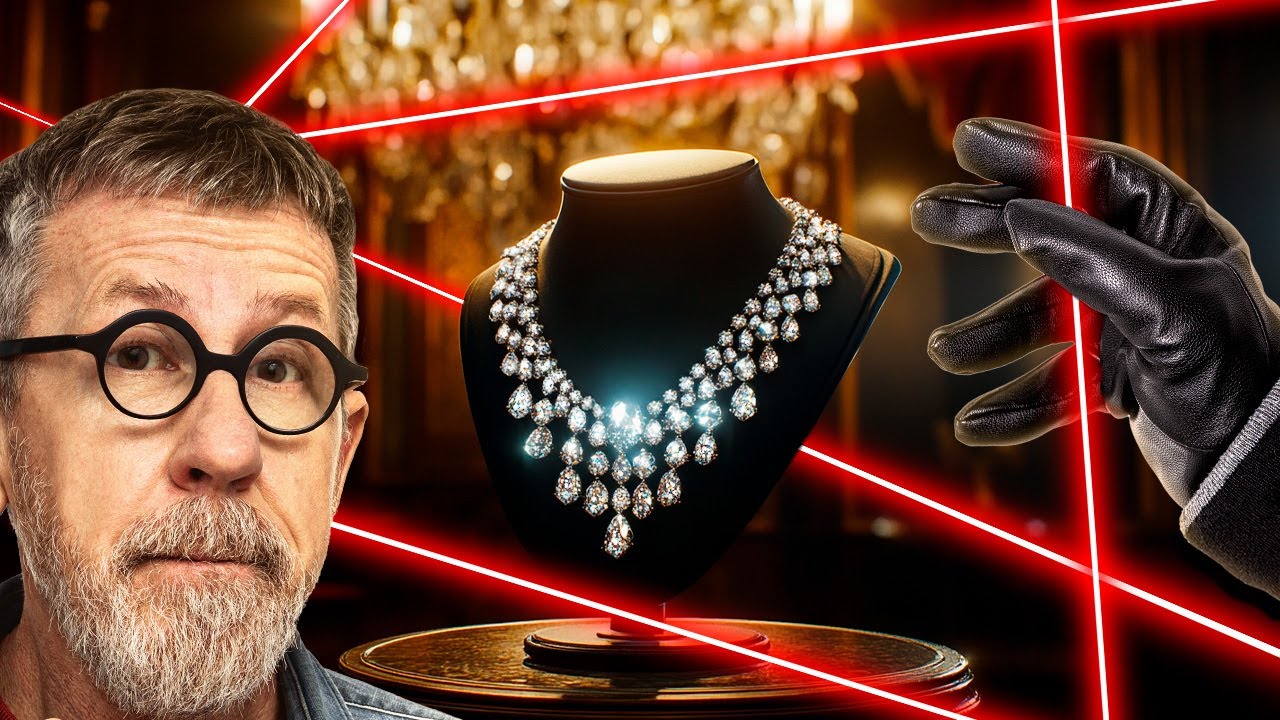
To understand this incredible affair, we must travel back thirteen years to 1772, when Louis the Fifteenth, still young at heart despite his advancing age, ordered the most exquisite necklace ever created from the German jeweler Charles Böhmer. The king, driven by his lifelong passion for women and his desire to please his latest mistress, the Countess du Barry, commissioned a jewel of staggering proportions. This necklace, weighing in at 2,842 carats, featured one hundred pearls and six hundred seventy-four diamonds, with a price tag of one million six hundred thousand livres, equivalent to approximately 30 million euros today. It was the most expensive necklace in history, and for Böhmer, it was both an honor and a curse. The jeweler, accustomed to financing his orders independently, took on enormous debt to acquire the precious stones, but the project dragged on for years as he struggled to gather the materials. By the time the necklace was finally completed in 1778, Louis the Fifteenth had been dead for four years, leaving Böhmer with a masterpiece no one wanted to buy.
The jeweler persistently offered the necklace to the new queen of France, Marie-Antoinette, but despite her husband Louis the Sixteenth’s willingness to purchase it, she repeatedly declined the extravagant gift. Böhmer made the rounds of European courts, but no one showed interest in his jewel, and he found himself drowning in debt with a priceless ornament that could not be sold. It was at this desperate moment that Jeanne de la Motte entered the scene, a 28-year-old countess from a noble family but without fortune, who used her charms to secure her future. She skillfully insinuated herself into the circle of Cardinal de Rohan, a wealthy man of the cloth with a weakness for pretty women and an insatiable ambition for power. Rohan had been desperately seeking Marie-Antoinette’s favor for years, hoping to obtain a ministerial position, but the queen despised him and refused him any audience whatsoever. Jeanne recognized this vulnerability and exploited it ruthlessly, making the cardinal believe she was in direct contact with the sovereign.
To prove her supposed closeness to the queen, Jeanne presented Rohan with fake letters imitating Marie-Antoinette’s handwriting and signed with the fraudulent signature Marie-Antoinette of France, a glaring error that the cardinal should have detected immediately, as the queen never signed her letters that way, always using simply her name. But Rohan, blinded by his ambition and desire for recognition, suspected nothing and became completely convinced that Jeanne would help him gain the queen’s favor. Having hooked her fish, Jeanne moved to the second phase of her plan, making the cardinal believe that Marie-Antoinette was ready to communicate with him directly. She fabricated more letters, this time addressed to Rohan, in which the supposed queen asked him for money to cover personal expenses without informing the king. Flattered by this apparent trust and seeing it as a golden opportunity to get closer to the sovereign, Rohan entrusted the funds to Jeanne, who naturally kept every livre for herself.
Each payment was followed by fake thank-you letters from the supposed queen, promising that a meeting would soon take place, but the long-awaited encounter was repeatedly postponed through endless letters that pushed back the planned date. As Cardinal de Rohan began to doubt, Jeanne realized she needed to make the meeting real to keep her cash cow from escaping. Through another forged letter, the supposed queen proposed a secret rendezvous on August 11, 1784, in the Grove of Venus in the gardens of Versailles, at 11 PM under the cover of darkness. The cardinal arrived nervously at the agreed spot, waiting anxiously as the night enveloped the gardens. Finally, a woman appeared, her face wrapped in a slightly transparent black fabric, who handed Rohan a red rose and whispered words of reconciliation, telling him he could always count on the past being forgotten. The conversation was cut short when Jeanne, who was present, suddenly warned that the king’s sisters were approaching, and the terrified cardinal made a quick escape.

What Rohan did not know was that the woman he had just met was not the queen at all, but a prostitute Jeanne had hired for the occasion, and in the darkness, the cardinal was completely fooled by this masterful deception. In the following weeks, Rohan continued to hand over small sums of money to Jeanne, who pocketed them as soon as he left, and the fish remained firmly hooked. With the cardinal under her control, Jeanne could now move to the third and most audacious phase of her plan, designed to finally get her hands on the famous necklace that Louis the Fifteenth had ordered. She knew that jeweler Böhmer was desperate to sell the necklace, and with its price set at one million six hundred thousand livres, she saw her chance to become rich forever. Jeanne approached Böhmer and let him know that the queen was finally willing to buy the jewel, but secretly, without informing the king, and through an intermediary, the Cardinal de Rohan, whose famous name reassured the jeweler.
To convince Rohan to pay for the necklace in advance, Jeanne wrote another fake letter from the queen, asking him to commit to Böhmer in four separate installments of four hundred thousand livres each, with the promise of full reimbursement. To ensure her plan succeeded, Jeanne enlisted an accomplice, the Count of Cagliostro, a protégé of the cardinal who claimed to be a medium, and she asked this mage to use his influence to convince the prelate to advance the sum for Marie-Antoinette. Cagliostro agreed and somehow managed to make the naive cardinal believe that a bright future awaited him if he went through with it, including the promise of being named Prime Minister. Once again, Rohan fell for the deception, and on February 1, 1785, he went to Böhmer, paid him the first installment of four hundred thousand livres, and left trembling with the necklace in a box. He then took the jewel to an apartment Jeanne had rented in Versailles, where he entrusted it to a fake valet who was supposed to deliver it immediately to the queen.
As soon as the cardinal left, Jeanne retrieved the necklace and carefully removed the precious stones, planning to sell each one individually for a high price. Time passed, and the unfortunate Cardinal de Rohan received no news of his promotion, nor did he see Marie-Antoinette wearing the necklace, which Jeanne explained away by saying no grand occasion had yet arisen. But the cardinal had another pressing concern, the repayment of the four hundred thousand livres promised by the queen, and a serious doubt began to settle in his mind. When he pressed Jeanne on the matter, she told him the queen was facing difficulties in raising the money but assured him everything would work out, while simultaneously asking him to front the costs for the second installment. Meanwhile, jeweler Böhmer was losing patience, as he no longer had the necklace and three-quarters of the promised amount remained unpaid. Furious from waiting, he decided to speak directly to Marie-Antoinette’s chambermaid, who was completely shocked and told him the queen had never ordered such a jewel.

In the following days, everything accelerated as the grand halls of Versailles buzzed with attempts to sort out the truth from the many lies. Marie-Antoinette asked her friend the Baron de Breteuil, a sworn enemy of Cardinal de Rohan, to help clear up the mess, and he was absolutely delighted to ensure the scandal became widely known. The case caused a real sensation, and the situation unfolded in a way Jeanne could not have predicted, leaving her panicked and desperately urging the cardinal to pay the jeweler to hush up the emerging scandal. King Louis the Sixteenth, who had no idea what was happening, was finally informed of the scam on August 14, and he was furious. He summoned Cardinal de Rohan the next day, the famous day of the Assumption mass, and in front of the royal couple, the prelate stammered and struggled to defend himself, suddenly realizing he had been tricked by his mistress. Marie-Antoinette was beside herself with rage and demanded that this fool who had the audacity to think she was secretly meeting him in the castle gardens be immediately thrown in jail.
The poor cardinal begged in vain, but the king was inflexible, declaring that he was doing what he had to do as both a king and a husband, ordering Rohan to get out as the prelate protested his innocence. This incredible mess had serious consequences for the royal couple, as the affair rapidly spread throughout the entire kingdom, becoming exaggerated and distorted with each retelling. Marie-Antoinette, already very unpopular with the French for her reputation of draining the kingdom’s resources with lavish spending, paid a high price as the population refused to believe she was innocent. Paris overflowed with pamphlets that poked fun at the queen, while Louis the Sixteenth came across as a simpleton unable to see what was happening behind his back. Cardinal de Rohan was tried for the crime of lèse-majesté for tarnishing the queen’s honor, but he was eventually acquitted by the Parliament of Paris, a decision that further discredited both the nobility and the clergy. This extraordinary affair weakened a regime that was already on the edge, and it would be overthrown just two years later, as the French Revolution erupted in 1789.
As for the real culprit, Countess Jeanne de la Motte, she was arrested and branded with a hot iron with a V mark for being a thief, then locked up for life in a correctional facility. But she managed to escape to London in 1787, where she wrote her memoirs and left behind one of the most incredible scams ever masterfully organized, a monumental deception that forever changed the course of French history. The Scandal of the Queen’s Necklace remains a cautionary tale of how greed, ambition, and naivety can combine to bring down even the most powerful institutions, and its echoes can still be felt in the halls of Versailles today. The palace, once the symbol of absolute monarchy, now stands as a monument to the excesses and follies that led to its downfall, and the story of Jeanne de la Motte’s audacious scheme continues to captivate and horrify visitors from around the world. This breaking news report has uncovered the full extent of the scandal, revealing how a single countess manipulated the highest echelons of French society with nothing more than forged letters and a hired prostitute, ultimately contributing to the collapse of an entire kingdom.