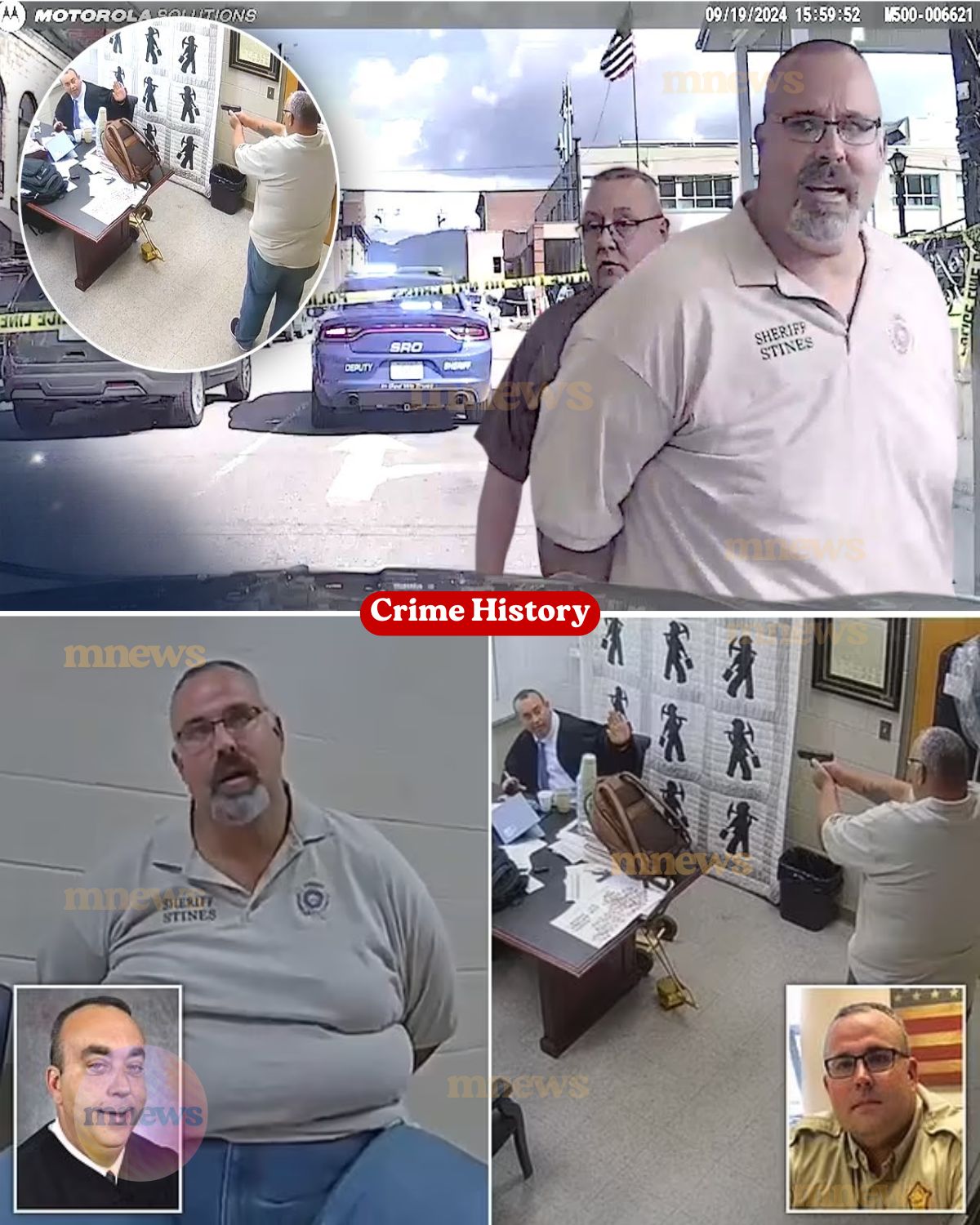
Newly released body camera footage captures the disoriented and paranoid state of a Kentucky sheriff in the immediate aftermath of him allegedly shooting a judge, his former boss and friend, inside a courthouse. The video shows Leslie County Sheriff Mickey Stines repeatedly pleading with troopers, expressing fears for his safety and family, during his transport to jail following the fatal shooting of Circuit Judge Kevin Mullins.
 The footage, obtained by news outlets, provides a stark auditory backdrop to a crime that has shaken the rural legal community. Stines is heard in the back of a police cruiser, handcuffed, making a series of frantic and disjointed statements to Kentucky State Police troopers. “Make sure there ain’t no weapons or nothing in there bro,” Stines says as he is placed in the vehicle. “Come on now.”
During the approximately hour-long drive from the Lee County Courthouse to the Leslie County Jail, Stines’s comments grow increasingly agitated. He complains of tight handcuffs, heat, and an inability to breathe. At one point, he warns, “Y’all got carbon monoxide in here.” His tone suggests a deep-seated fear, as he pleads, “Please don’t do this to me. Please.”
The shooting itself occurred on the afternoon of September 19, 2023, after Stines and Judge Mullins shared a lunch, a common occurrence between the two men described as friends. Surveillance video from inside Judge Mullins’s private chambers, previously released, shows the shocking moment Stines allegedly drew his service weapon and fired.
 Investigators have stated that just prior to the shooting, Stines had attempted to call his daughter from the judge’s phone. A detective testified at a preliminary hearing that upon his arrest, Stines told officers, “They’re trying to kidnap my wife and kid.”
In the bodycam footage, troopers gently probe for a motive, repeatedly asking if the shooting was related to his family. “I’m just asking, was it something to do with your family or anything like that?” one trooper inquires. Stines does not provide a direct answer, instead continuing his stream of anxious requests and statements.
His distrust is palpable as the cruiser approaches the jail. “This is not the jail. Now, this is not the jail,” Stines insists, despite assurances from the officers. When told they are arriving at the Leslie County Jail, he responds with panic, “Y’all are going to let somebody hurt me… don’t pass me off to nobody.”

The legal team for Stines has seized upon his demeanor in the footage. In a statement, his attorneys said the video “affirms our belief that our client felt there was an imminent threat to his family and himself.” They cite “an extreme amount of pressure” from a pending civil lawsuit and suggest the footage shows the impact on his mental health.
That civil case involves a woman, Sabrina Atkins, who sued the sheriff’s office alleging a deputy, Ben Fields, solicited sex from her while she was on home incarceration. In a separate 2022 interview with investigators from the Kentucky Attorney General’s office, Atkins claimed to have seen video footage from the judge’s chambers depicting Mullins engaged in sexual activity.
 News Nation first reported the audio of that interview, where Atkins alleges the judge had sex with women “to get out of jail.” The connection, if any, between these allegations, the civil suit, and the shooting remains a central unanswered question in the investigation.
Prosecutors have charged Mickey Stines with murder. He has pleaded not guilty. His defense attorneys have indicated they may argue he was under an “extreme emotional disturbance,” potentially seeking a manslaughter charge instead.
The released bodycam audio offers no clear answers but paints a vivid picture of a man in profound crisis minutes after an act that irrevocably shattered two families and the bedrock trust of a local justice system. The haunting pleas from the back of the cruiser—”Be fair to me now, I promise, God please”—now stand as a key piece of evidence in the quest to understand why a sheriff killed a judge.