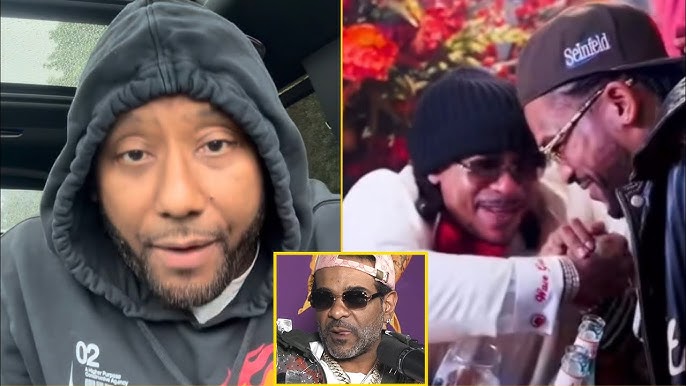
The simmering tensions within New York’s hip-hop community have escalated after newly-freed legend Max B directly addressed the controversy surrounding Dave East’s appearance at his welcome home dinner. In a new interview, Max B offered a pointed critique of those criticizing East, framing the backlash as unnecessary drama and affirming the younger rapper’s right to pay homage.

The controversy ignited when media personality Maino publicly questioned Jim Jones on his “Drink Champs” podcast about reconciling with Max B, creating an awkward public moment. Maino later stated he would not attend Max B’s events, placing allies in a perceived loyalty test. Dave East, who attended the dinner, faced significant online criticism for his show of support. During an in-depth conversation on Forgotten Kings TV, hosts Ed Lover, Mrek, and Flats dissected the unfolding situation. They played a clip from Max B’s interview with Danza Project where the Harlem pioneer defended Dave East. “Bro was taking heat,” Max B stated. “The world soaped up… Why would he take heat ‘cuz he showed up to my event?”
Max B emphasized his generational impact, noting East was just 12 or 13 years old when he was incarcerated. “He grew up off my stuff,” Max asserted, arguing it was natural for East to show respect. His commentary turned sharper when addressing the origin of the conflict, dismissing the loyalty debate as “some dick-sucking stuff” and clarifying his stance on former associate Maino.

“Mayo was with my brother in Caki in the 90s running around like chickens with their head cut off,” Max B said, indicating a long, complex history. “Me and Mayo ain’t just me… It is what it is. I’m a quality. You either in it or you ain’t.” He concluded with a declaration of his independent path: “This is the Max B show.”
The Forgotten Kings panel analyzed the layered politics. Flats, noting his and Dave East’s age group, underscored Max B’s profound influence on their generation in Brooklyn and Harlem. He argued that East’s attendance was a moral and principled act of homage, disconnected from any existing beef. “Jim Jones shouldn’t want Dave East to jump into his beef or his dislike with somebody when they don’t have nothing to do with it,” Flats stated.
Mrek highlighted the missed opportunity for unity in New York hip-hop, suggesting the moment was overshadowed by “selective politics” reminiscent of 50 Cent’s tactics. He pointed to the larger tensions between Cam’ron, Jim Jones, and their respective camps as the true backdrop. “When you got a room full of bosses, that’s when you start to see the stuff come out,” Mrek observed.
The panel also scrutinized Maino’s role as an instigator, comparing his antagonistic style to 50 Cent’s calculated media approach. They questioned whether his pressing of the issue was an attempt to create viral moments, ultimately forcing unnecessary sides. Reck noted that Jim Jones never explicitly forbade anyone from attending, placing the onus on Maino for “trying to be messy.”
This public airing of grievances threatens to further fracture relationships within the tightly-knit East Coast scene. Max B’s return was anticipated as a potential unifying force, but it has instead exposed unresolved histories and conflicting loyalties. The central question now is whether this will remain a war of words or escalate, and how figures like Jim Jones and Maino will respond to Max B’s blunt assessment.
As the conversation concluded, the hosts reflected on the fleeting nature of cultural relevance, stressing the importance of seizing the moment for positive impact rather than political posturing. With Max B firmly declaring his independence and refusing to cater to drama, the ball now lies in the court of his detractors, setting the stage for the next chapter in this unfolding hip-hop saga.