A new era of aviation is dawning, not from a government skunkworks, but from a startup in Atlanta, as a hypersonic aircraft designed to fly at Mach 5 prepares to shatter a decades-old speed record and redefine global travel and defense. Hermeus Corporation, founded by engineers from SpaceX, Blue Origin, and U.S. Air Force projects, is developing technology to sustain flight at 3,800 mph, a speed where air friction generates furnace-like heat capable of melting conventional aircraft.
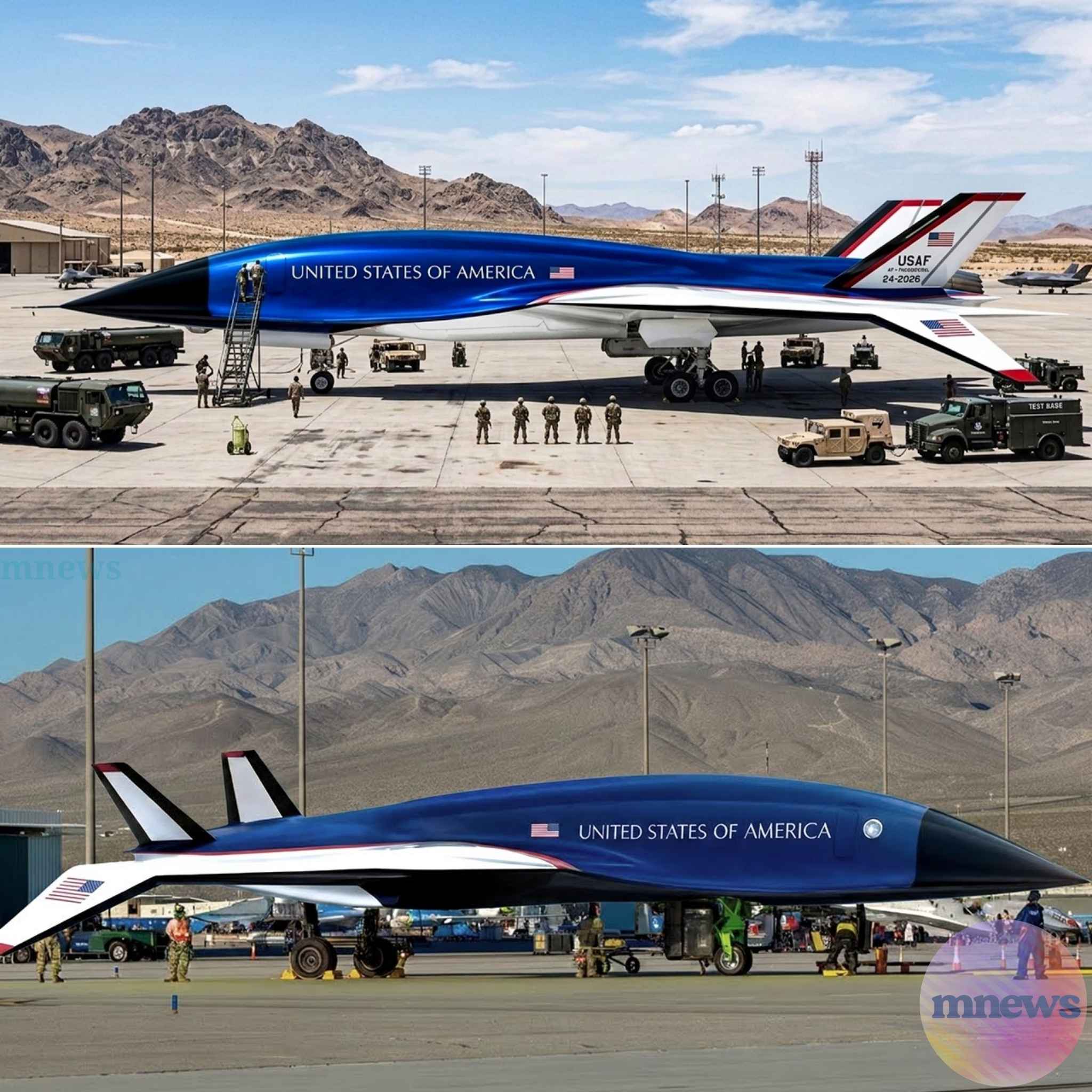
This pursuit aims to leapfrog the legendary SR-71 Blackbird, which held the jet speed record at 2,200 mph, and the Concorde, which halved transatlantic travel times. The goal is not merely a record but a reusable platform that can take off and land conventionally, offering the U.S. a decisive strategic edge and revolutionizing civilian travel by connecting cities like New York and London in approximately 90 minutes.
The core challenge of hypersonic flight is managing extreme heat, not just achieving velocity. At Mach 5, temperatures on leading edges can exceed 1,000°F, melting standard aluminum and weakening titanium. This thermal barrier has limited sustained atmospheric hypersonic flight for decades, making the engineering task one of creating materials and systems that can survive a prolonged, man-made inferno.
Hermeus is tackling this with a rapid, iterative development philosophy, moving from design to flight test faster than traditional defense programs. Backed by over $60 million from the U.S. Air Force and venture investors, their “Quarter Horse” program is a series of unmanned test vehicles designed to prove the necessary technologies step by step, culminating in a craft capable of sustained Mach 5 flight.
The revolutionary component is the engine, named Chimera. It is a turbine-based combined cycle engine designed to function as two engines in one: a conventional jet turbine for takeoff and acceleration, and a ramjet for high-speed hypersonic cruise. The critical, perilous transition between these modes is known to engineers as the “valley of death,” where a misstep could cause catastrophic loss of thrust.

To conquer this, Hermeus has progressed through rigorous testing. An early Chimera prototype, using a General Electric J85 core, successfully demonstrated mode transition in a ground test stand at the University of Notre Dame, simulating conditions up to Mach 4. This proved the fundamental concept could work outside of simulations.
The current focus is Chimera 2, which integrates a far more powerful Pratt & Whitney F100 engine core—the same family that powers F-15 and F-16 fighters. A key innovation paired with this core is an advanced pre-cooler, a compact heat exchanger that instantly cools scorching incoming air before it enters the engine, preventing turbine blades from overheating and allowing the jet to reach higher speeds before transitioning to ramjet mode.
Hermeus is testing this combined system at its own dedicated facility, the High Enthalpy Air-breathing Test (HEAT) site in Jacksonville, Florida. This ownership allows for rapid, flexible testing cycles, treating engine development more like a software sprint than a decades-long government project.
Concurrently, the airframe is being proven through the Quarter Horse series. The first flying prototype, “Mk 1,” completed its maiden flight at Edwards Air Force Base in May 2025, validating flight controls and handling for a high-speed, unmanned design on a conventional runway.
The next step, “Mk 2.1,” is already flying. Roughly the size of an F-16 and powered by an F100 core, it is designed to push past Mach 2, becoming one of the fastest unmanned aircraft ever flown. It serves as a flying testbed for aerodynamics and systems ahead of the ultimate goal: “Mk 3.”

Quarter Horse Mk 3 is slated to be the first aircraft to fly with the complete Chimera 2 engine and perform the live turbine-to-ramjet mode switch in the sky. Its success would mark the birth of the first reusable aircraft capable of true, sustained hypersonic flight within the atmosphere, a historic milestone.
The strategic implications are profound. Hermeus is already designing a military derivative named “Darkhorse,” a reusable, multi-mission hypersonic drone. Such a craft could penetrate contested airspace at several thousand miles per hour, conducting reconnaissance, electronic warfare, or strike missions and returning to base, offering a persistent capability unlike one-shot hypersonic missiles.
For civilian travel, the vision is “Halcyon,” a proposed 20-seat passenger jet. It would cruise at 90,000 feet at Mach 5, cutting a New York-to-Paris journey to about 90 minutes at business-class fares. The challenges are immense, involving passenger safety, cabin pressurization, and, crucially, noise regulations that currently ban supersonic overland flight.
Hermeus is not alone in the high-speed race. In defense, Stratolaunch has successfully flown its reusable, rocket-powered Talon-A test vehicle past Mach 5 multiple times. On the civil side, Boom Supersonic is developing the Mach 1.7 Overture airliner. Meanwhile, the ambitious, decades-long SABRE engine program in the UK by Reaction Engines recently faced financial collapse.
The path forward remains fraught with technical and regulatory hurdles. Yet, the combination of modern manufacturing, computational power, and agile development has brought sustained atmospheric hypersonic flight closer to reality than ever before. The work in Atlanta represents a fundamental leap, aiming not just to break a record but to shatter a long-standing physical and engineering barrier, forever changing what is possible in the sky.