The decades-long mystery surrounding hip-hop’s most tragic feud has been shattered by a bombshell revelation from one of the industry’s most formidable figures. In a stunning new analysis, Curtis “50 Cent” Jackson has dismantled the foundational narrative of the East Coast-West Coast war, asserting the conflict between The Notorious B.I.G. and Tupac Shakur was not born of genuine hatred but was a personal rift weaponized by the music industry for profit.
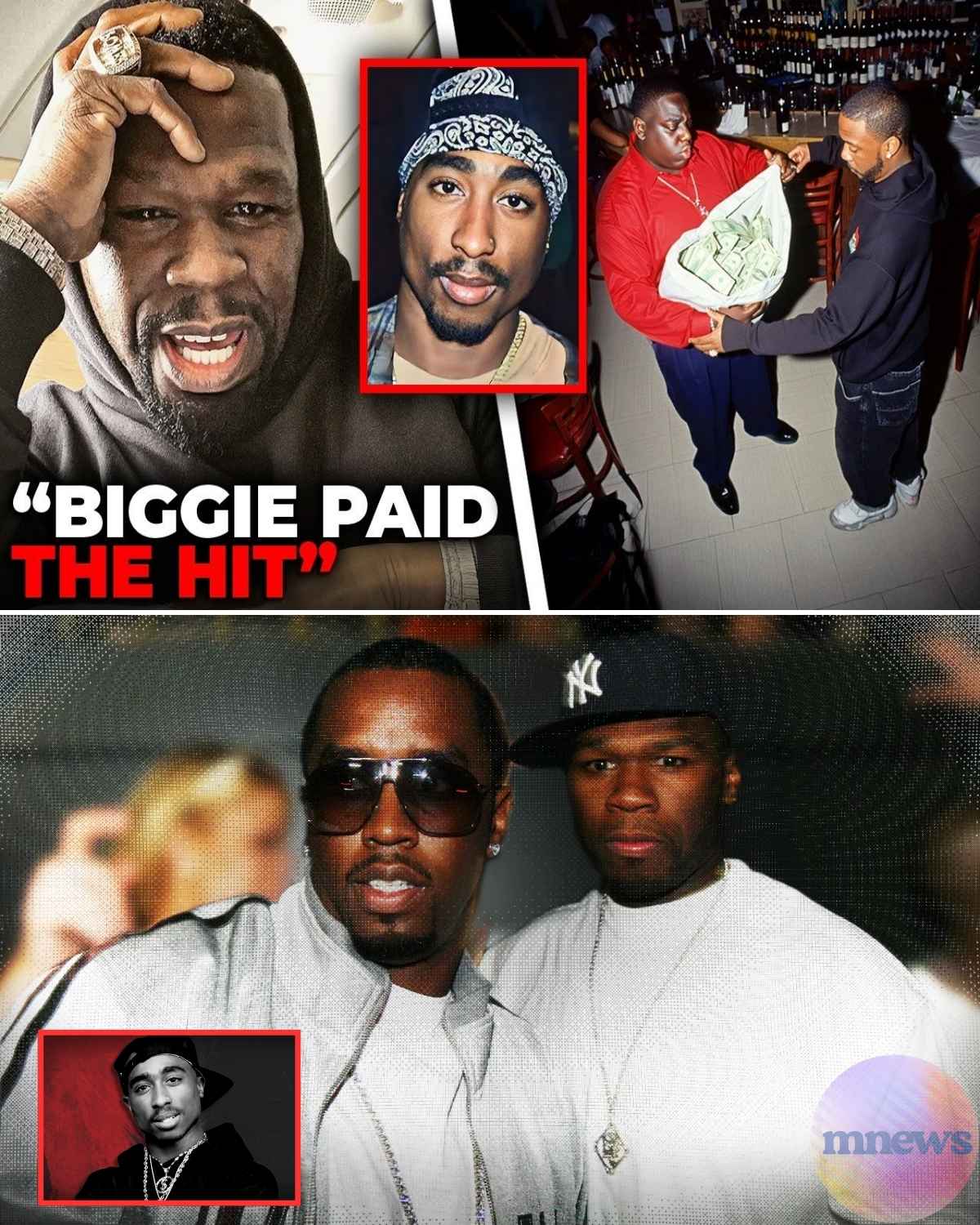
Jackson, a survivor of street violence and industry politics, provides a radical reinterpretation of events leading to both icons’ murders. He argues the legendary beef was “massively overhyped” and not the life-or-death street war portrayed by the media. “If they had genuinely wanted to body each other,” Jackson contends, “they would have handled that in the streets immediately.”
The revelation centers on the duo’s early, brotherly bond, now cast in tragic light. In 1993, an established Tupac mentored a hungry Biggie Smalls in Los Angeles, offering his couch, career advice, and priceless industry wisdom. Sources confirm Tupac gave Biggie a revolutionary blueprint: “Don’t rap for men, rap for women on the singles.” This strategy became foundational to Biggie’s commercial success.
Their chemistry was undeniable, culminating in a joint freestyle at Madison Square Garden in October 1993. The relationship was so strong that Biggie once recorded a diss verse targeting Tupac but refused to release it out of loyalty, even muting the lines when producers later tried to use them posthumously.
The fracture occurred on November 30, 1994, at New York’s Quad Recording Studios. Tupac was ambushed, robbed, and shot five times. As he was carried out, he saw Biggie and Sean “Diddy” Combs upstairs, seemingly unfazed. This moment, fueled by pain and paranoia, cemented Tupac’s belief in betrayal, despite no evidence linking Biggie to the attack.
Jackson asserts the real villains were label executives who exploited this personal tragedy. He points directly to Suge Knight’s entrance. While Tupac served prison time, Knight posted his $1.4 million bail and signed him to Death Row Records, leveraging Tupac as a weapon in his existing feud with Bad Boy Records’ Combs.

The industry then poured gasoline on the embers. The release timing of Biggie’s “Who Shot Ya?” felt like a taunt to Tupac, prompting nuclear responses like “Hit ‘Em Up.” Jackson notes Biggie remained largely silent, never engaging with the same vitriol. In his final interview, Biggie stated, “I hated nobody from the West Coast… It was a personal beef.”
Jackson’s perspective is informed by his own near-fatal shooting. He studied their deaths as cautionary tales, noting both died from torso wounds preventable with body armor—a lesson he applied to survive being shot nine times in 2000.
He separates artistic critique from personal animosity, praising Biggie’s technical prowess while honoring Tupac’s unparalleled cultural impact. “Every rapper who grew up in the ’90s owes something to Tupac,” Jackson states, emphasizing their differences were professional, not personal.
The most explosive claim involves recent accusations. Jackson has bluntly stated Diddy “ordered Tupac’s murder,” aligning with his narrative that executives escalated the conflict for power, leading to tragedy. This theory gains eerie resonance as Diddy faces federal racketeering and sex trafficking charges in 2025, with renewed scrutiny on unsolved murders.
A January 2025 documentary features ex-bodyguard Gene Deal alleging Diddy could have been involved in Biggie’s death. Neither murder has been officially solved, with theories ranging from gang affiliates to police corruption.

Jackson reveals the coastal war was a manufactured narrative. Tupac himself hinted at this truth, saying, “It was never a beef. It’s only a difference in opinion… I’m just mad at my little brother when he doesn’t respect me.” This frames the conflict as a familial betrayal exploited by external forces.
Peace efforts, like a summit brokered by Louis Farrakhan and a 1997 meeting between Snoop Dogg and Diddy, emerged too late. Biggie was murdered weeks before the April meeting could solidify a truce.
The legacy is a cautionary tale of industry manipulation. Jackson, whose own feud with The Game was compared to the iconic rift, used it as a warning against escalation. His revelations force a historical reckoning, suggesting two artists who shared a genuine bond were torn apart and ultimately destroyed by a business that sold their conflict to the world.
The truth, according to 50 Cent, is that the hate was never truly between the brothers themselves. It was a fire stoked and fed by those who stood to gain from the ashes, leaving a permanent scar on the culture and robbing the world of two defining voices in their prime. The revelation reframes hip-hop’s greatest tragedy not as an inevitable clash of titans, but as a preventable fracture manipulated into a war.