A Florida inmate has been executed for the 1988 murder of the store manager who gave him his first job, capping a year that saw the state carry out a historic number of death sentences.
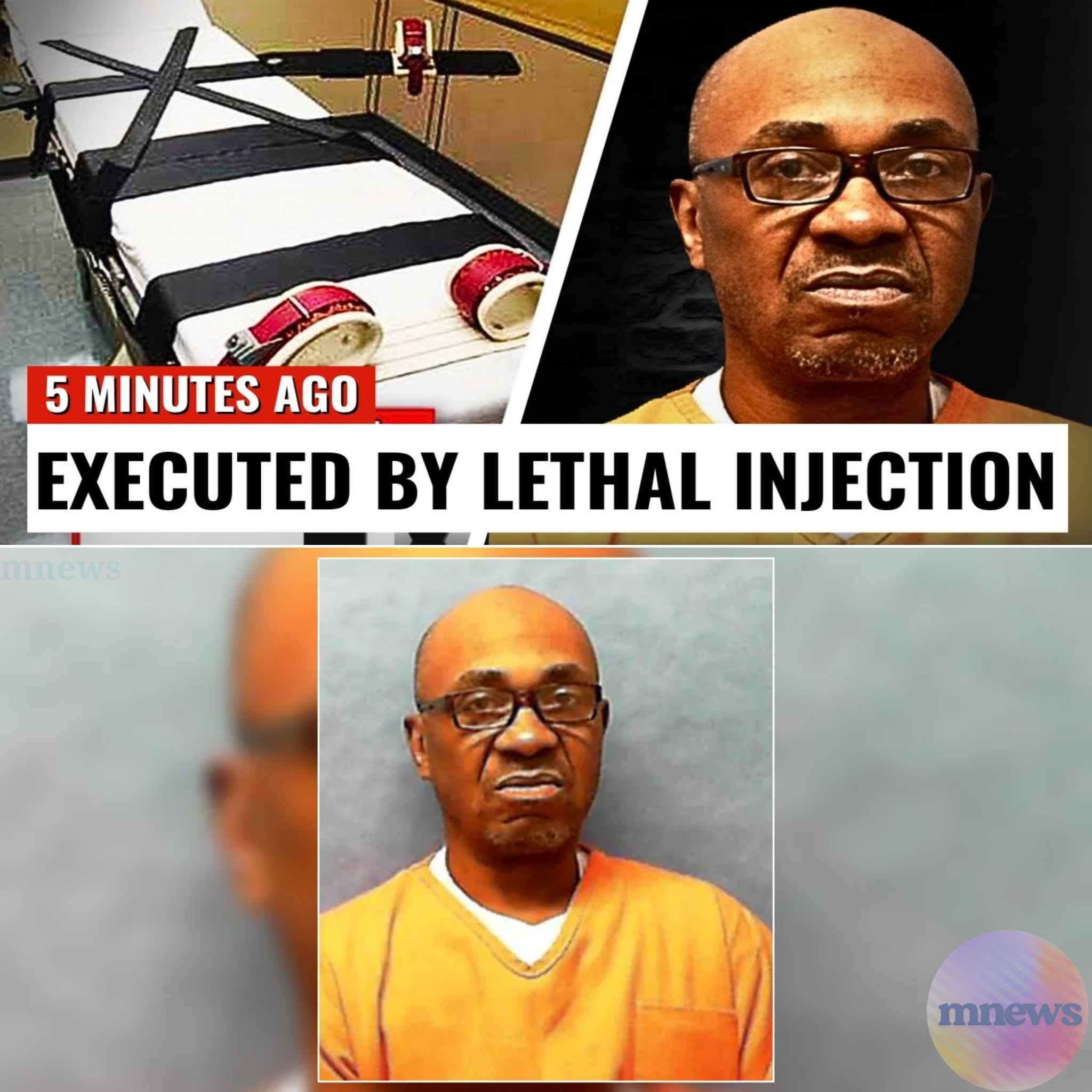
Richard Barry Randolph, 63, was pronounced dead by lethal injection at 6:30 p.m. Thursday at Florida State Prison near Starke. The execution marks the 17th carried out by Florida this year, the highest annual total since the state reinstated capital punishment in 1976.
Governor Ron DeSantis signed Randolph’s death warrant last month, setting the final act in motion for a crime that shocked the small community of East Palatka decades ago. The execution proceeded after the Florida Supreme Court rejected last-minute appeals centered on Randolph’s severe autoimmune disease.
The court ruled that claims the state’s three-drug protocol could cause him extreme pain and suffocation were filed past the legal deadline. Medical experts for the defense had argued his systemic lupus could compromise his veins and lead to a torturous death.
Officials reported a brief delay as they worked to establish an intravenous line. The process then lasted approximately six minutes, during which Randolph was observed moving, gasping, and grimacing before being declared dead. He offered no final statement.
Randolph spent 35 years on death row for the brutal killing of 53-year-old Minnie Ruth McCollum. His execution path began with an act of kindness when McCollum, manager of the Handy Way convenience store, hired the then-26-year-old Randolph despite his lack of work experience.
For several months, he proved to be a reliable employee. Without family or a stable home, the job allowed him to rent a small house. That stability collapsed as Randolph descended into cocaine addiction, a dependency that eventually cost him his job and home.

By August 1988, he was living in a dumpster behind the very store he once worked in. On the morning of August 15, he entered the Handy Way intending to rob it, armed with a toy gun. McCollum discovered him trying to open the safe.
An argument erupted and escalated violently after she realized his weapon was a fake. Court records detail a prolonged and savage attack where Randolph beat McCollum, slammed her head against hard surfaces, and strangled her with his sweatshirt drawstring.
When she regained consciousness and screamed, he resumed the assault. He then stabbed her multiple times in the neck and head with a small knife before sexually assaulting her. He stole her car keys and fled in her vehicle.
Three witnesses saw him locking the store’s front door while wearing an employee shirt. They grew suspicious upon seeing the disarray inside and called the sheriff. Deputies found McCollum alive but mortally wounded.
She was rushed to the hospital in a coma, clinging to life for six days before succumbing to her catastrophic brain injuries. Randolph was arrested later that same day in Jacksonville attempting to cash stolen lottery tickets.
He quickly confessed to the attack and led investigators to his bloodstained clothing. In 1989, a jury found him guilty of first-degree murder, armed robbery, sexual assault, and grand theft. The jury recommended death by an 8-4 vote.

The judge cited four aggravating factors in imposing the capital sentence: the murder was committed during a sexual assault, was done to avoid arrest, was motivated by financial gain, and was especially heinous, atrocious, and cruel.
For over three decades, Randolph’s case wound through the courts. He filed numerous appeals, post-conviction motions, and clemency requests, all of which were ultimately denied. His final hours were spent in relative isolation.
He awoke at 4 a.m. on the day of his execution, showered, and met with a spiritual advisor. He received no family visits or phone calls. The night before, he consumed his final meal: a double hamburger with lettuce and tomato.
His last meal also included fried onion rings with ketchup and a serving of cherry pie topped with whipped cream. He was escorted to the execution chamber at 5:50 p.m., where the lethal injection was administered ten minutes later.
The execution was witnessed by official observers and representatives of the victim. No protests or demonstrations were reported outside the prison grounds. The viewing room remained darkened except for light on the chamber itself.
With Randolph’s death, Florida closes a chapter on one of its longest-standing death row cases. The execution underscores the state’s accelerated pace of carrying out capital sentences under Governor DeSantis’s administration.
The year’s total of 17 executions surpasses any previous year under the modern death penalty statute. This case, blending a story of shattered trust with brutal violence, has now reached its final, state-administered conclusion.