A lethal injection at the Oklahoma State Penitentiary has ended the life of Gilbert Ray Postelle, closing a chapter on one of the state’s most brutal and senseless killing sprees. The 35-year-old was pronounced dead at 10:14 a.m. on February 17, 2022, after 14 years on death row for his role in the Memorial Day 2005 murders of four people.
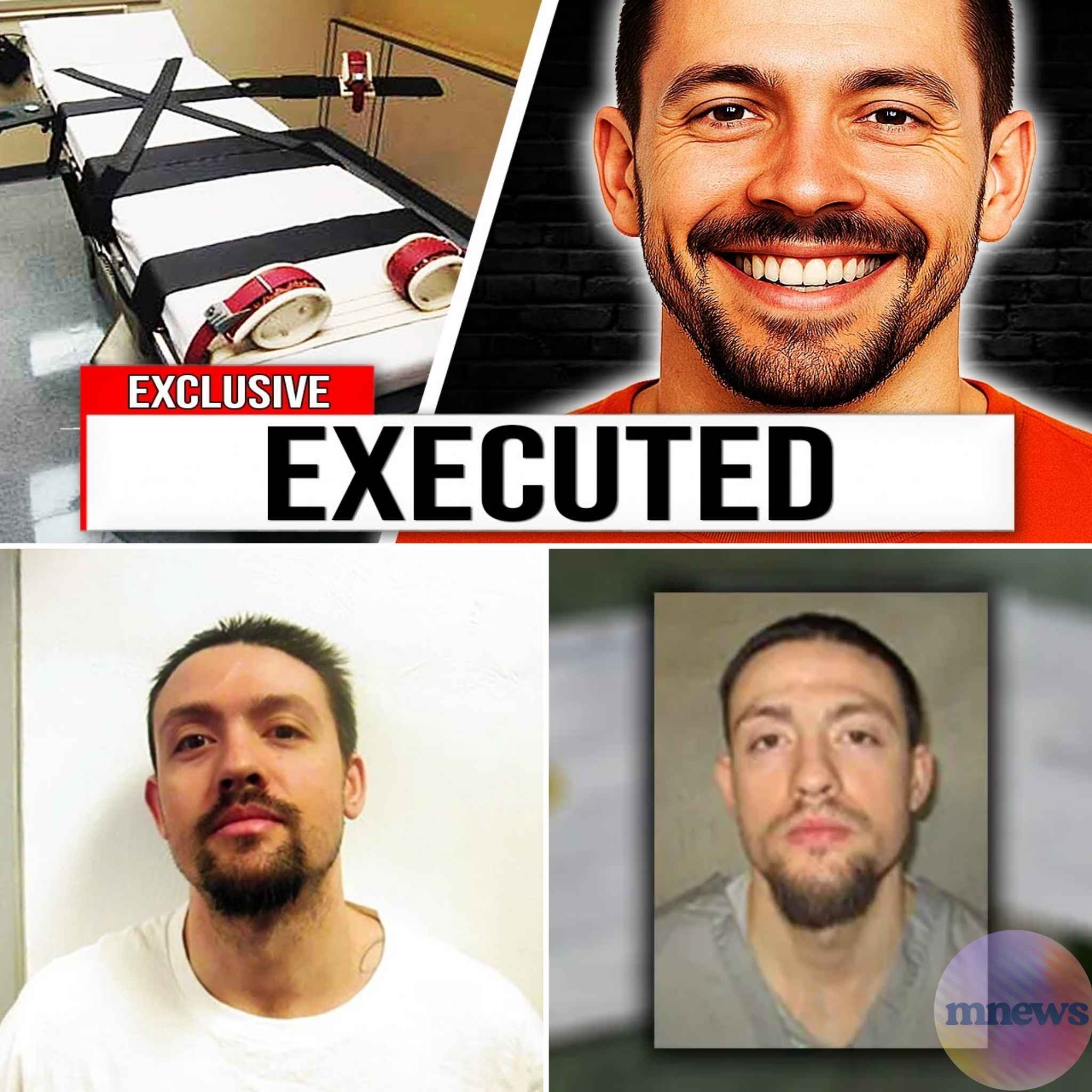
The execution followed a final, silent refusal to speak. Strapped to the gurney, Postelle declined to give any last words, shaking his head when offered the chance. His death by lethal injection proceeded after the U.S. Supreme Court denied a last-minute appeal challenging Oklahoma’s protocol.
The path to the execution chamber began at dawn on May 30, 2005, in southeast Oklahoma City. A maroon minivan arrived at a trailer home where James “Donnie” Swindle and Terry Smith were staying. The van’s door slid open, and a 19-year-old Gilbert Postelle stepped out with a MAC-90 rifle.
Postelle shot Terry Smith in the face at point-blank range. As Donnie Swindle turned to run, gunfire from Postelle’s father, Earl Bradford “Brad” Postelle, knocked him down. Gilbert’s older brother, David, then took the rifle and executed Swindle with a shot to the head. The rampage, captured in part by a security camera, had only begun.
Gilbert Postelle then stormed the trailer, kicking in the doors and firing into rooms. Outside, he chased down James Alderson, who was hiding beneath a boat, and shot him. He then turned his rifle on Amy Wright as she fled, firing three times until she fell face down in the dirt.
The attack lasted mere minutes. The Postelles and their accomplices then drove away, leaving four victims dead in the morning sun. A witness from a nearby flower shop reported the men in the van were laughing afterward, “like it was all a game.”
The motive was rooted in drug-fueled paranoia and a fabricated grievance. Brad Postelle, left disabled by a motorcycle crash, falsely believed Donnie Swindle was responsible. He fed this obsession to his sons during methamphetamine binges in the days leading to the massacre.

“Donnie’s going to pay,” Gilbert stated flatly that afternoon, according to witness testimony. Armed with rifles, the group piled into the van under the pretense of target shooting. Two passengers, sensing the ominous shift, demanded to be let out before the killings.
In the van after the shootings, Brad Postelle hugged his sons and said, “That’s my boys.” Gilbert reportedly muttered, “That [expletive] almost got away.” The group then began a frantic effort to dispose of the van and weapons, sending it to Indiana with instructions to bury the gun parts.
The investigation moved swiftly. Police traced the van and recovered critical evidence. Gilbert was arrested on August 17, 2005. His father, brother, and several accomplices were also taken into custody. One accomplice, Randall Bias, eventually provided a chilling account of the events to detectives.
At trial in 2008, the evidence was overwhelming. A jury convicted Gilbert Postelle on four counts of first-degree murder. For the murders of Amy Wright and James Alderson, he received the death penalty. For Donnie Swindle and Terry Smith, he was sentenced to life in prison without parole.
Brad Postelle never stood trial. Declared incompetent due to brain damage from his motorcycle crash, he died in 2011. Authorities later confirmed his crash was a single-vehicle accident; Donnie Swindle had no involvement, revealing the foundation of the massacre was a paranoid delusion.
David Postelle received a life sentence for the murders but continued his criminal enterprise from prison. A federal investigation found he orchestrated a large-scale drug trafficking operation for the Irish Mob, moving over 500 pounds of narcotics. He was later given a second life sentence in federal prison.
Gilbert Postelle’s appeals stretched over 14 years. His defense pointed to a horrific childhood dominated by his father’s meth lab, his own addiction starting by age 12, and a low IQ. In a clemency hearing in December 2021, he expressed remorse to the victims’ families.

“My life at that time was filled with chaos and drugs,” Postelle told the Oklahoma Pardon and Parole Board. “I am truly sorry for what I’ve done.” Donnie Swindle’s mother delivered a searing rebuttal, stating she could not even view her son’s body due to the damage from nearly 100 rounds fired.
The board denied clemency. In his final weeks, Postelle joined a lawsuit seeking to die by firing squad instead of lethal injection, arguing it would be less painful. The request was denied. He married and divorced while on death row and was engaged to another woman at the time of his execution.
On his final day, Postelle refused all visitors and spiritual advisors. For his last meal, he requested a McDonald’s order including 20 chicken nuggets, two chicken sandwiches, three large fries, a cola, and a caramel frappe. He entered the execution chamber and offered no final statement.
The drugs were administered at 10:00 a.m. His eyelids grew heavy by 10:02, and he was declared unconscious at 10:06. A single tear rolled down his cheek. At 10:14 a.m., Gilbert Ray Postelle was pronounced dead. The execution leaves a complex legacy of violence, shattered families, and a crime born from addiction and lies.
The case raises enduring questions about justice, the death penalty, and the cyclical nature of violence. While one triggerman has been executed, other perpetrators remain imprisoned, and the victims’ families continue to grapple with a loss that originated in a fiction. The state of Oklahoma considers the case closed.