A Florida execution chamber has claimed the life of a former U.S. Air Force sergeant who murdered his family in a meticulously planned attack nearly three decades ago. Edward J. Zakrzewski, 60, was pronounced dead by lethal injection at 6:13 p.m. on July 31 at Florida State Prison, closing a grim chapter that began with a phone call in 1994.
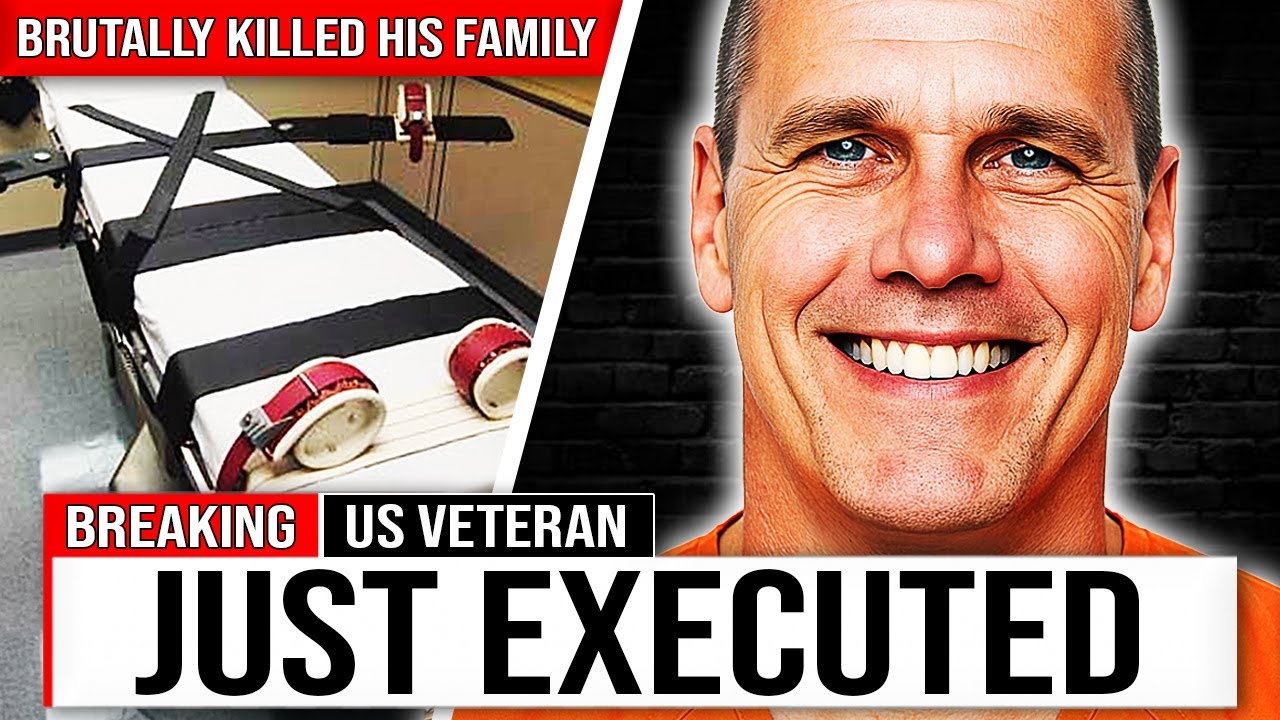
The final act followed 29 years of appeals and legal challenges after his conviction for the first-degree murders of his wife, Sylvia, 34, and their two young children, Edward III, 7, and Anna, 5. His execution proceeded after Governor Ron DeSantis signed his death warrant in June, setting the final countdown in motion.
Zakrzewski’s final day began before sunrise. He declined a final visit with a spiritual adviser. For his last meal, he requested a substantial feast: fried pork chops, potatoes, bacon, fried onions, toast, root beer, pie, ice cream, and coffee.
At approximately 6 p.m., the curtain to the witness room rose, revealing Zakrzewski strapped to a gurney and covered with a white sheet. When asked for a final statement, he delivered a sardonic remark laced with bitterness.
“I want to thank the good people of the Sunshine State for killing me in the most cold and calculated, clean, humane, and efficient way possible,” he stated. “I have no complaints whatsoever.”
He then began reciting Robert Frost’s “Stopping by Woods on a Snowy Evening,” his voice trailing off before he could finish the poem. The lethal injection process began at 6:04 p.m. He was declared dead nine minutes later.
The path to the execution chamber was paved on June 9, 1994, in Mary Esther, Florida. Then, a 29-year-old technical sergeant, Zakrzewski, received a call at work from his son, known as Kim, who said Sylvia wanted a divorce and planned to take the children.

His response was chillingly methodical. He left the base, purchased a machete, returned to work, and finished his shift. That evening, he hid the weapon and laid out a crowbar and rope inside his home before waiting for his family.
Sylvia was first. Zakrzewski struck her twice in the head with the crowbar, then dragged her to a bedroom and strangled her with the rope. He then called his children to the bathroom individually to brush their teeth.
Kim entered first. Zakrzewski attacked him with the machete; the boy raised his arm in a futile defense before fatal blows struck his head, neck, and back. Five-year-old Anna met the same horrific fate moments later.
Afterward, Zakrzewski dragged Sylvia’s body to the bathroom to join the children, delivering a final machete blow to ensure her death. He then fled, driving to Orlando, flying to Hawaii, and assuming a new identity on a secluded religious commune.
He lived there as “Michael Green” until an episode of “Unsolved Mysteries” aired his photograph. Recognized by commune members, he surrendered to police in Hawaii nine days later on October 24, 1994.
Extradited to Florida, he initially attempted a jailbreak in 1995. In a dramatic courtroom turn on March 19, 1996, he confessed to all three murders, shifting the trial solely to the question of punishment.
Prosecutors depicted a calculated, heinous slaughter, emphasizing that Anna likely saw her brother’s blood before her own death. The defense argued Zakrzewski had snapped under psychological strain, believing he was saving his children from future pain.

The jury recommended death for the murders of Sylvia and Kim by a 7-5 vote. For Anna’s murder, the panel deadlocked 6-6. The judge, however, overrode that tie, imposing a third death sentence.
For years, appeals focused on the non-unanimous jury recommendations. A 2017 change in Florida law requiring unanimous death sentences sparked a final challenge, but courts refused to apply it retroactively to his case.
The Florida Supreme Court dismissed another appeal in September 2018, solidifying his fate. His execution marks one of the first carried out under the state’s revised death penalty statutes, testing the boundaries of retroactivity.
The case forced a brutal examination of familial betrayal, premeditation, and the limits of legal mercy. For the victims’ relatives and the community, Thursday’s execution concludes a long, painful wait for a sentence deemed just by the courts.
Reaction from victim advocacy groups has been mixed, with some stating the execution delivers overdue accountability, while others point to the decades-long delay as a failure of the system. Legal experts note the case will be cited in ongoing debates over jury unanimity.
As the state resumes executions under its revised legal framework, the legacy of Edward Zakrzewski’s crimes and his three death sentences will continue to resonate in Florida’s complex history with capital punishment. The final words, both his and the judge’s, underscore a tragedy deemed unforgivable by the law.