A Texas death row inmate has been executed for the 2011 murder of a pastor during a brutal church robbery, closing a case that devastated a community and exposed a lifetime of violence.
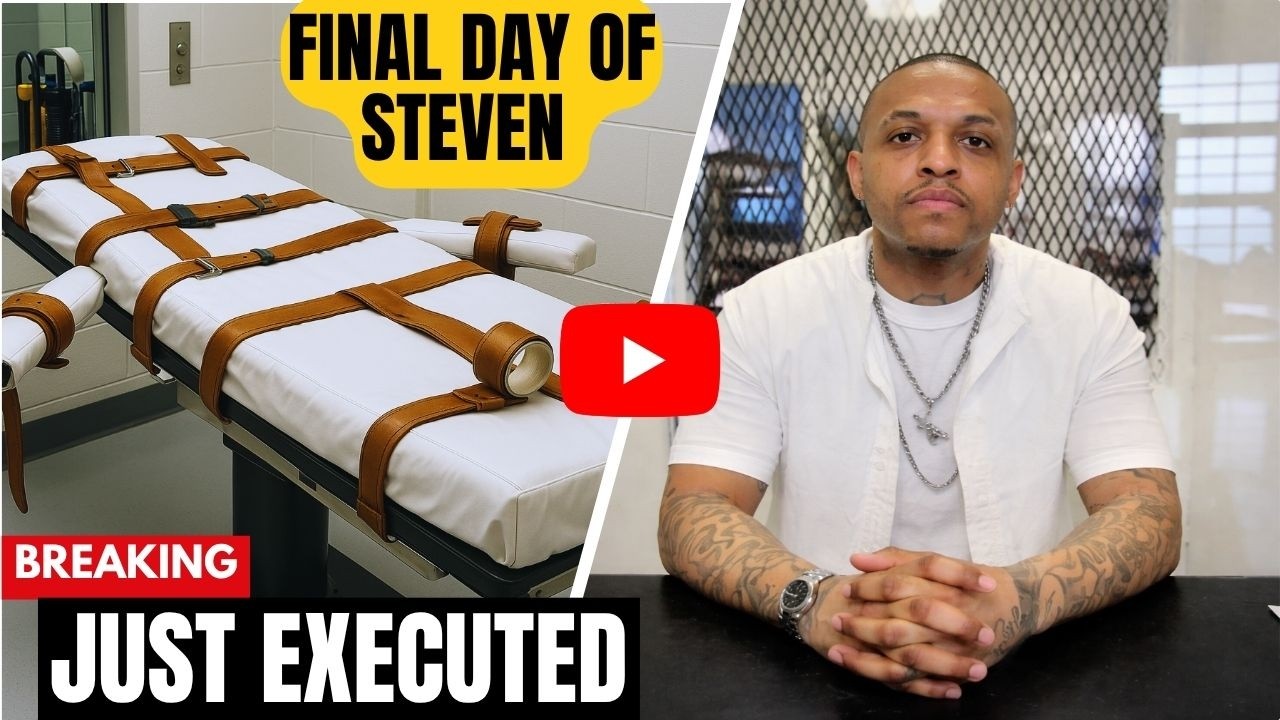
Steven Lawayne Nelson, 37, received a lethal injection at the state penitentiary in Huntsville on Wednesday evening. He was pronounced dead at 6:50 p.m., more than a decade after being sentenced for the capital murder of Pastor Clinton Dobson.
The execution followed the rejection of Nelson’s final appeal in 2023. He spent his final years in the Polunsky Unit, living in near-total isolation on Texas’ death row.
Nelson showed little emotion as he was escorted into the death chamber. When offered a final statement, he delivered cryptic remarks that blended defiance with apparent peace.
“I will always love you no matter that our love is uncontrollable,” Nelson stated. “There is no definition and no feeling. I’m thankful. It is what it is.”
His words concluded with a stark assessment of the room. “No, I’m not scared. It’s cold in here. But I’m at peace. I’m ready to be at home. Let’s ride, warden.”
Texas no longer offers special last meal requests to condemned inmates. Nelson received the standard prison meal available that day, a final reminder of the institution’s rigid control.
The crime that sealed his fate occurred on March 3, 2011, at North Point Baptist Church in Arlington. Nelson, then 24 and on probation for assault, entered the church intending to rob it.
Inside were Pastor Clinton Dobson, 28, and church secretary Judy Elliott, 69. What began as a robbery escalated into horrific violence that would shock the community.
Nelson attacked both individuals. He brutally beat Elliott, causing traumatic injuries to her face, head, and body, along with internal brain bleeding that left her fighting for her life.
Pastor Dobson was assaulted, strangled with a computer cord, and ultimately suffocated with a plastic bag. His body was discovered by Elliott’s husband after Dobson’s wife grew concerned.
Elliott miraculously survived the attack but endured five months of intensive therapy and reconstructive surgery, including permanent metal supports implanted in her face.

Nelson fled the scene with Dobson’s laptop and cell phone, along with Elliott’s credit cards and car. He used the cards to buy clothes and jewelry, later selling the laptop for cash.
An extensive manhunt led police to Nelson within days. The evidence against him was overwhelming and included a trail of stolen property in his possession.
Forensic analysis matched DNA from both victims to blood stains on Nelson’s shoes. His fingerprints were lifted from the chaotic crime scene inside the church office.
During interrogation, Nelson admitted to being present but denied committing the murder, blaming unnamed accomplices. The evidence, however, painted him as the sole perpetrator.
The community reeled from the loss. A memorial service for Pastor Dobson drew over two hundred mourners who remembered his kindness and dedication.
Nelson’s path to violence began long before that spring morning. Born into a household marked by neglect and abuse in Oklahoma, he exhibited troubling behavior from early childhood.
By age six, he had his first encounters with law enforcement. His juvenile record escalated through theft, burglary, and aggravated assault despite repeated intervention attempts.
As a teenager, his family moved to Texas, hoping for a fresh start. The pattern continued, leading to an unusually severe sentence in a juvenile prison for property crimes.
Released in his late teens, Nelson repeatedly violated parole, committing new thefts and violent offenses. In 2010, he assaulted his girlfriend and was placed on probation.
His trial in October 2012 was tense and brief. The prosecution presented a compelling case built on forensic evidence and the timeline of his actions following the murder.
Nelson’s defense claimed two acquaintances were the actual killers, but their alibis held. The jury deliberated and found him guilty of capital murder after just a few days.
During the sentencing phase, the prosecution detailed Nelson’s relentless criminal history. The defense pointed to a childhood of abuse and diagnosed mental health conditions.

Victim impact statements from Dobson’s family filled the courtroom. His widow condemned Nelson’s actions, stating no one would remember him for the destruction he caused.
The jury unanimously sentenced him to death. Upon hearing the verdict, Nelson reacted violently, attempting to flood the courtroom by breaking a fire sprinkler.
His time awaiting execution was marked by further violence. While jailed pre-trial, he was implicated in the murder of a fellow inmate, Jonathan Holden, in 2012.
Nelson allegedly tricked Holden, who had a mental illness, into a fake suicide attempt using a blanket noose, then tightened it until the man died. Inmates reported he danced afterward.
Holden’s family later settled a civil rights lawsuit against the county for $350,000, citing failures in inmate supervision that allowed the killing to occur.
For Judy Elliott and the families of both Clinton Dobson and Jonathan Holden, Nelson’s execution represents a long-awaited conclusion to a painful legal saga.
The case underscores the profound impact of a single violent act on an entire community, reverberating from a quiet church office to the state’s most secure prison units.
It also highlights the complex interplay between a troubled upbringing, personal choice, and societal safety, leaving a permanent scar on all involved.
With the administration of the lethal injection, the State of Texas has carried out its ultimate penalty, closing the final chapter on a life defined by escalating crime and brutality.
The Huntsville unit, the busiest execution chamber in the United States, has recorded another execution, continuing Texas’s central role in the national debate over capital punishment.
Justice, for some, has been delivered with finality. For others, the wounds inflicted on that March day in Arlington will remain, a somber reminder of violence invading a sacred space.