For over a century, the circus sideshow offered a paradoxical sanctuary, a place where society’s most extraordinary individuals could transform profound physical differences into celebrated careers. From a man with a second face to a three-legged performer, these individuals, often labeled “freaks,” built lives of resilience and spectacle on the stage. Their stories, drawn from historical records and film, reveal a complex tapestry of human endurance, exploitation, and unexpected fame in an era that both gawked at and revered them.
 The annals of sideshow history are filled with names that captivated the public. Jack Earle, born Jacob Rubin, began life as a small child but experienced astonishing growth, reaching over six feet tall by age seven. He spent fourteen years with the Ringling Bros. and Barnum & Bailey Circus before transitioning to a successful career in sales and public relations, all while cultivating talents in poetry and sculpture.
Another iconic figure, Schlitze, gained fame through the 1932 film “Freaks.” Born with microcephaly, which resulted in a significantly small head and intellectual disability, he communicated in simple words and sentences. Despite his challenges, he was described as outgoing and joyful, spending decades as a beloved performer who loved to dance and sing for captivated audiences.
Perhaps one of the most visually striking was Prince Randian, known as the Human Caterpillar. Born with tetra-amelia syndrome, leaving him with only stumps for limbs, he stood just under three feet tall. His act, which included rolling and lighting cigarettes using only his mouth, showcased incredible dexterity. Fluent in multiple languages, Randian’s intelligence was as formidable as his physical adaptability.
The limits of human anatomy were further tested by Felix Wehrle, dubbed the Human Rubber Band. Born in 1858, Wehrle possessed hyperelastic skin and joints, allowing him to stretch his skin dramatically and bend his fingers completely backward. He toured dime museums and major circuses, with experts now speculating he had Ehlers-Danlos syndrome, a connective tissue disorder.
In the 1880s, Fanny Mills, the Ohio Bigfoot Girl, drew crowds due to Milroy’s disease, which caused severe lymphedema and massive enlargement of her feet. Reports claimed her feet were nineteen inches long. Embracing her uniqueness, she became a star attraction, commanding a then-astounding salary of up to four thousand dollars a week at the height of her popularity.
A more troubling legacy is that of Grady Stiles Jr., known as Lobster Boy. Stiles had ectrodactyly, a genetic condition that fused his fingers and toes into claw-like appendages. A multi-generational sideshow performer, his life was marred by alcoholism and violence. His story ended tragically when he was murdered, a crime orchestrated by his family after years of abuse.

Defying physical limitations, Johnny Eck, the Half Boy, was born with sacral agenesis, leaving him with underdeveloped legs. An accomplished artist, magician, and performer, he was famed for climbing ladders and walking on his hands. His role in the movie “Freaks” cemented his place in pop culture as a symbol of ability over disability.
The story of Charles Tripp, the Armless Wonder, is one of profound skill. Born without arms, he mastered the use of his feet to perform intricate tasks like writing, painting, and even operating a photography studio. His partnership with Eli Bowen, a legless performer, created one of the most memorable acts in sideshow history, demonstrating unparalleled teamwork.
A tale shrouded in Gothic horror is that of Edward Mordrake, a 19th-century English nobleman allegedly born with a second face on the back of his head. According to legend, the face would whisper malevolent thoughts, driving Mordrake to madness and eventual suicide. While his existence is debated by historians, his story persists as a chilling fixture of medical folklore.
The phenomenon of “human unicorns,” individuals with cutaneous horns, was documented by Robert Ripley. One such man, known as Wang, had a horn protruding from the back of his head. Ripley’s research also uncovered historical cases like Madame Dimanche of Paris, who had a ten-inch horn removed from her forehead in the 1820s.
Ella Harper, the Camel Girl, had congenital genu recurvatum, causing her knees to bend backward, allowing her to walk comfortably on all fours. Her talent made her the star of W.H. Harris’s Nickel Plate Circus in 1886, earning a substantial weekly salary. She later left show business, married, and lived a private life until her death in 1921.

Frank Lentini, the Three-Legged Wonder, was born with a parasitic twin that gave him a third leg, four feet, and two sets of genitalia. His extra leg, shorter than the others, did not hinder his mobility; he even used it to kick a football on stage. Lentini enjoyed a long career, married, and raised four children, living a full and public life.
Robert Huddleston, or Pony Boy, also had a severe form of genu recurvatum, walking on all fours with a distinctive, graceful posture. After working on his family farm, he spent 36 years in sideshows, including a stint with the Tom Mix Circus. Even in retirement, he remained active, restoring cars and raising rabbits.
Minnie Woolsey, known as Koo Koo the Bird Girl, had Virchow-Seckel syndrome, which gave her a small head, beak-like nose, and receding jaw. Rescued from an asylum by a showman, her cheerful personality and unique appearance made her a sensation, famously featured in the photograph for the “Freaks” movie poster.
The original Siamese twins, Chang and Eng Bunker, born in Siam in 1811, were conjoined at the sternum. They achieved massive fame in America, mastering their own performances, learning English, and amassing a fortune. They married two sisters and fathered 21 children between them, their descendants still gathering for annual reunions to this day.
Maximo and Bartola, two Salvadoran siblings with microcephaly, were fraudulently exhibited as “Aztec Children” discovered in a lost city. Their fabricated story captivated the public and scientists alike, leading to a White House visit and a European tour where they met Queen Victoria before biologists debunked their alleged origins.

Isaac Sprague, the Living Skeleton, began experiencing extreme progressive muscular atrophy at age twelve. Despite his emaciated frame, he built a career in sideshows, marrying and having three healthy sons. He was known to sip milk from a flask during performances to maintain his energy, embodying a spirit of perseverance.
Joseph Merrick, famously known as the Elephant Man, endured severe deformities from a young age. After a difficult early life in workhouses and sideshows, he found refuge under the care of surgeon Frederick Treves at the London Hospital, where he became a dignified figure in Victorian society, his story a poignant narrative of compassion amidst curiosity.
Stephan Bibrowski, exhibited as Lionel the Lion-Faced Man, had hypertrichosis, causing thick hair to cover his entire body. Taken from his mother at age four by a German showman, he became a gentle and gymnastic performer with Barnum and Bailey. He eventually settled in Coney Island, his gentle demeanor belying his dramatic appearance.
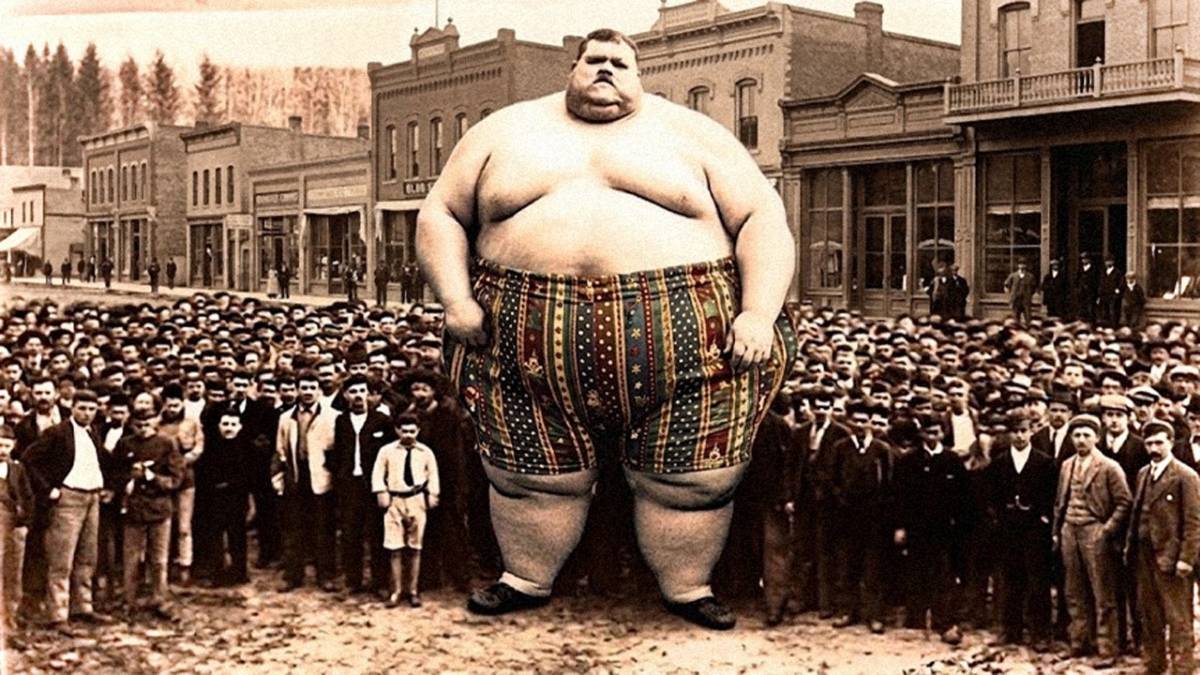
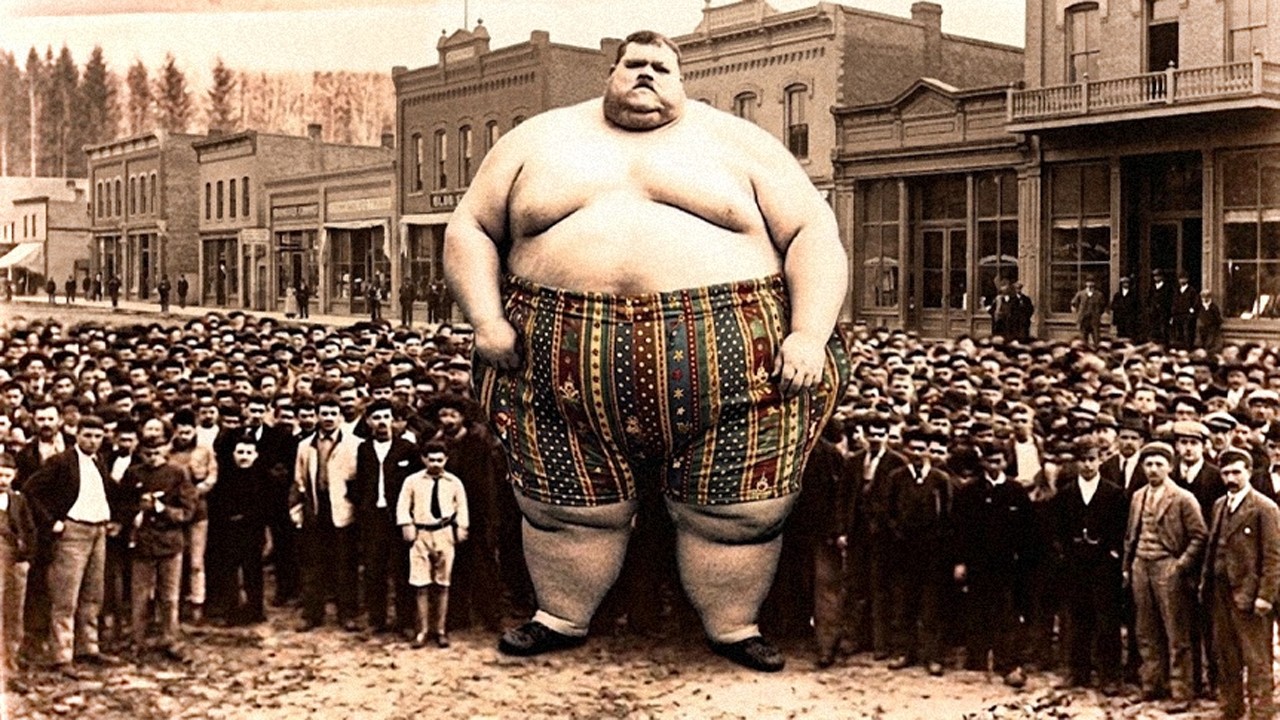
Finally, Kent “Fat Albert” Jackson represented the era of the human curiosity into the late 20th century. Weighing nearly 900 pounds at his peak, he performed at fairs and carnivals, often alongside a very small man, embracing his size with confidence instilled by his parents and building a family life alongside his career.
These individuals, whose lives were showcased under the glaring lights of the big top, navigated a world that viewed them as both marvels and monsters. Their legacies are not merely footnotes in entertainment history but powerful testaments to the human capacity for adaptation, talent, and dignity in the face of extraordinary physical circumstances. They turned the very traits that made them outcasts into the foundation of their identities and livelihoods, forever changing the narrative of difference.
Source: YouTube